







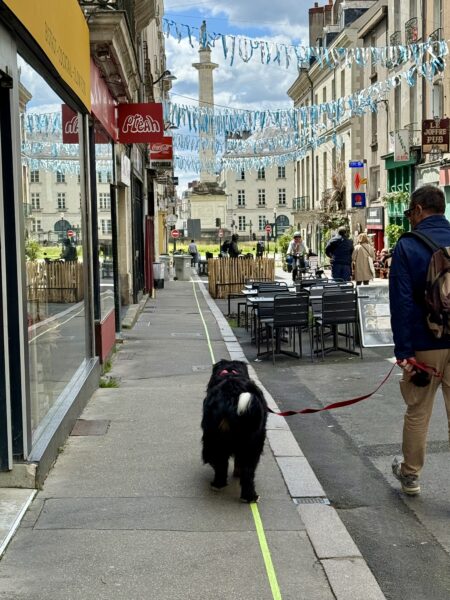
Nantes, the former capital of the Dukes of Brittany and now the capital of the Loire-Atlantique department, can be explored by following a nearly 20-kilometer green route that allows you to discover the city’s exceptional architectural, cultural, and artistic heritage, including installations, monuments, streets, squares, and gardens. This new and intriguing experience is provided by the Le Voyage à Nantes project, through which the Tourist Office has transformed the city, which had “died out” after the shipyards closed in the 1990s, into one of France’s top tourist destinations.
Le Voyage à Nantes: discovering the city
How? By following the green thread on the floor on a tour of more than 50 stops, revealing Nantes’ treasures, from its rich past to its artistic effervescence focused on the future, especially in the field of design.
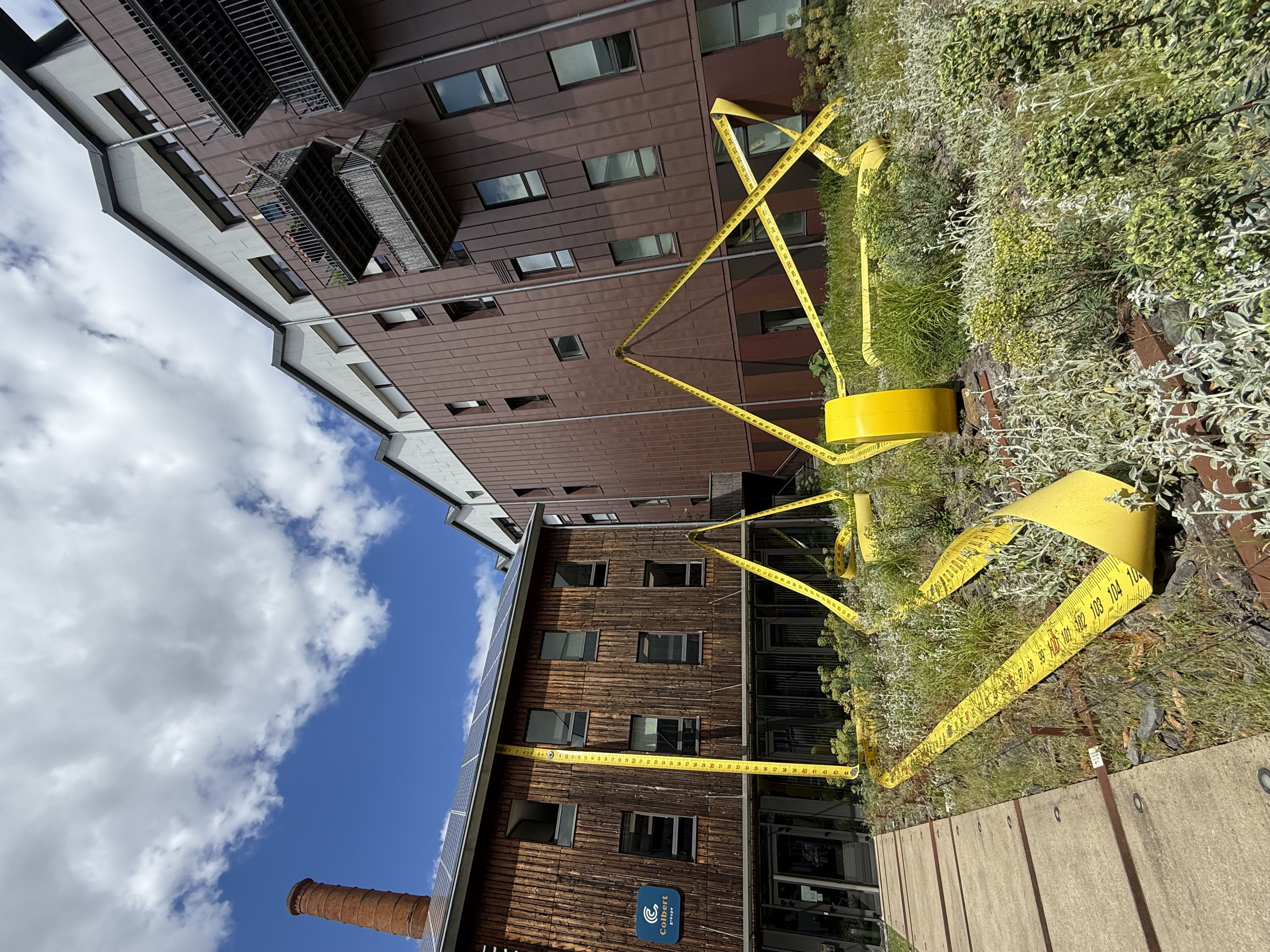
It was natural for us to draw a parallel with Saint-Étienne, visited at the beginning of this tour in collaboration with Explore France . Although the cities have different histories, both have reinvented themselves and risen like phoenixes from their ashes. After the crisis that followed the closure of mines and weapons factories, Saint-Étienne invested in design and was recognized by UNESCO as a Creative City of Design. In Nantes, it all began ten years ago with an idea by Jean Blaise, who invited artists with the aim of giving the city a facelift by transforming abandoned factories into cultural centers, but above all by making Le Voyage à Nantes an event of international renown.
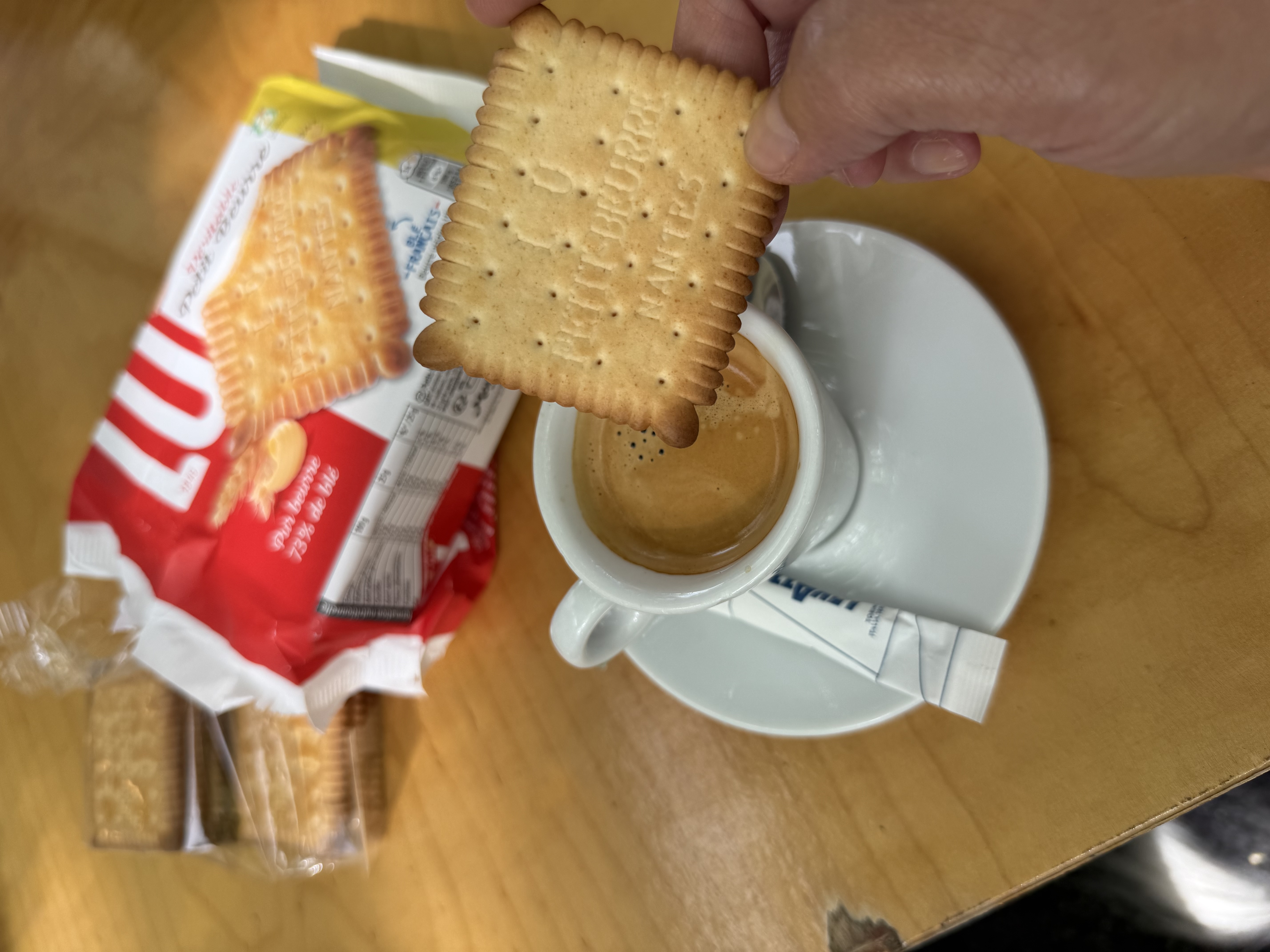
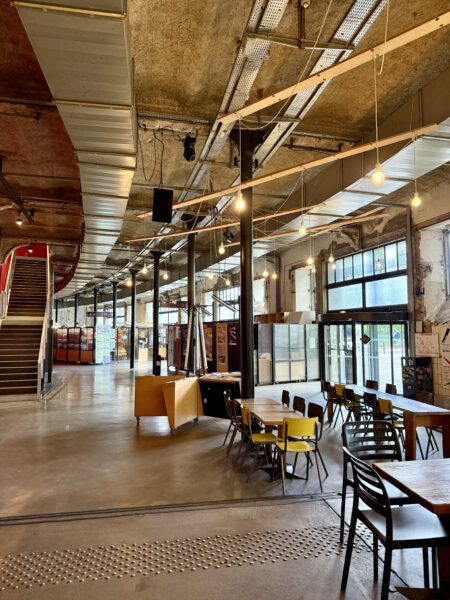
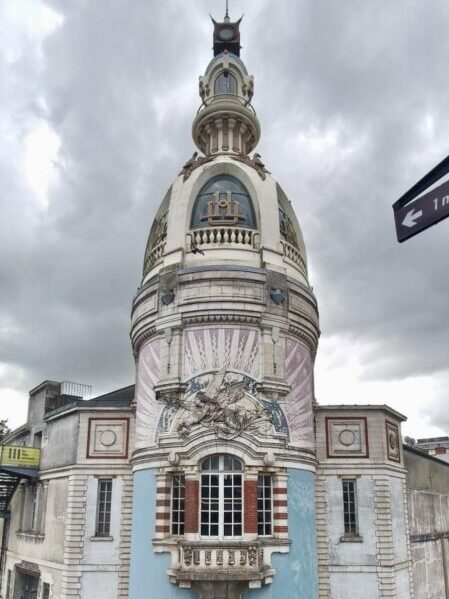
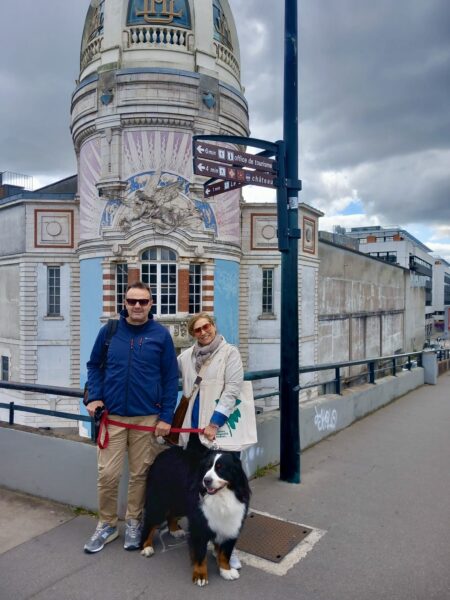
Our tour of the city, in collaboration with Explore France and Visit Nantes, began with one of its symbols: the former LU factory that produced the famous Petit Beurre biscuits. Here, we had coffee with our guide, Bénédicte, who explained that the name Le Lieu Unique derives from the initials of its founders, Lefèvre and Utile. Today, it’s a vibrant cultural center, recognizable from afar by its pink, blue, and gold tower that towers over the city and overlooks the Canal Saint-Félix.
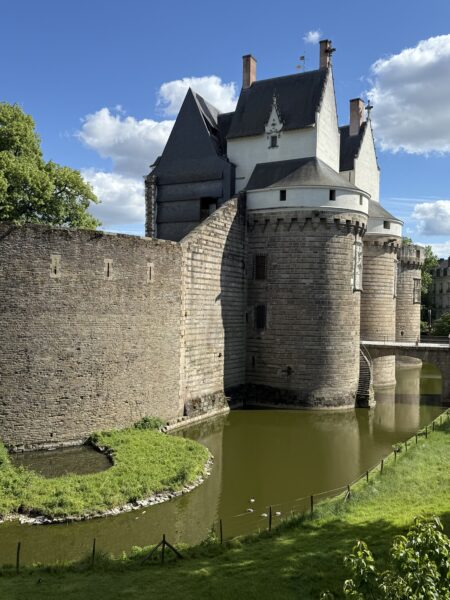
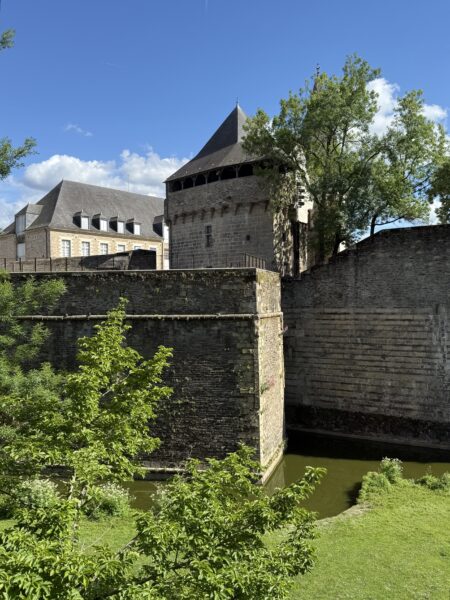
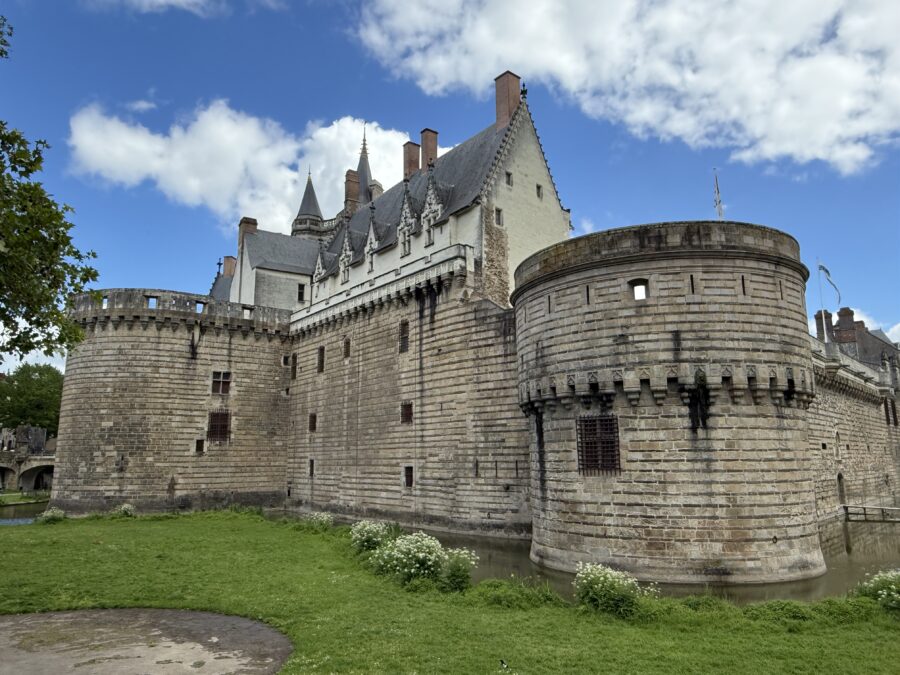
After crossing the bridge over the river, we reached the Castle of the Dukes of Brittany, the most Italianate of French castles, its design inspired by the Renaissance buildings that Anne of Brittany so loved. This royal residence was the home of the two-time Queen of France, wife of Kings Charles VIII and Louis XII. You can stroll freely along the ramparts, and the moat, transformed into a lush garden, is a favorite picnic spot for Nantes residents. Inside, it houses the Nantes History Museum, which chronicles the city’s economic development, linked to shipyards, biscuit factories, sugar processing and the slave trade.
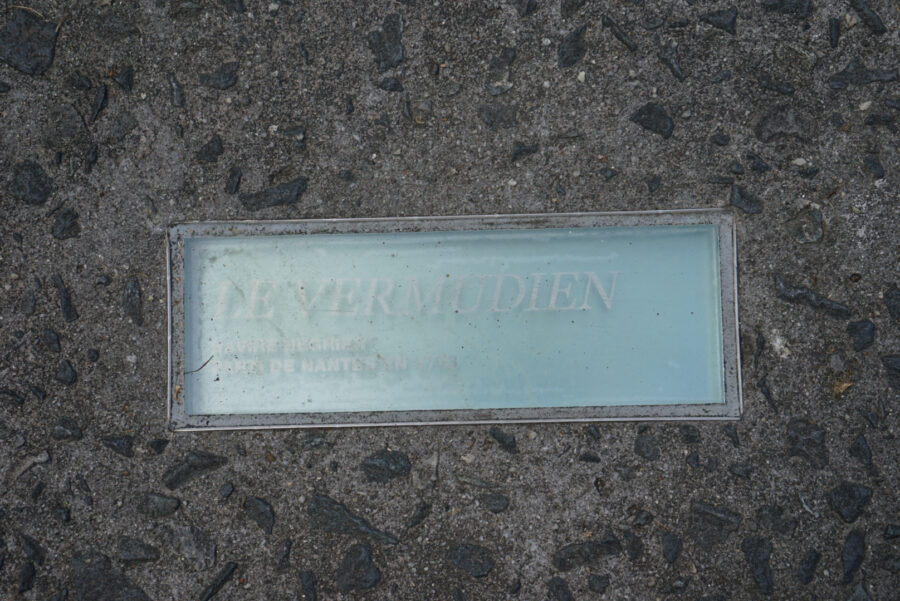

In the 17th and 18th centuries, slaves were unloaded in the port, which Nantes merchants took from Africa to transport to the Americas. Xavier showed us the Mémorial de l’Abolition de l’Esclavage, one of the most important monuments in the world dedicated to slavery and its abolition, with which the city commemorated this sad period. Inaugurated in 2012, it sits on the Quai de la Fosse, where the slave ships docked. It’s heartwarming to walk among the transparent glass rectangles engraved with the names of the 1,710 vessels whose historical records have been found, with figures, facts, and testimonies.

The banks of the Loire, now a focal point of Nantes, were considered infamous and unsafe when the shipyards were moved. The rebirth came after the dismantling of the industrial area, which transformed the île de Nantes into a creative hub, with street art, cultural spaces, and contemporary architecture.


In the Parc des Chantiers, where large ships were built, is the Galerie des Machines, a workshop of monumental mechanical sculptures inspired by Jules Verne, born in Nantes in 1828, by Leonardo’s inventions, and by the city’s industrial history. The most famous attraction is a huge mechanical elephant, accessible to climbers, which makes its daily rounds on the Loire quay amidst trumpeting and splashing water. When stationary, it rests under the Gallery’s canopy among plants and fantastical iron animals. Not far away stands the Carrousel des Mondes Marins, a 25-meter-high carousel with flying fish, storm-tossed ships, and sea creatures: a tribute to the underwater world of “Twenty Thousand Leagues Under the Sea”, one of Verne’s most beloved novels, which was written in a house directly across from the island.



The yellow crane that stands tall on this stretch of land in the middle of the Loire is all that remains of the old shipyards and has now become a symbol of Nantes. Beyond the crane is the playful installation “On va marcher sur la lune”, dedicated to one of the Nantes writer’s most famous novels about the journey from the earth to the moon: a soft gray carpet reminiscent of lunar craters concealing rubber trampolines where you can jump and experience weightlessness. It’s impossible to resist the temptation to try it with Otto! At the end of the Île de Nantes are the 18 concentric circles of Daniel Buren’s “Les Anneaux”, a sort of imaginary telescope over the river that opens towards the estuary.
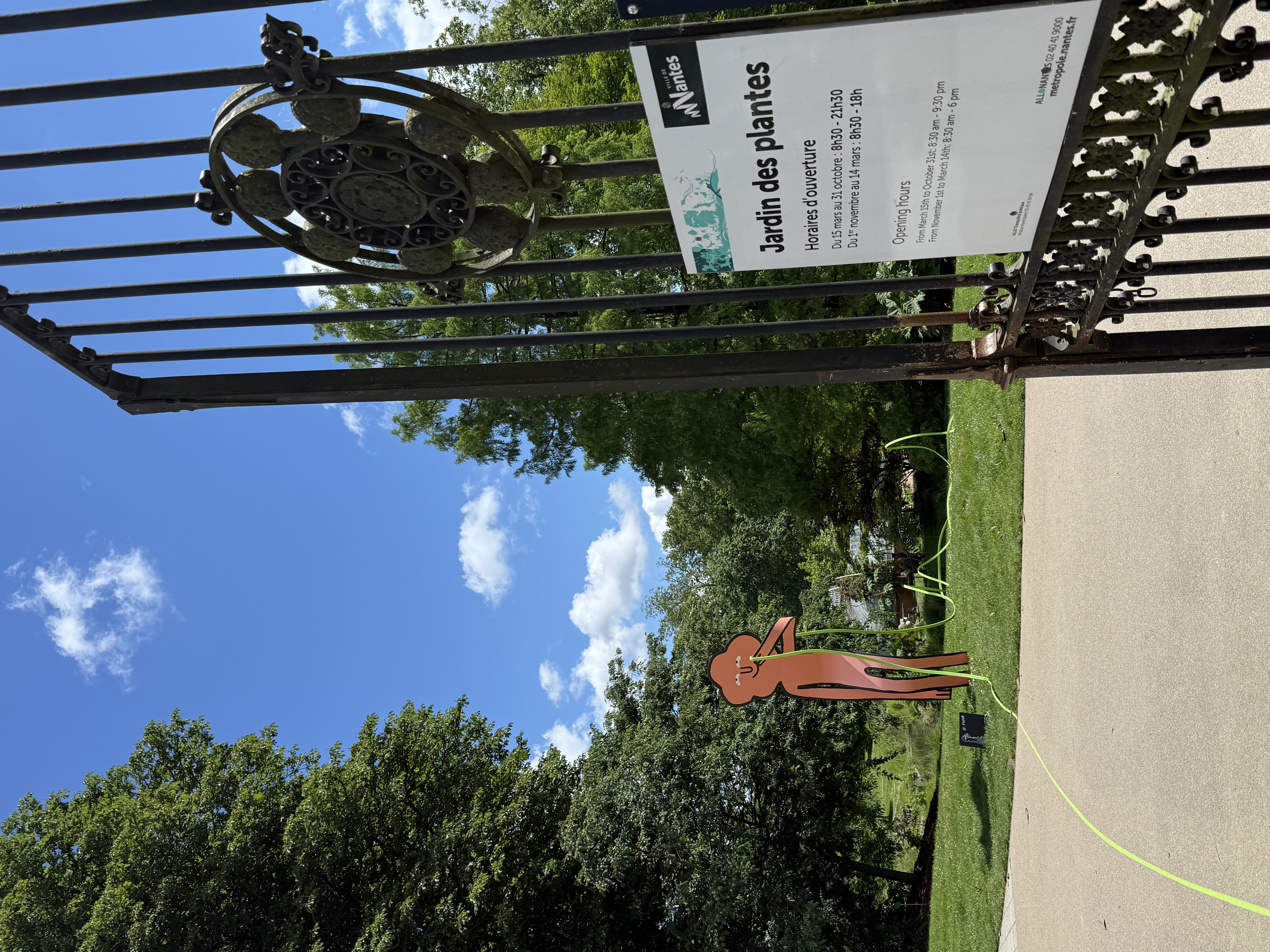

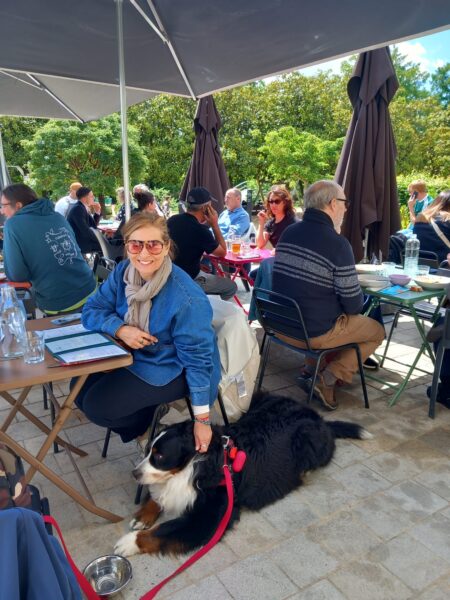

Returning to the thread linking past and future of the Le Voyage à Nantes project, it’s no coincidence that greenery was chosen: the city boasts over 100 parks and gardens and was declared the greenest in France in 2013. Among the most beautiful is the Jardin de plantes, one of the four most important botanical gardens in France and a true oasis of hills, greenhouses, ponds, and over 11,000 plants. Since 2020, it has housed the artwork of Jean Jullien, humorous stylized figures in intense colors emerging from trees, meadows, and ponds. Here, we stopped for our pleasant lunch break at the Café de l’Orangerie, amid the colors and scents of exotic plants, another vestige of the trade of Nantes merchants, who were brought home along with sugar, coffee and rum.
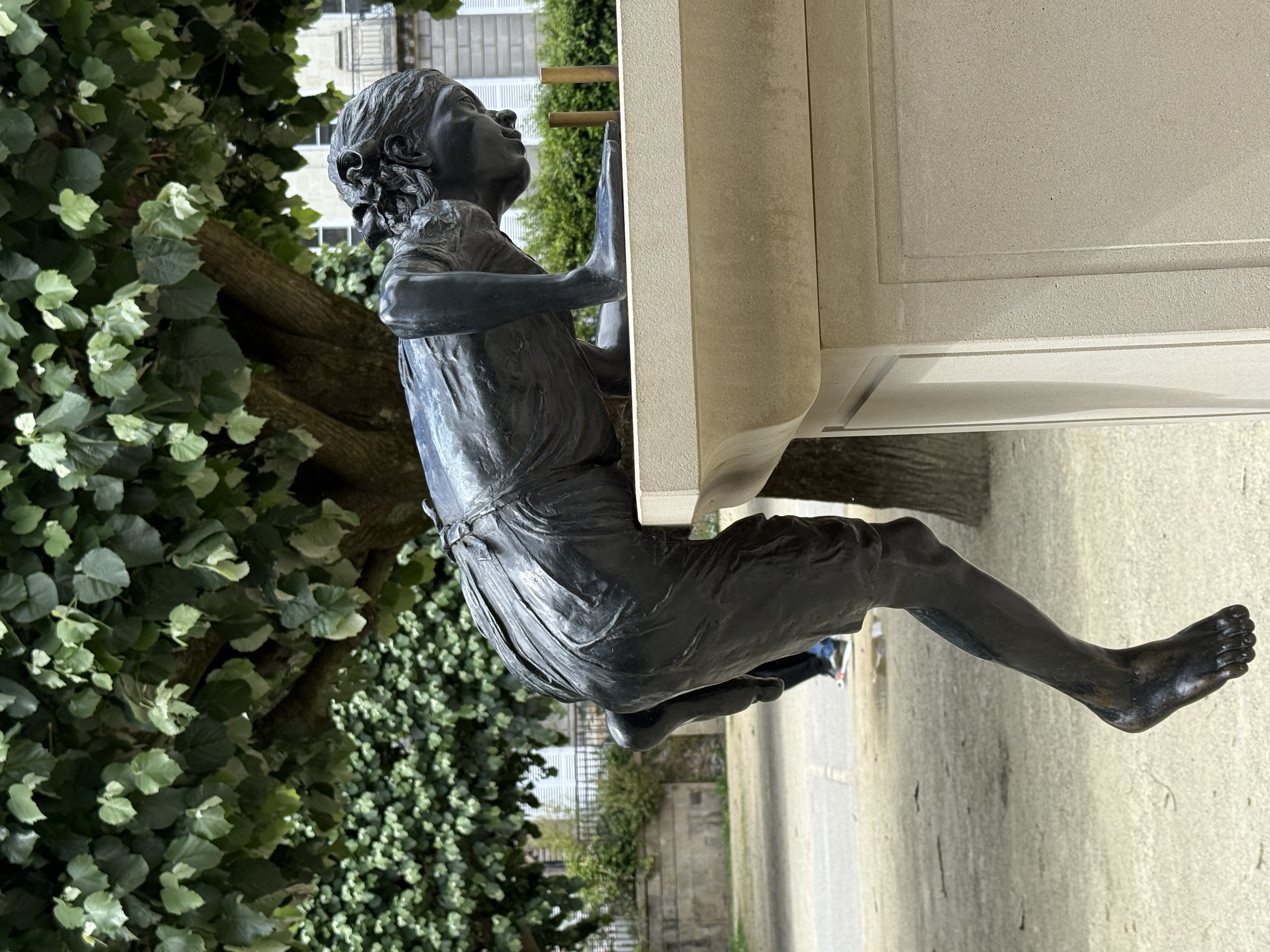
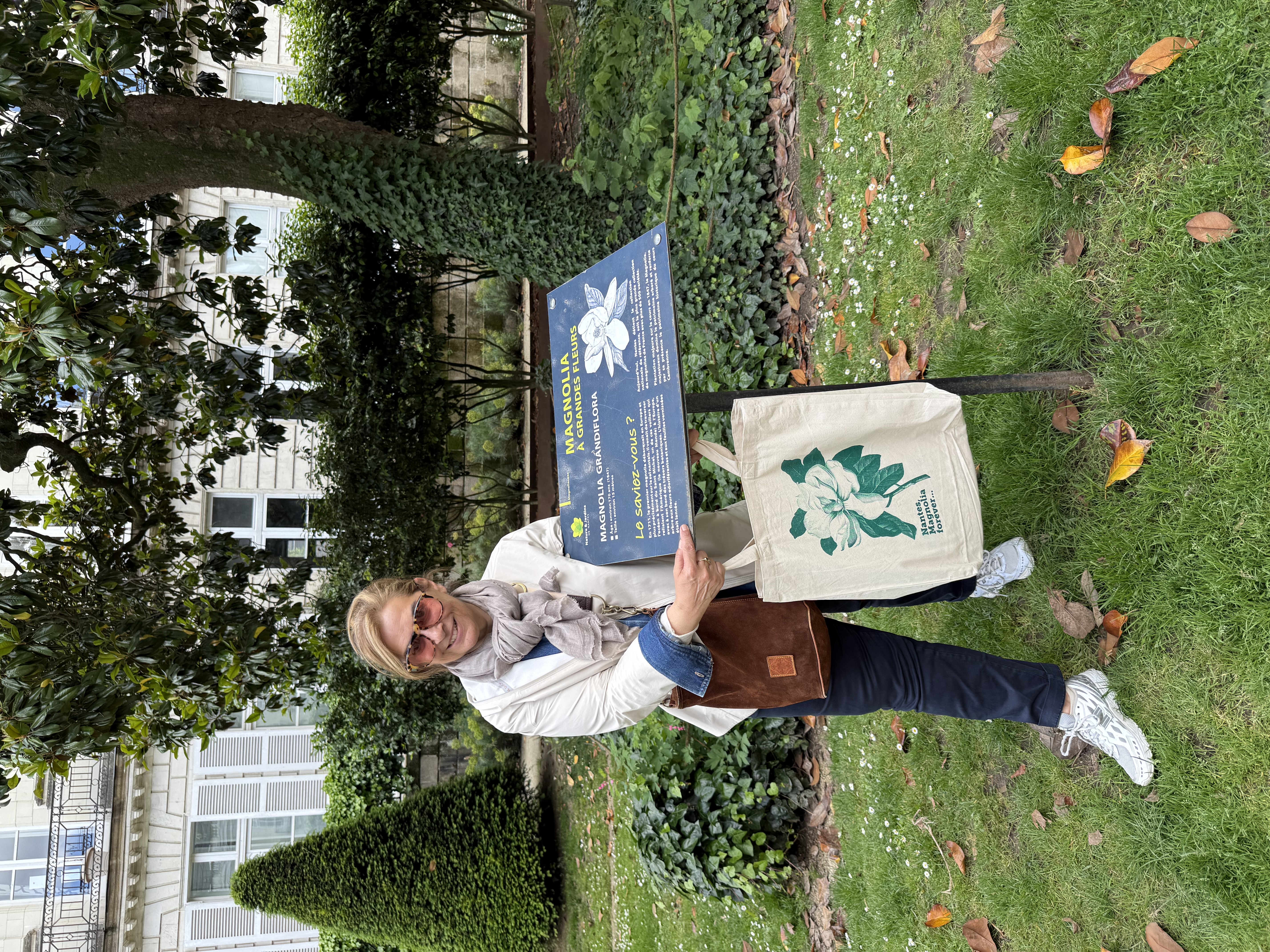

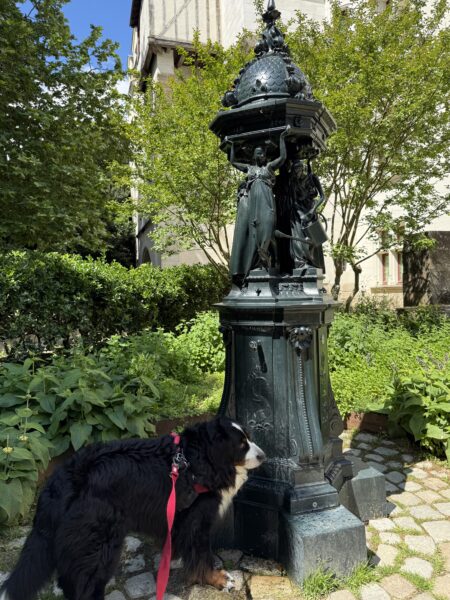
The Cours Cambronne green space, enclosed by two wrought-iron gates, is truly unique. A garden with giant magnolias, perfect for strolling and taking souvenir photos, with the sculpture “L’Éloge de la transgression” by sculptor Philippe Ramette in the background, depicting a young girl climbing onto an empty pedestal. This is one of the permanent works, along with the artistic fountains “L’Évasion” by Cyril Pedrosa, who reinterpreted the traditional caryatids of the five historic cast-iron Wallace Fountains.
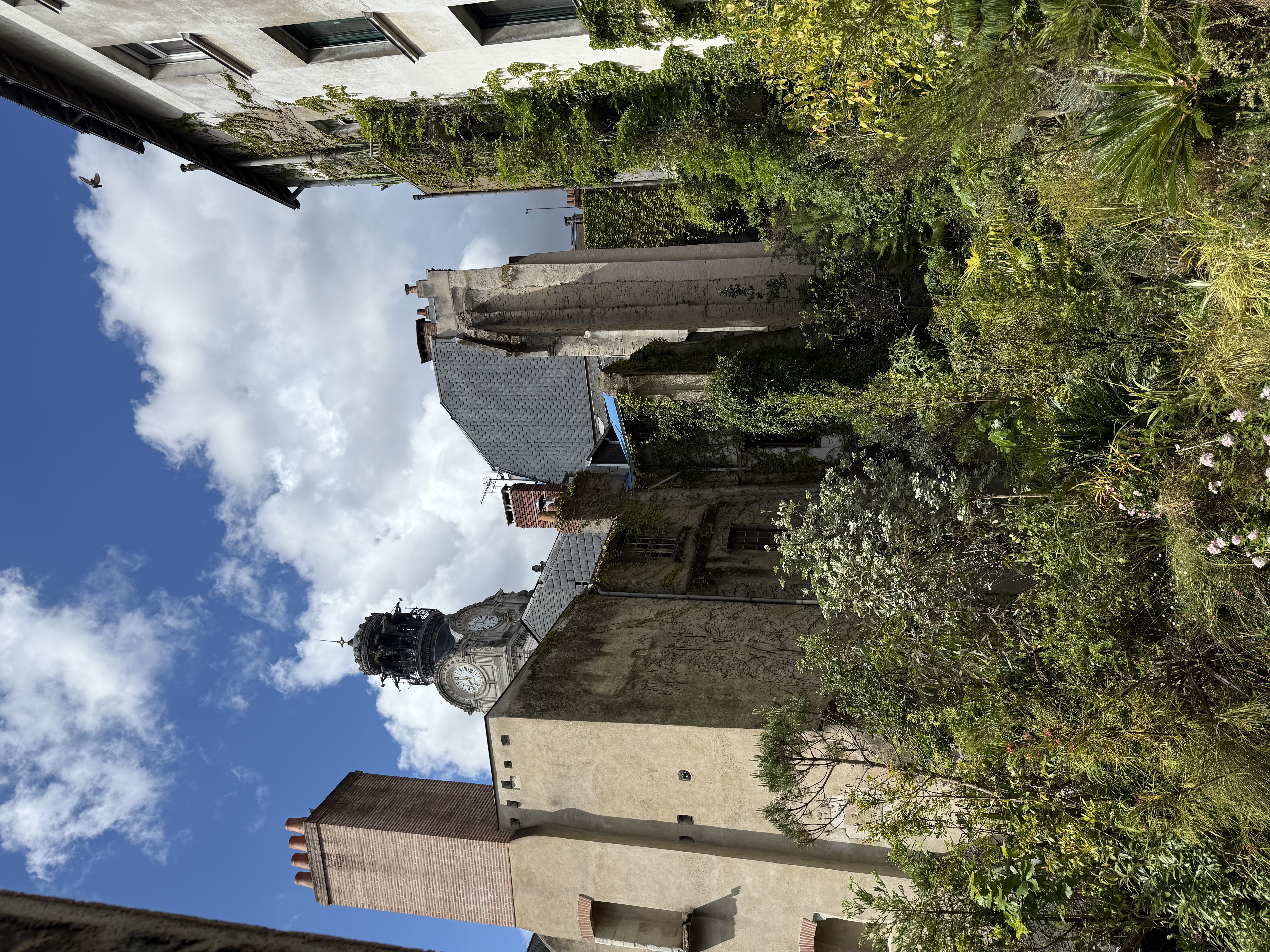
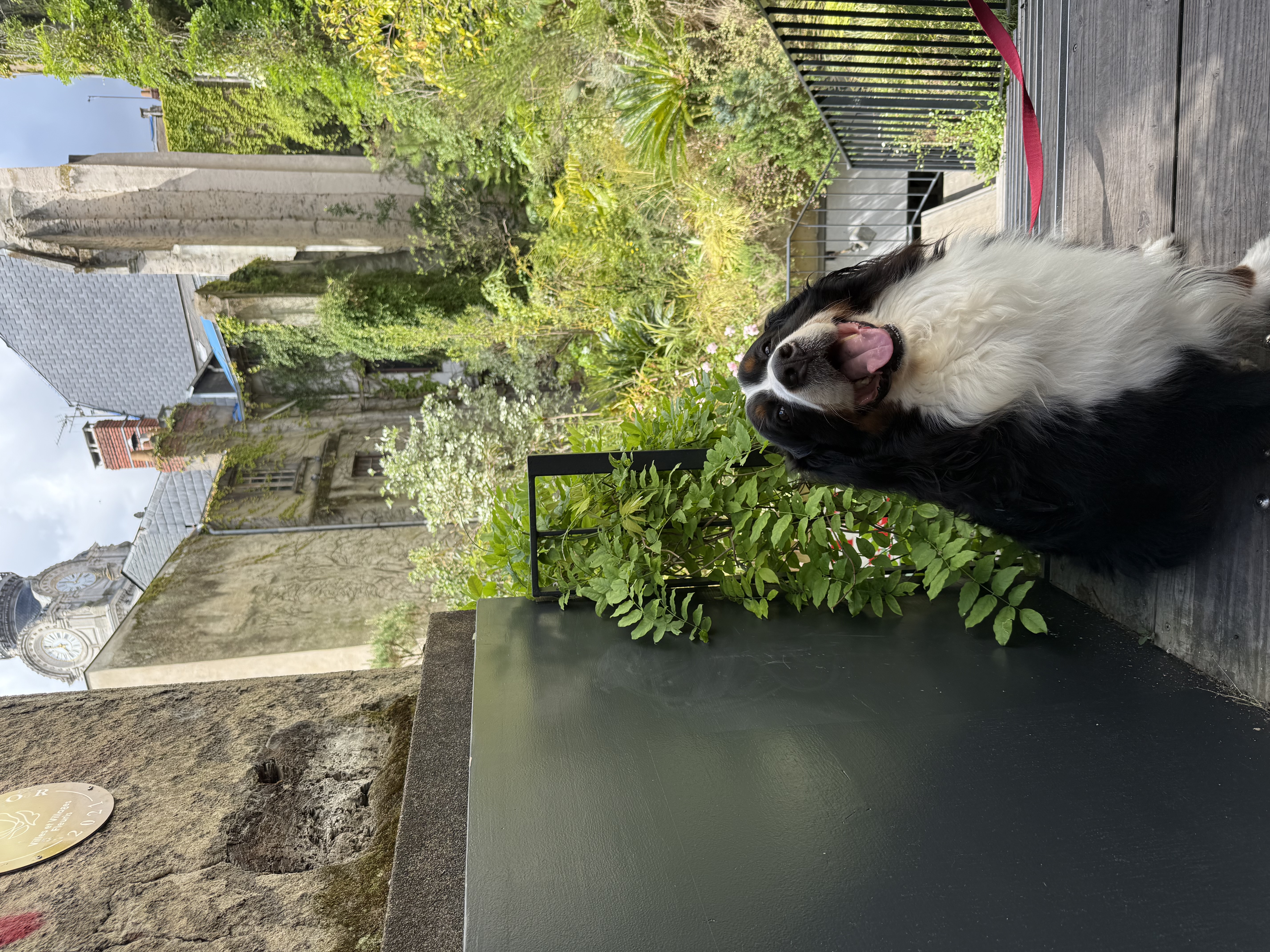
Another is the “Jungle intérieure”, an original work by artist Evor hidden in the Passage Bouchaud, a garden suspended between the walls of the buildings with the bell tower of the Church of Santa Croce in the background, where Bénédicte led us via a small, almost hidden staircase.
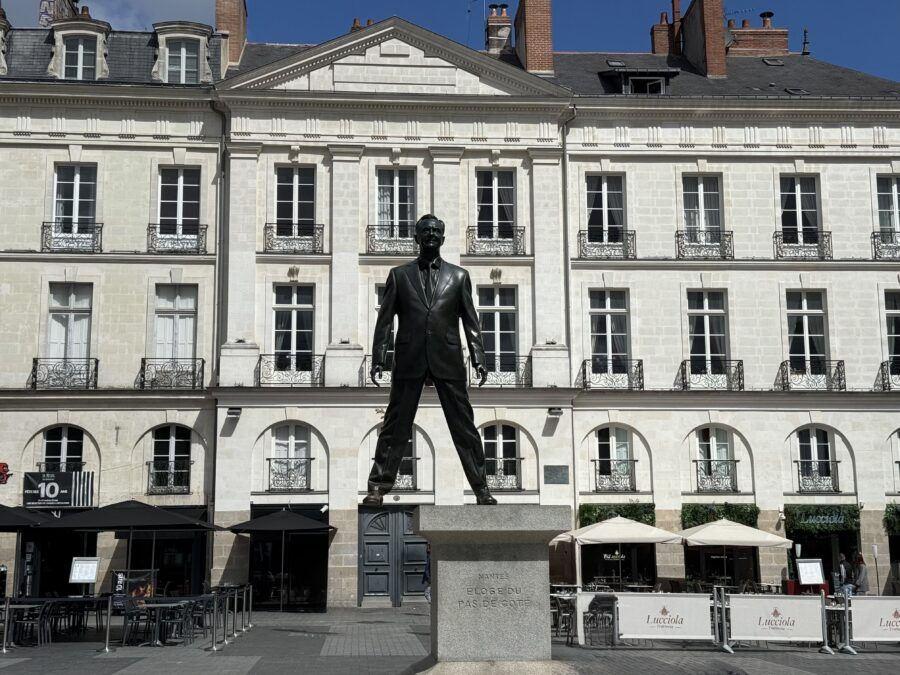
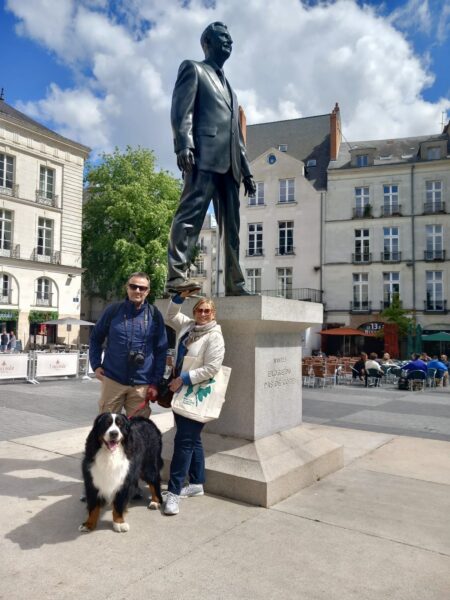
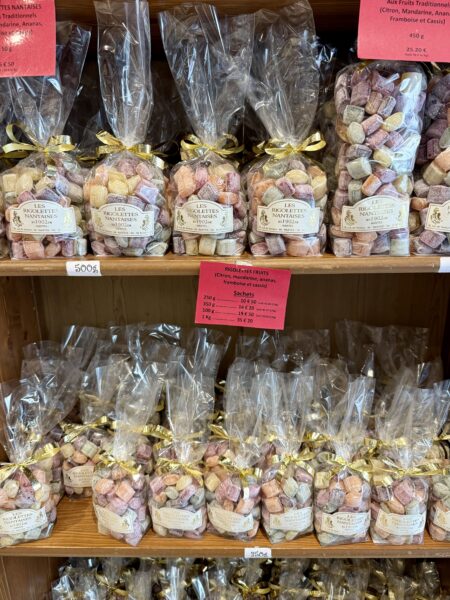
The artistic side of Le Voyage à Nantes for the picturesque Place Bouffay is the statue “L’Élogedupas de côté” by Philippe Ramette, depicting an elegant man in a suit and tie balancing on one foot. Shopkeepers in the neighborhood streets have also joined the route of signs reimagined by artists. Like the large tooth-shaped sign at the shop selling rigolettes, crunchy sugar-coated candies with a heart of fruit jam, still produced by hand today. They were invented in 1902 by Charles Bohu, who named them after his cat and created them in the shape of small rectangles with rounded corners.
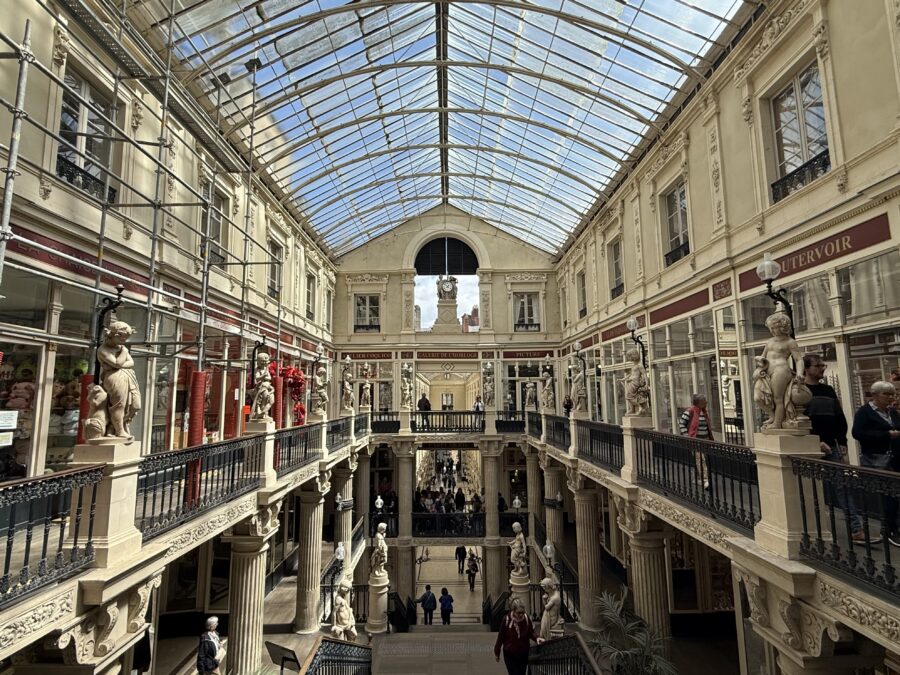
Feydeau district, a former island in the heart of Nantes, was home to tuff and granite palaces built by shipowners with the proceeds of trade with the American islands. Another symbol of the city’s wealthy bourgeoisie is the 19th-century Passage Pommeraye, a three-story arcade with statues, monumental staircases, colonnades, skylights, friezes, and shops, unique in France.
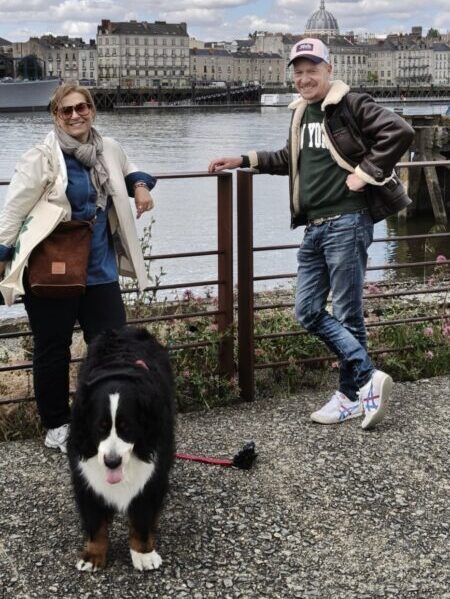

But why is it called a former island? Xavier explained: until the first half of the 20th century, Nantes was crossed by the Loire and Erdre rivers, which were filled in between 1926 and 1946. Thus, the city, once known as the “Venice of the West,” lost its islands, Feydeau and Gloriette, and part of its poetry.
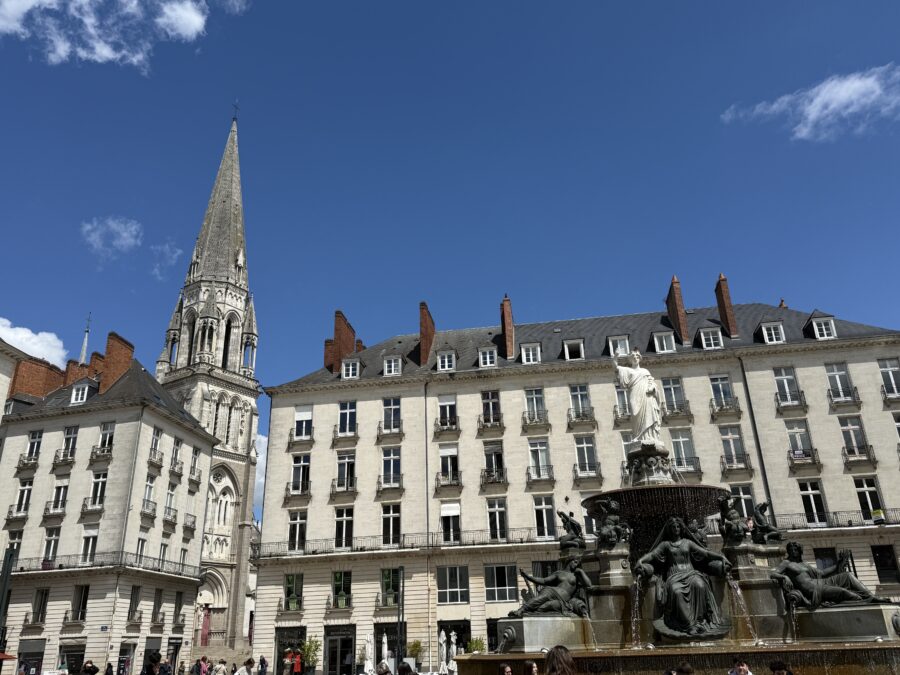
In the center of Nantes, in Place Royale, there are historic photos showing it with its canals. Today, this semi-oval space features a beautiful monumental fountain. At the top of the pyramid is a white marble statue of a woman holding a trident, representing Nantes, and lower down are the symbols of the city’s maritime and riverine vocation: a young girl representing the Loire, and further down, depicted as young men and women, Erdre, Sèvre, Cher and Loiret rivers.
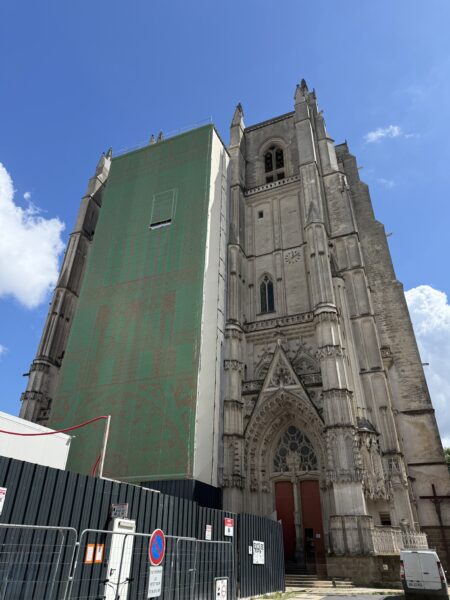

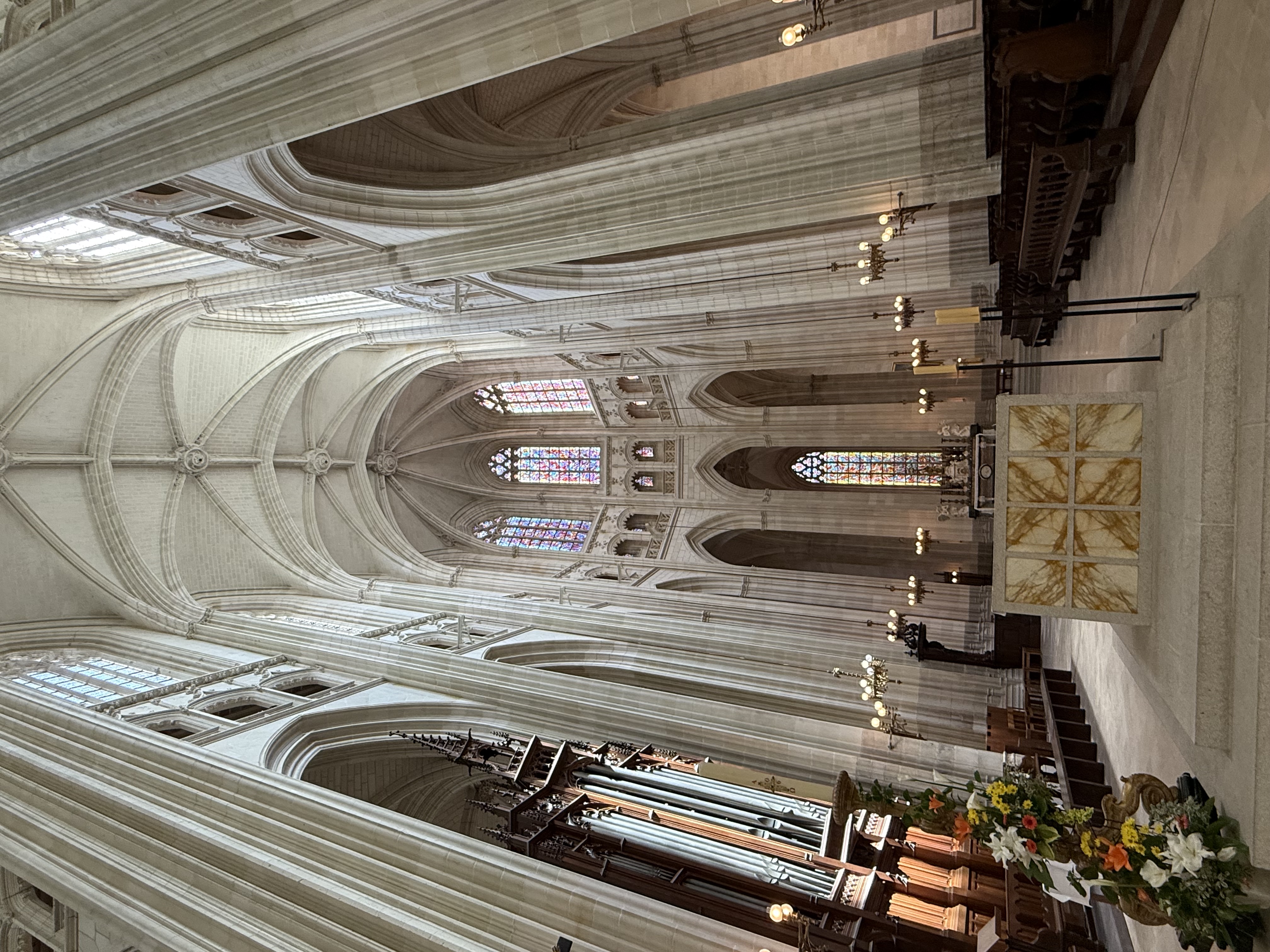
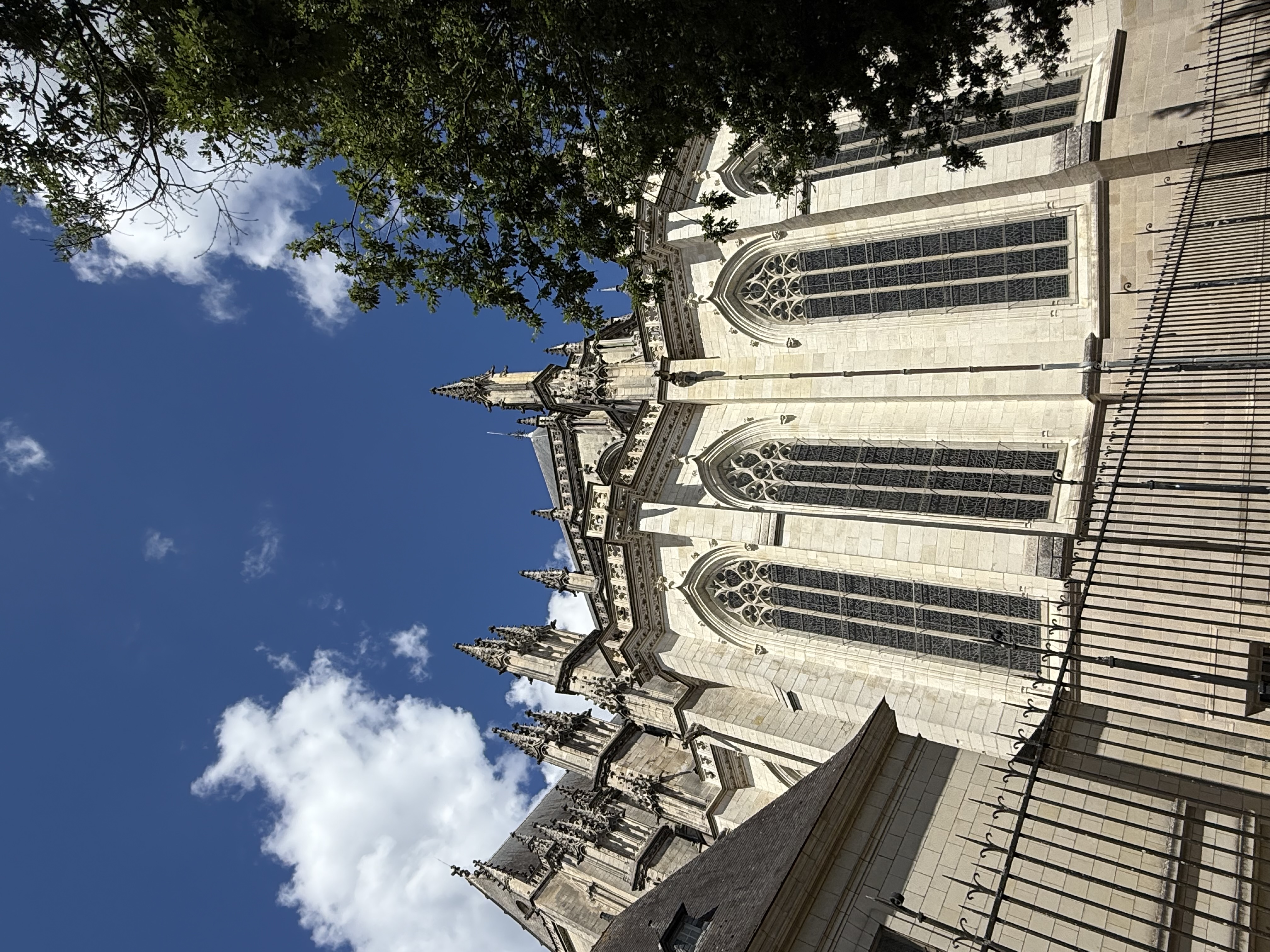
Not far from the castle is the Cathedral of Saints Peter and Paul, which can only be partially visited due to renovations following the serious fire of July 18, 2020. On the left side is the Porte Saint-Pierre, the oldest in the city, with Gallo-Roman elements.
Before leaving Nantes, a toast with Muscadet is a must, a savory white wine from the vineyards surrounding the city and with ocean aromas.
In collaboration with Explore France e Le Voyage à Nantes

