






Chambéry, a city in Savoy rich in art and culture, has preserved its old world atmosphere particularly in its medieval quarter, which has remained unchanged for five centuries. An integral part of this historic center is the labyrinth of covered passageways known as allées; winding beneath and between the houses, they form a network spanning a full five kilometers.
The capital of the Duchy of Savoy
We had visited the city, once the capital of the Duchy of Savoy until 1562 and now the administrative center of the Savoy department in the Auvergne-Rhône-Alpes region, many years ago. However, that was during the winter season, and we were accompanied by our first dog, Arturo. We returned this year thanks to a collaboration with Explore France, which allowed us to admire the city under the warm spring sun, amidst blooming gardens and strolls beneath the arcades of Rue de Boigne, arcades that bear a striking resemblance to those in Turin. This is certainly no coincidence, given that in 1563, Duke Emmanuel Philibert moved his duchy’s capital to the Piedmontese city, deeming it safer than Chambéry, which was too vulnerable to invasions by French royalty.
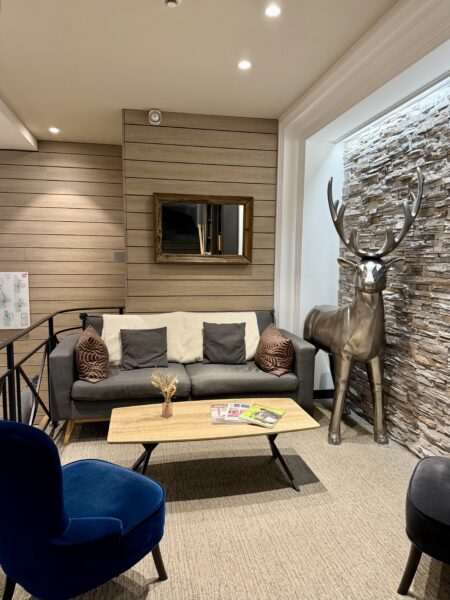
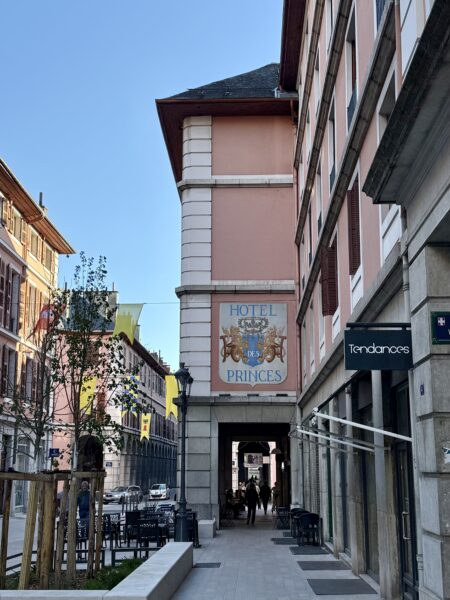
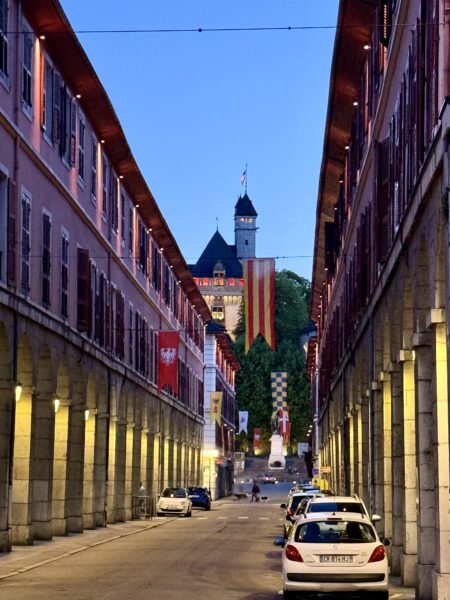
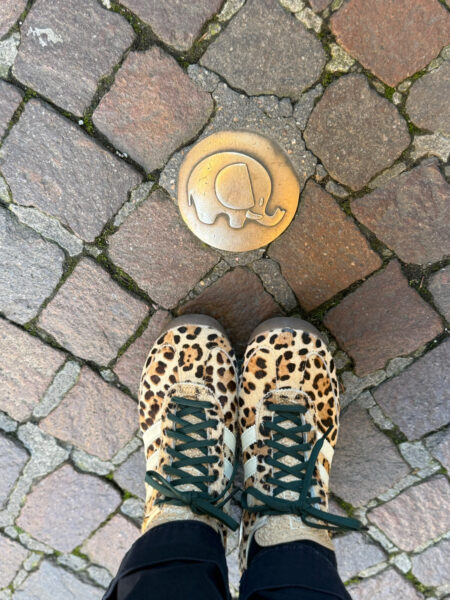
We stayed at the Hôtel des Princes, housed in a former Poor Clares convent beneath the arcades of Chambéry’s city center. Its location allowed us to explore the city comfortably on foot and easily reach all the points of interest by following the relief-sculpted elephants along the sidewalks and cobblestone streets, a route spanning approximately two kilometers.
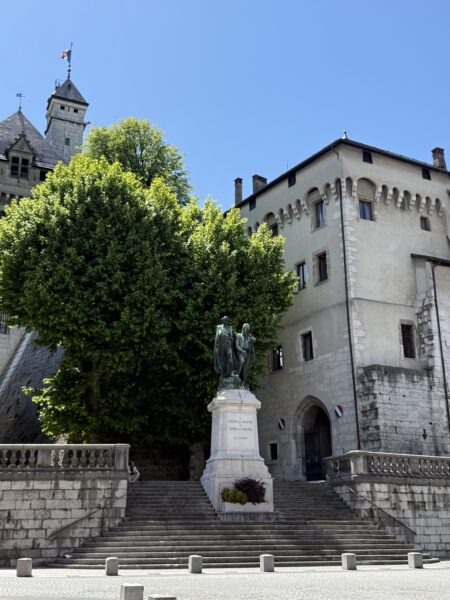
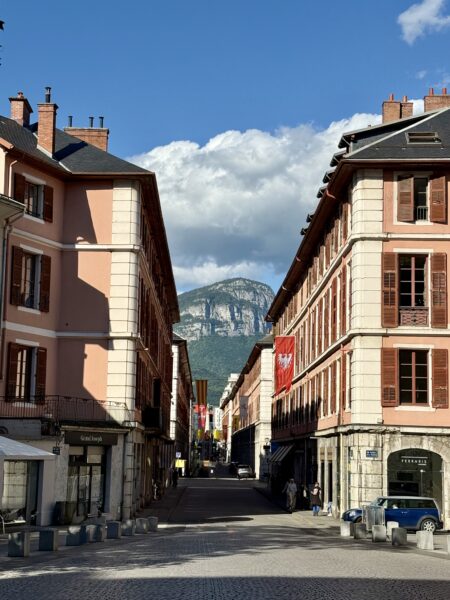
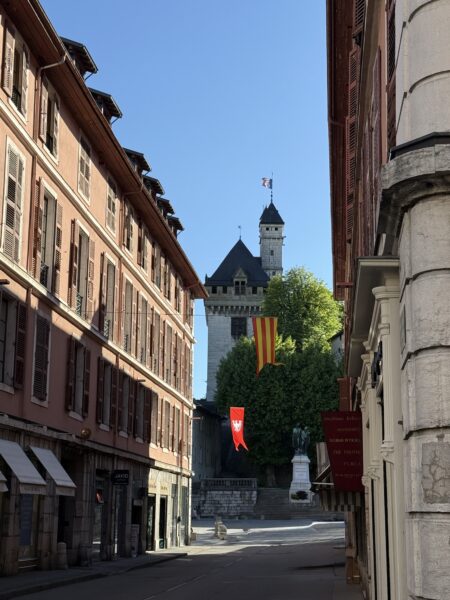
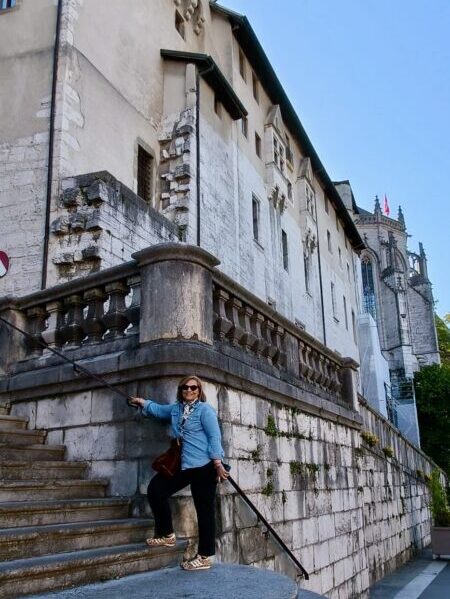
While strolling around the Château des Ducs de Savoie – which we didn’t visit because dogs aren’t allowed inside – and through the city’s medieval heart, we discovered that Chambéry was built entirely over water. Unlike Venice, it has no canals or waterways; instead, the houses rest on foundations of larch piles driven into the waterlogged, marshy soil. The buildings lean against one another for mutual support, but also to minimize taxes, as the House of Savoy levied them based on the width of the facades.
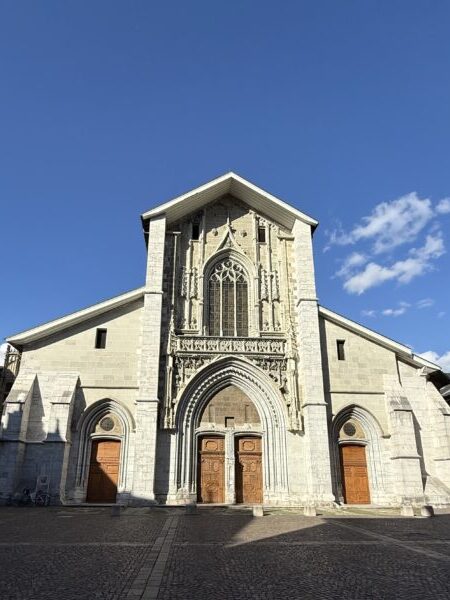
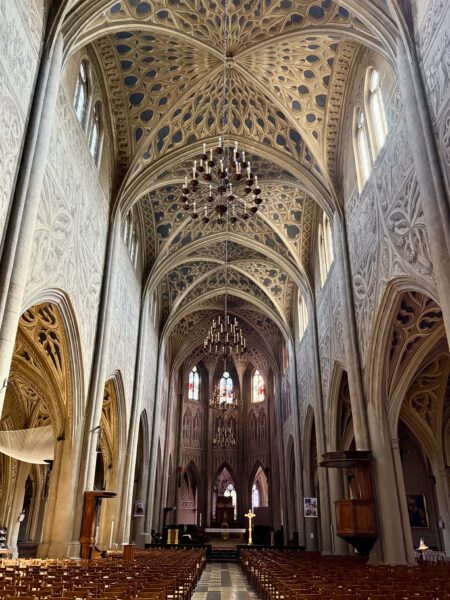
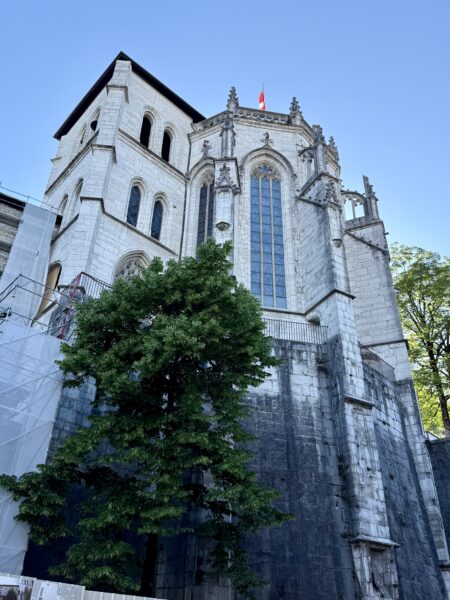
Luxury in this city is never ostentatious. A case in point is the Cathedral of Saint Francis de Sales, which boasts a very austere façade, in stark contrast to its interior, which is entirely decorated with trompe-l’œil work by Italian artists; it is the most extensive such undertaking in Europe. A copy of the Shroud of Turin is kept here to commemorate the fact that the original—now housed in the Cathedral of Saint John the Baptist in Turin, was held in the Holy Chapel of the Dukes of Savoy in Chambéry from 1502 to 1578.
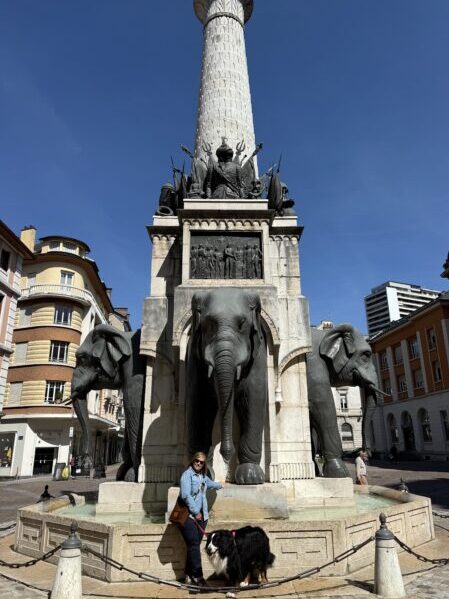
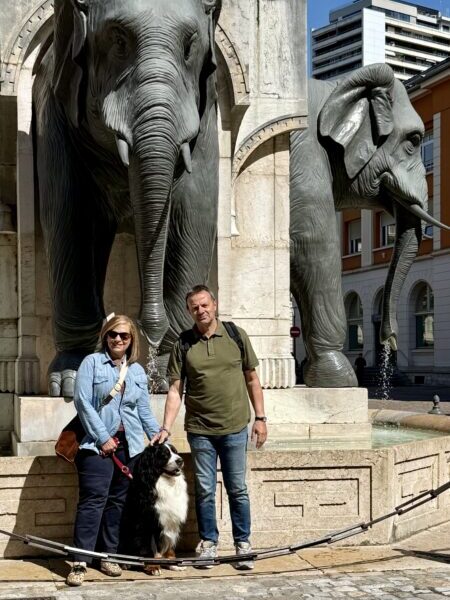
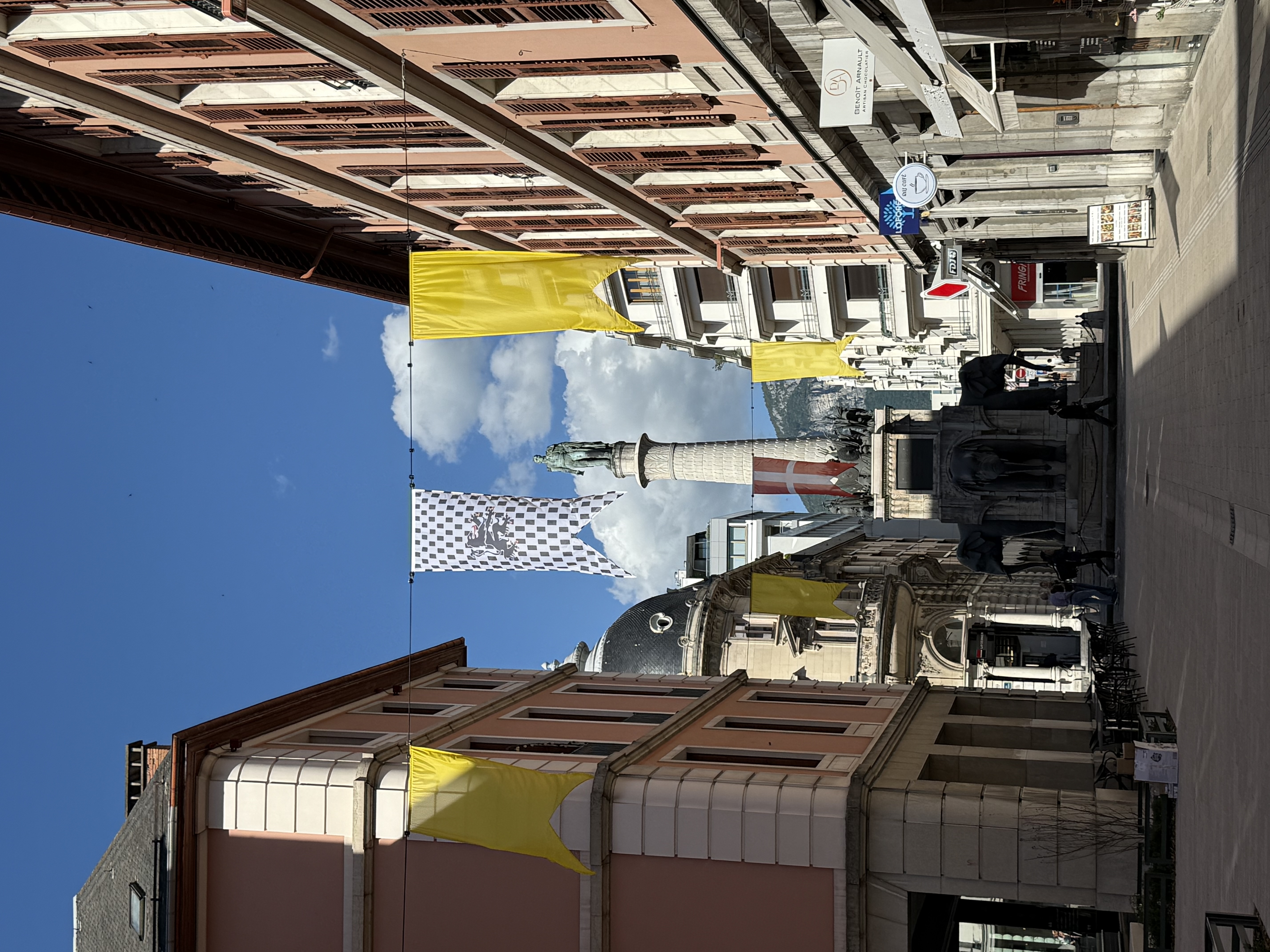
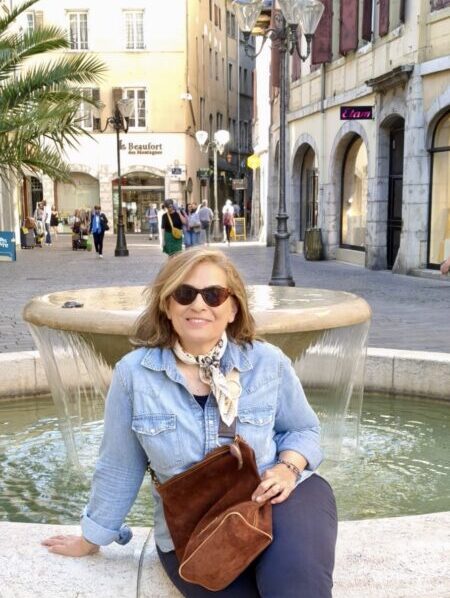
Where did our itinerary begin? At the Elephant Fountain, a monument erected in 1838 that has become the symbol of Chambéry. At its summit stands the statue of General Benoît de Boigne, a soldier and adventurer who won fame and fortune in India. Upon returning to his hometown, he donated part of his wealth to major urban projects, and Chambéry dedicated the fountain to him in gratitude.
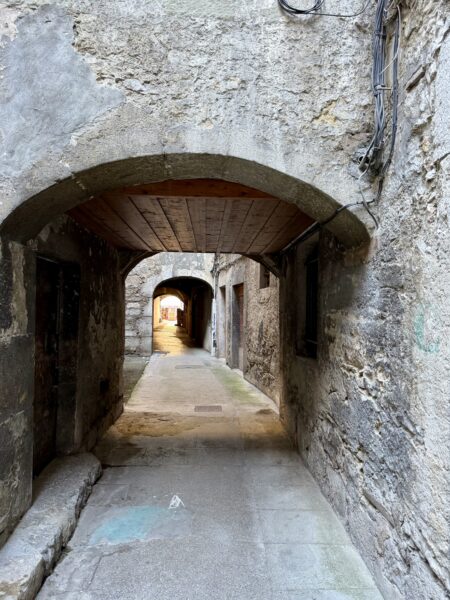
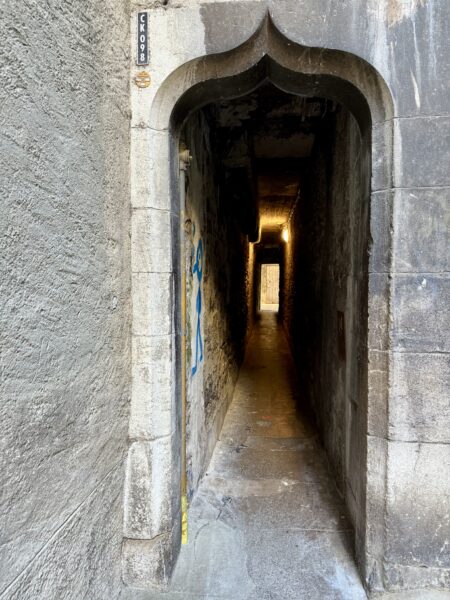
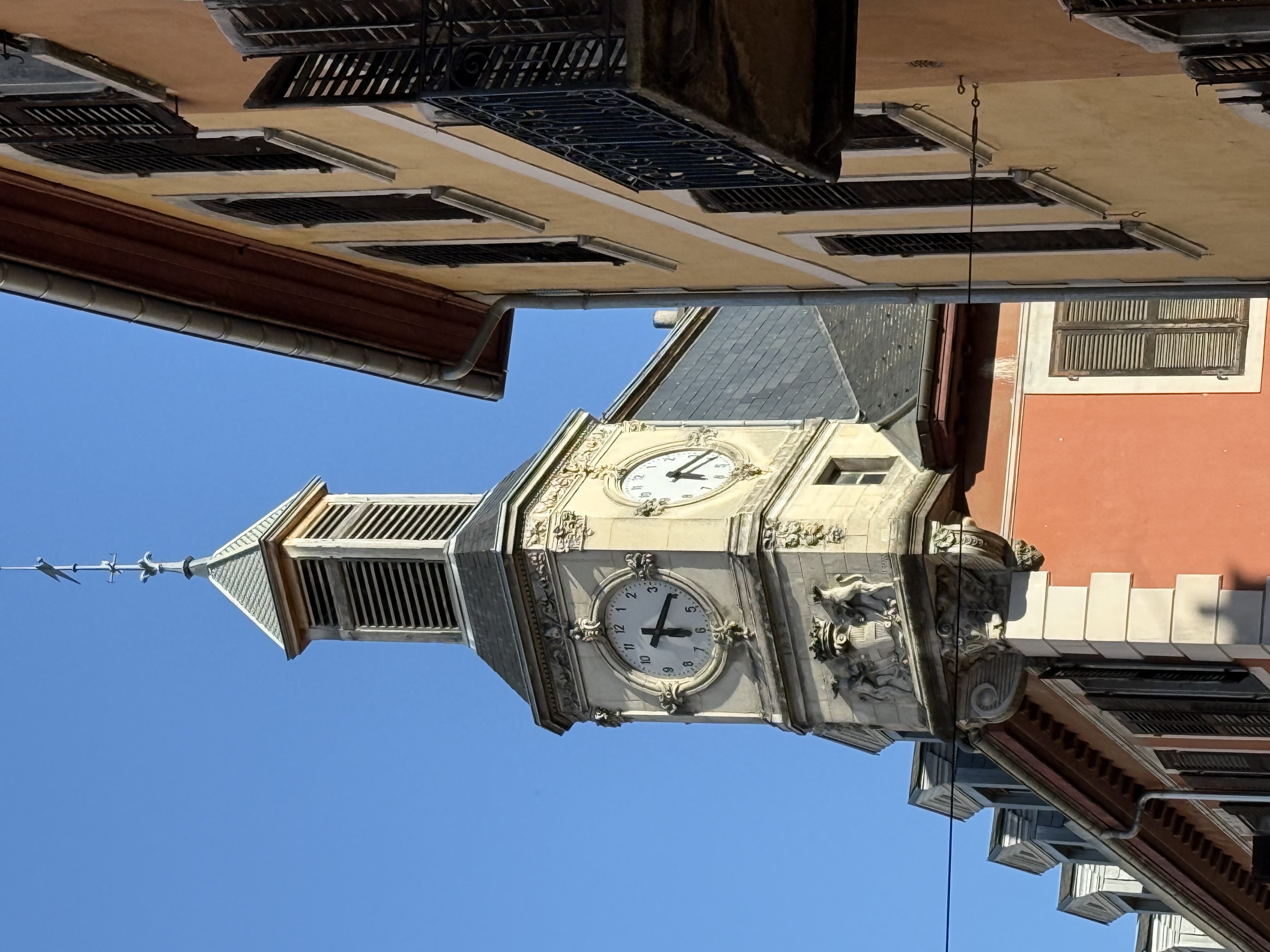
Then, we wanted to lose ourselves in the historic district, wandering between Rue Juiverie, lined with fine noble residences, and Rue Basse du Château, with its narrow, winding layout typical of the medieval era. Eventually, we reached Place Saint-Léger, the city’s long-standing heart. It was once the bed of the Albanne, a river that still flows beneath Chambéry today, but now it resembles a wide street rather than a square, bustling with shops and cafés.
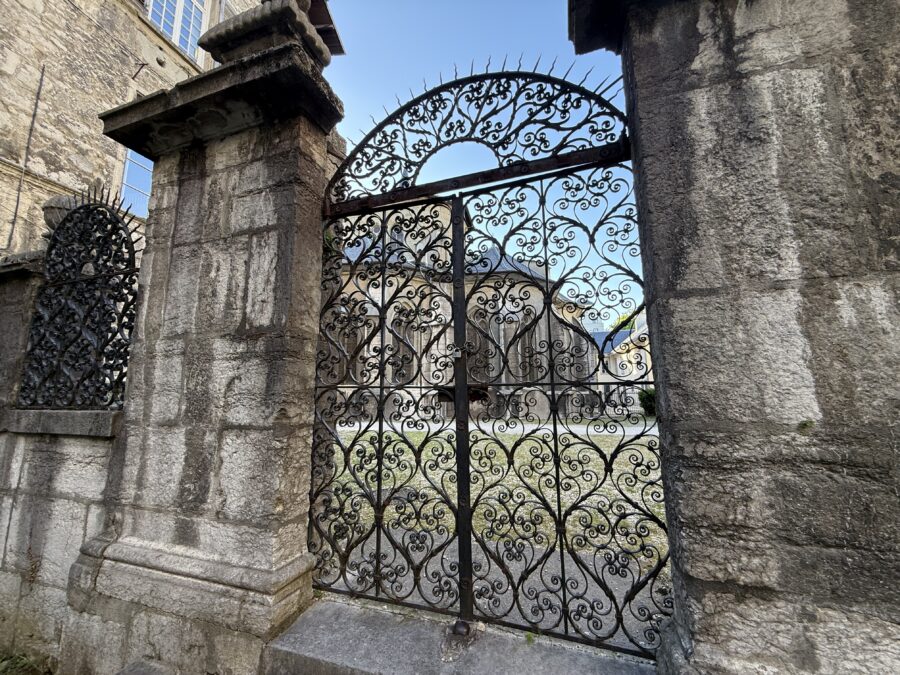
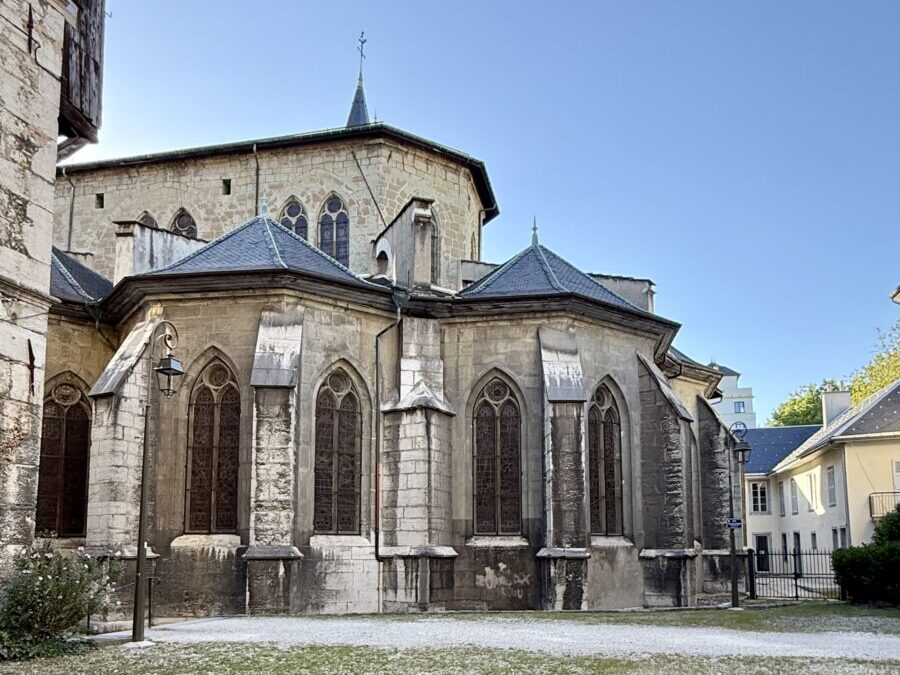
There are many interesting vistas to discover by venturing into the passageways between the various buildings or by peeking into the courtyards. The courtyard of Palais Castagnery de Châteauneuf is particularly noteworthy; here, an elaborate iron gate separates the private area from the Franciscan convent.
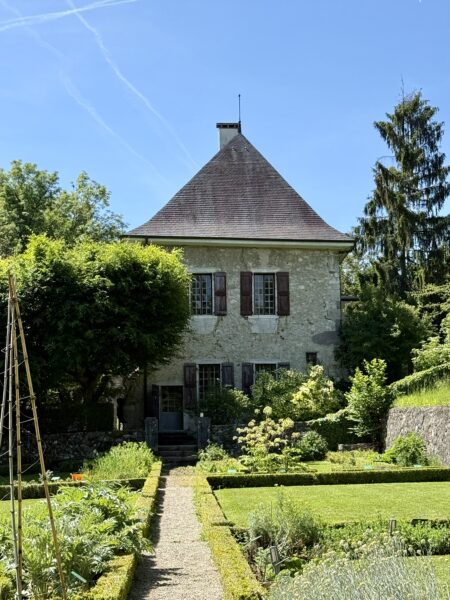
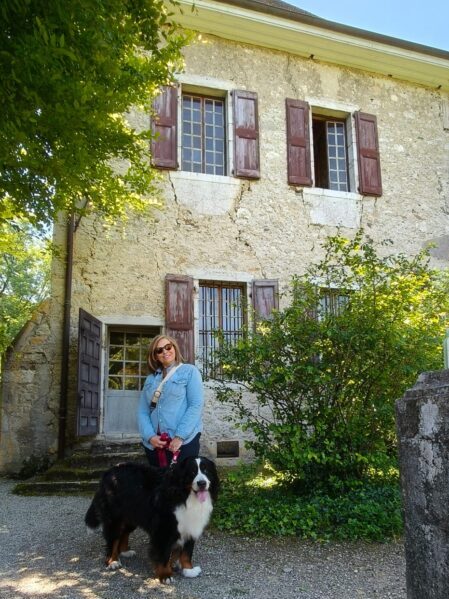
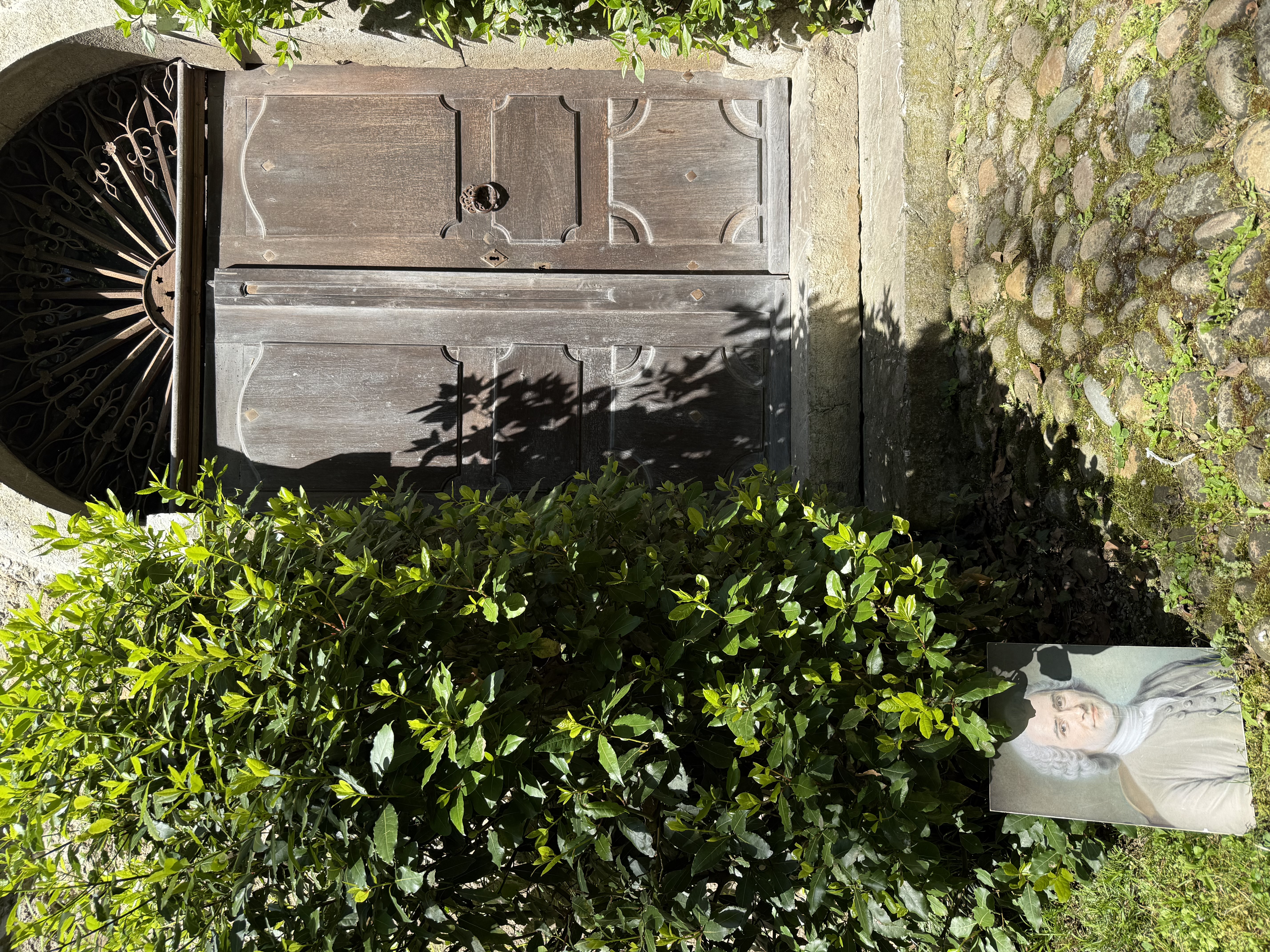
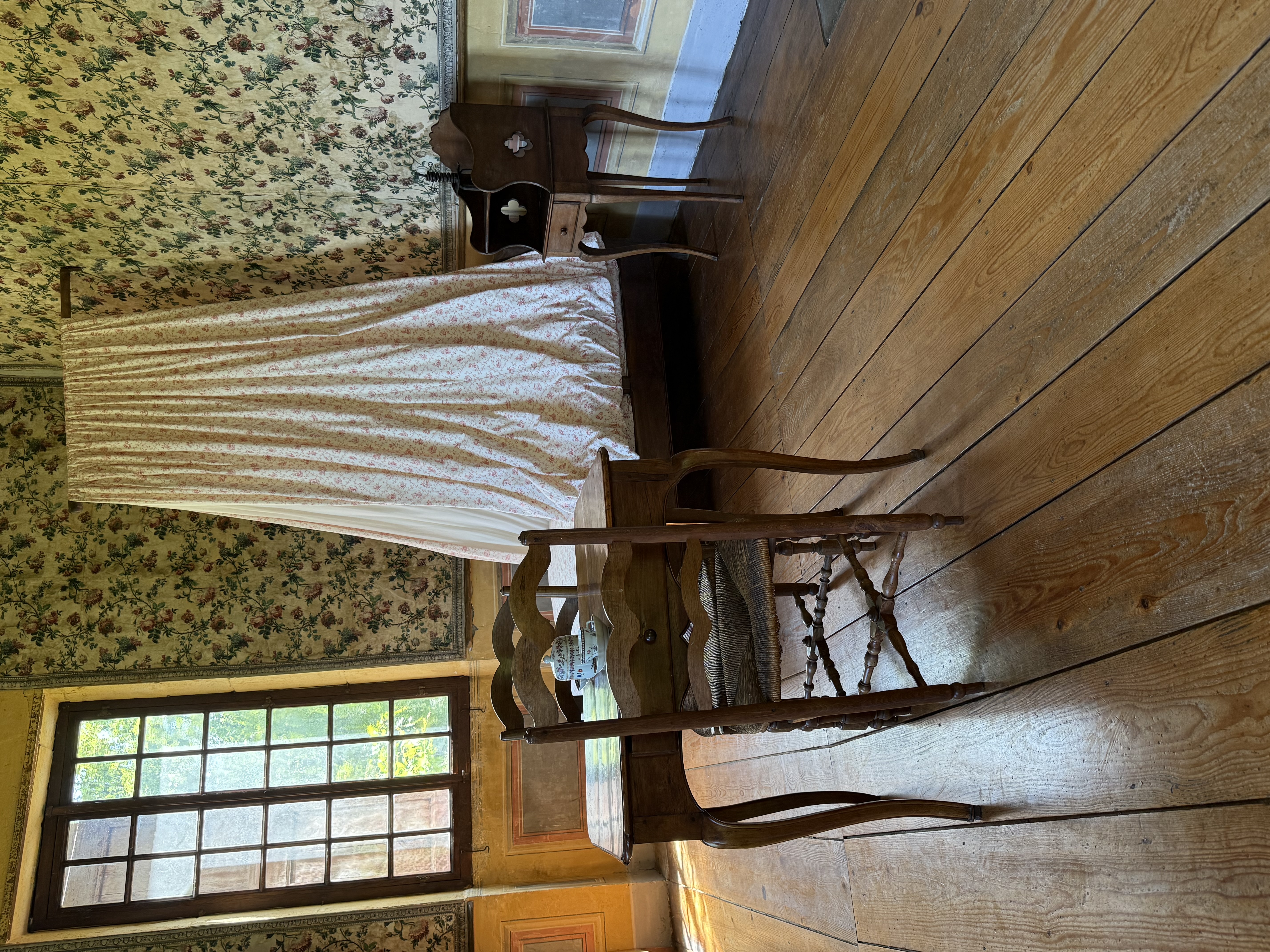
For those traveling with a dog, as we were, the ideal option is to continue the walk toward Les Charmettes, the enchanted valley where Jean-Jacques Rousseau’s home is located. The famous philosopher spent several summers there between 1736 and 1742 with his lover and benefactress, the Swiss baroness Madame Louise de Warens. Otto was able to join us in the magnificent garden, which is home to over 80 species of medicinal, ornamental, and garden plants. However, dogs are not allowed inside the rooms of the house itself; admission is free, and the interior preserves the furniture and furnishings from the time Rousseau lived there in perfect condition.
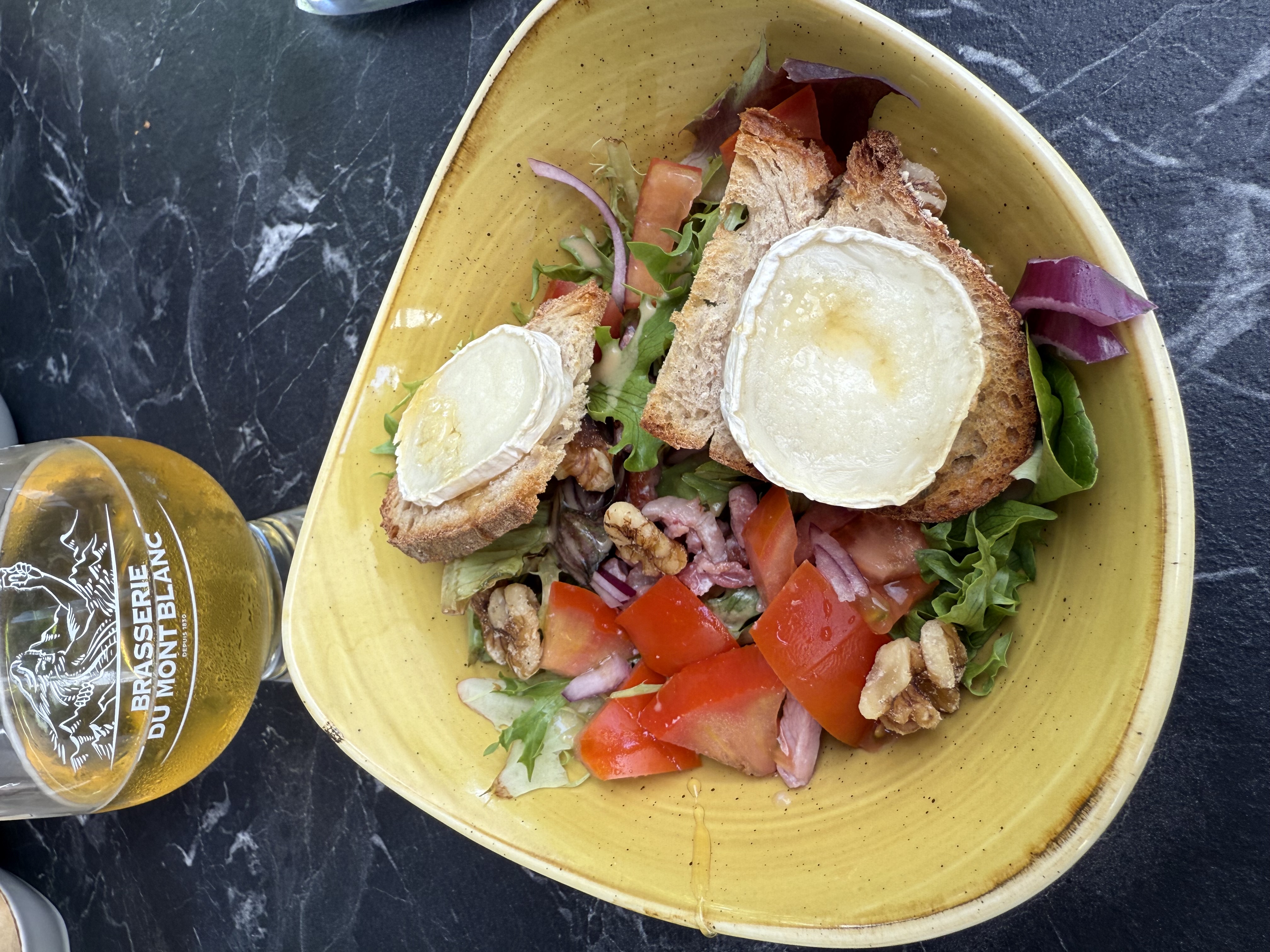
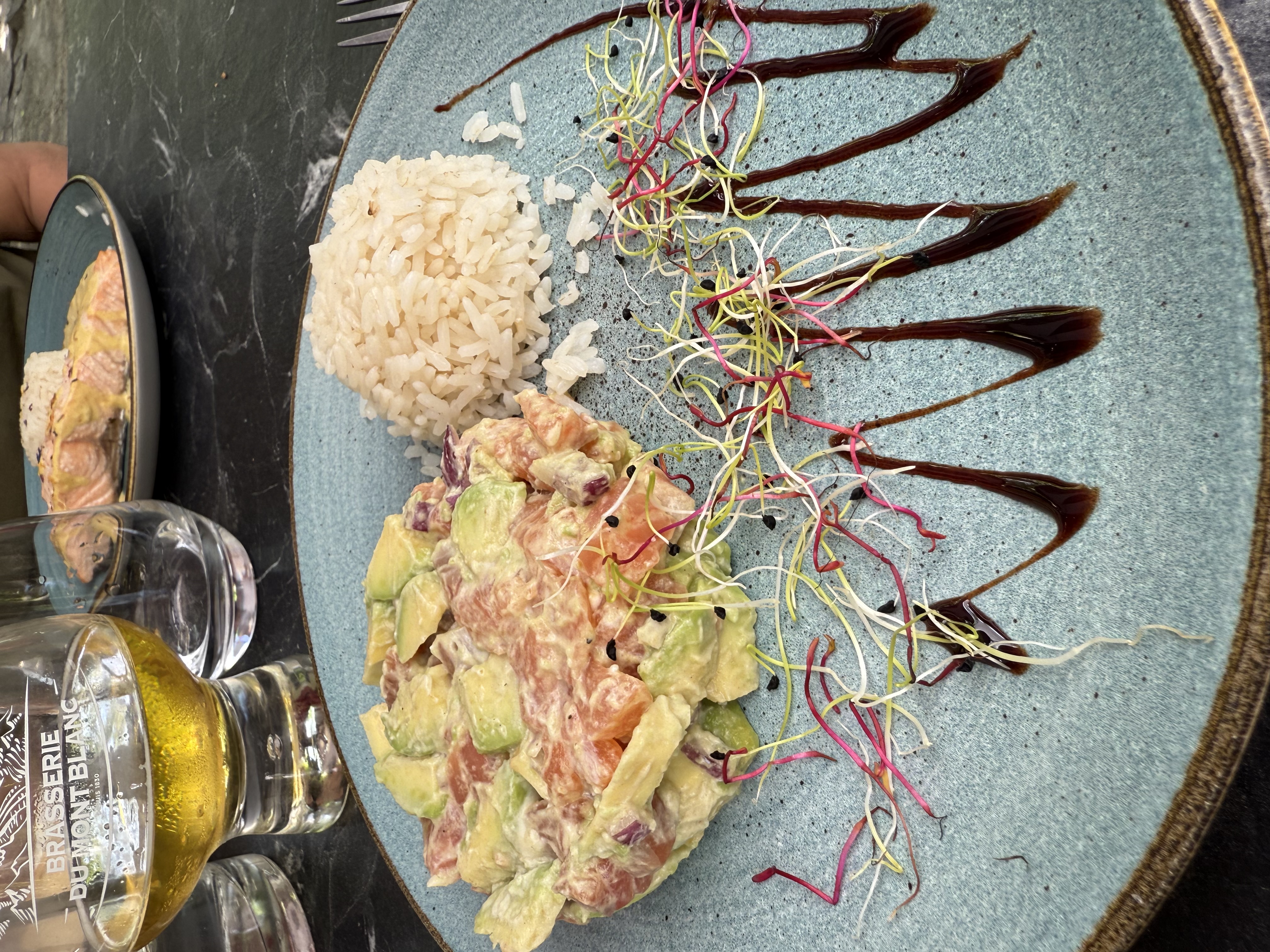
After the visit, we were able to enjoy the charm of the setting by sitting at a table under the pergola at Restaurant Ô Pervenches, where we savored a salad with cured ham, walnuts, and toasted bread topped with warm, soft goat cheese, as well as salmon tartare and fillet served with basmati rice.
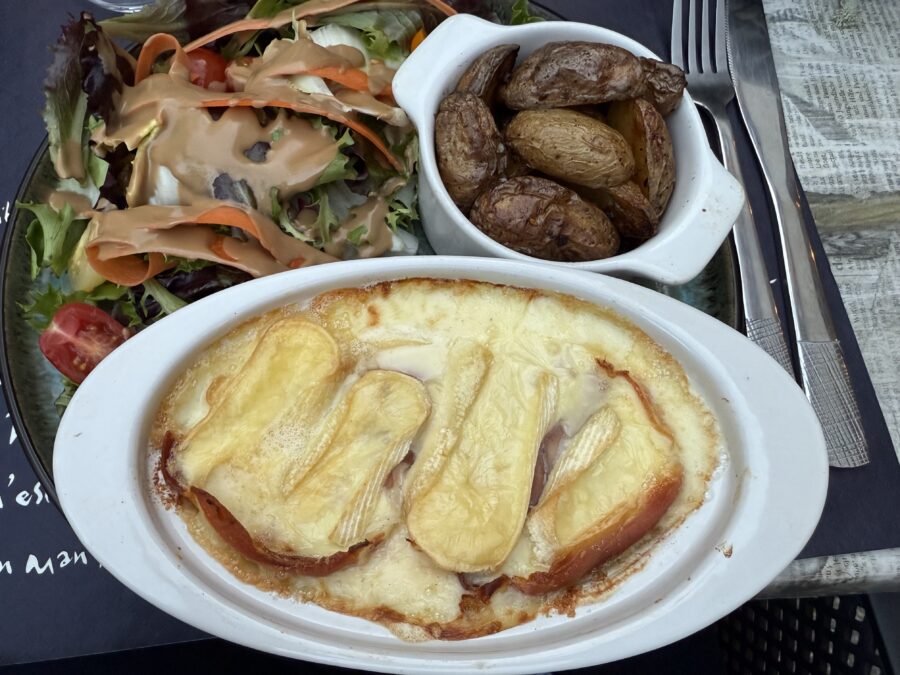
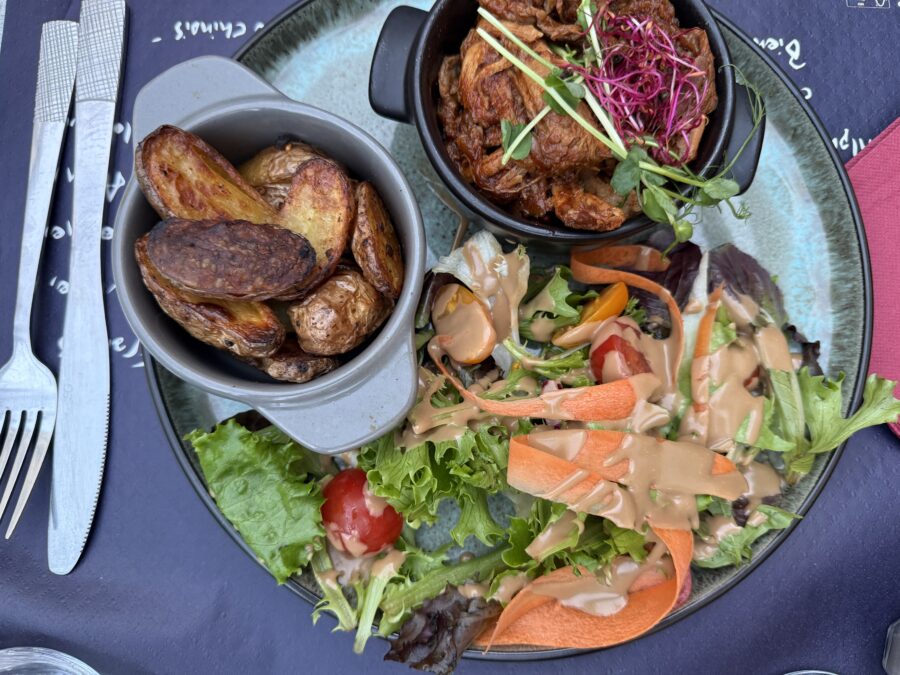
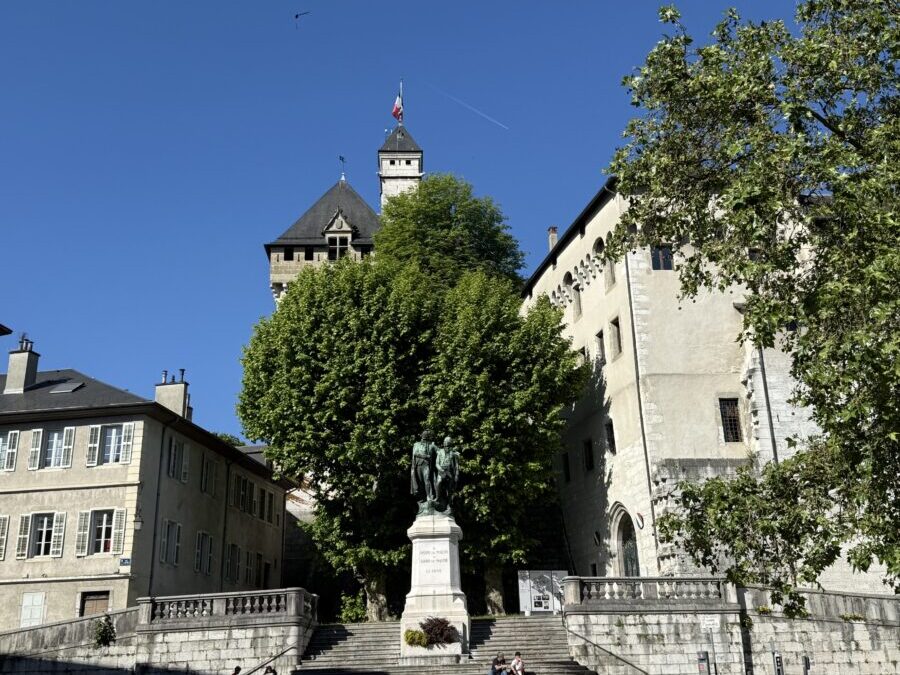
The previous evening, we dined at Le Cosmo, where we enjoyed classic local dishes such as Salade Savoiarde, Tartiflette, a traditional gratin of potatoes, lardons and onions topped with melted Reblochon cheese, and pork ribs with barbecue sauce. We experienced traditional Savoyard cuisine again at the restaurant Le Grand Joseph; there, at lunchtime, in the shade of a centuries-old plane tree and facing the Château des Ducs de Savoie, we met Marine, who welcomed us on behalf of the Chambéry Tourist Office.
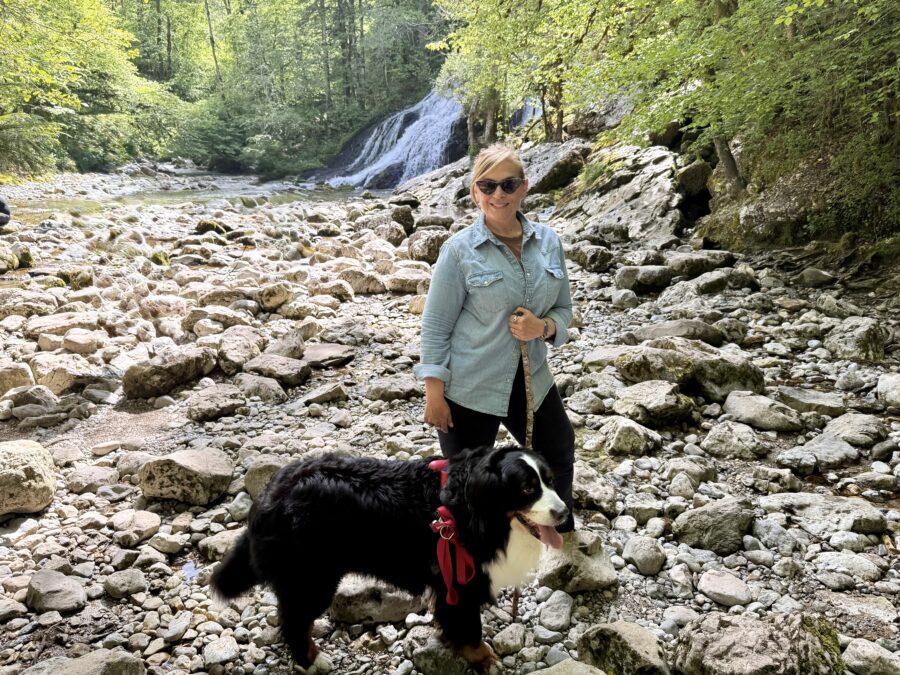
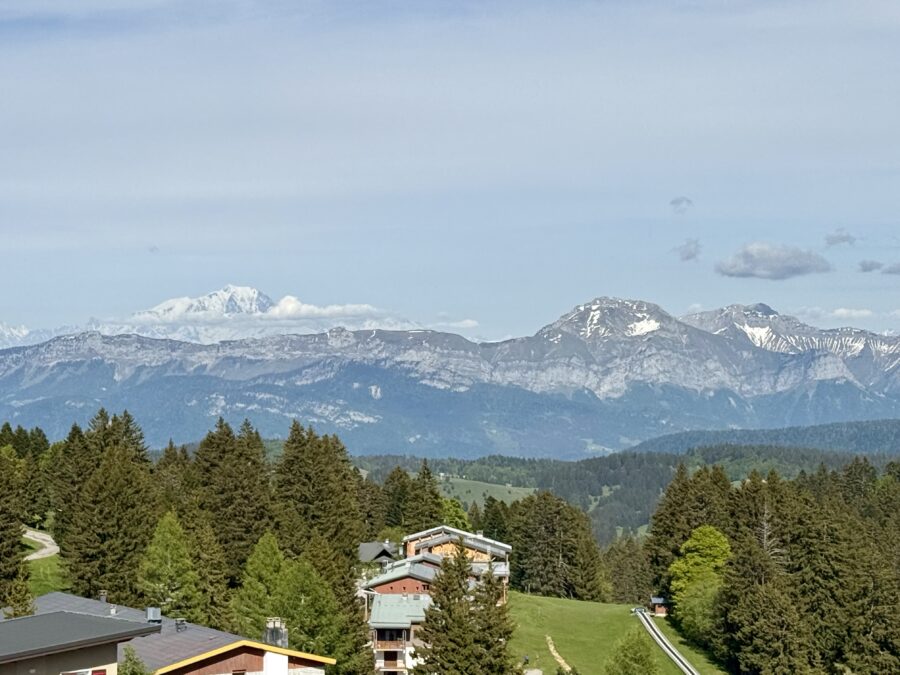
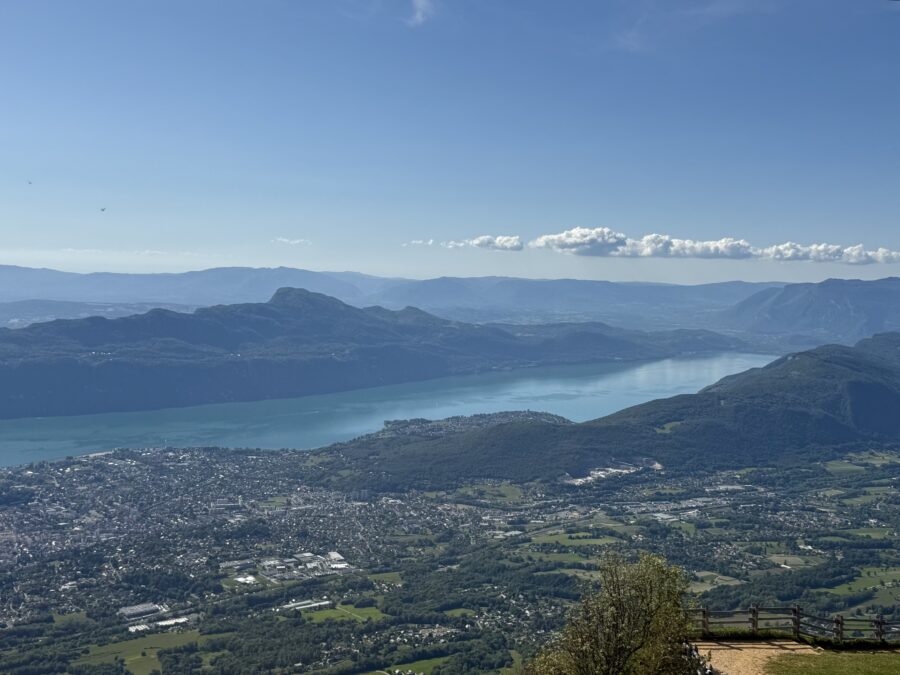
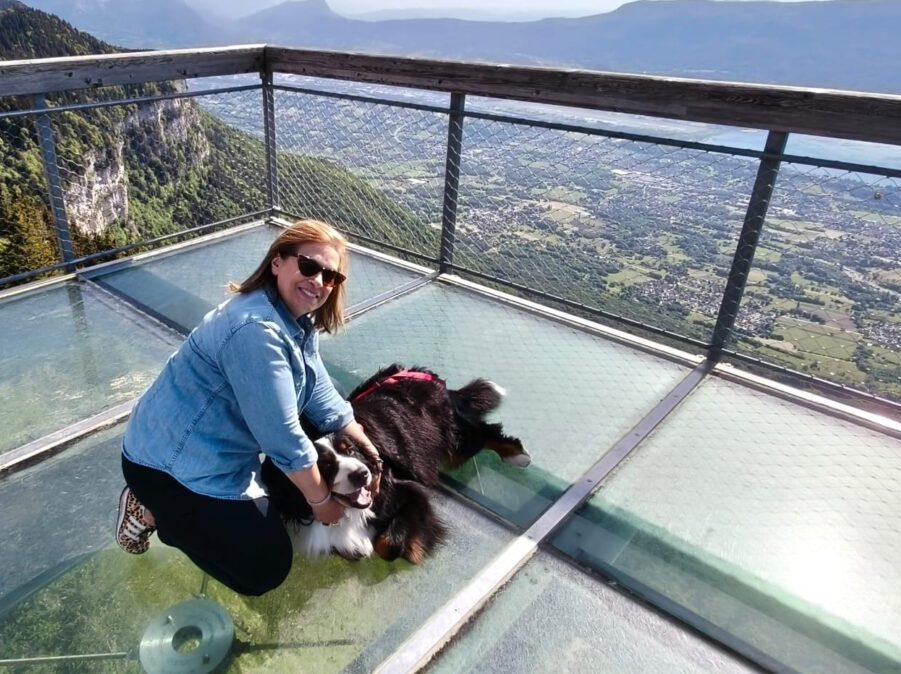
She was the one who suggested excursions in the area surrounding the city, a breathtaking natural landscape that is perfect for exploring with your four-legged friend. With Otto, we hiked to the Pissieu Waterfalls along an easy, shaded path at the edge of the woods that follows the stream, and visited the Revard viewpoint, which offers a spectacular 360-degree view of Lake Bourget, Savoy’s largest and deepest lake, and the Mont Blanc massif.
In collaboration with Explore France , Auvergne-Rhône-Alpes Tourisme e Chambéry Montagnes.

