






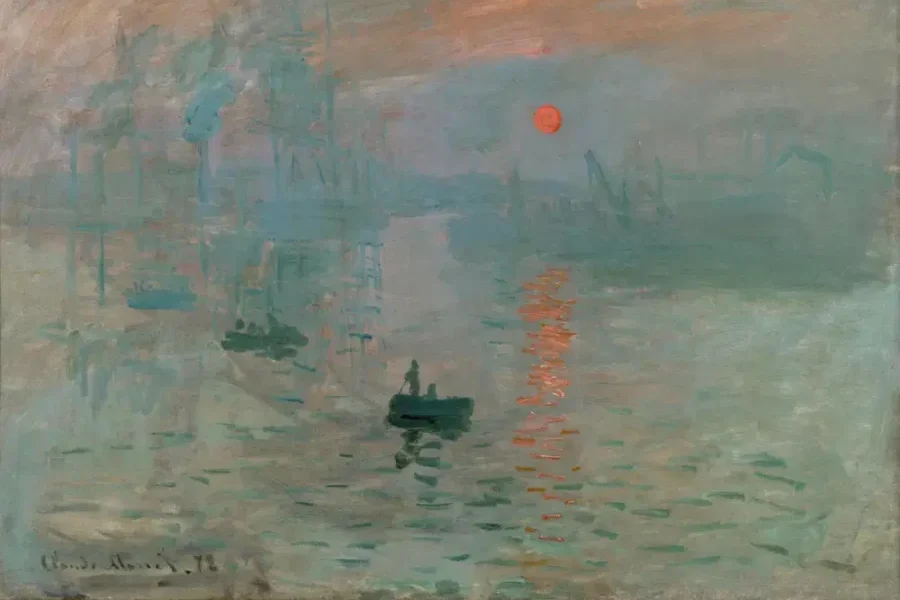
Le Havre inspired and gave rise to the Impressionist painting movement, born from a painting where Monet painted the first impressions at dawn during the “blue hour,” half an hour before sunrise when the light has a cool cast. The celebrated “Impression, soleil levant”, now in the Musée Marmottan in Paris, depicts the port and its industrial activity and was painted in November 1872 from the window of the Hotel L’Amirauté, overlooking the Grand Quai.
The city redesigned by Auguste Perret

But it is a different painting, or rather its reproduction, that can be seen today on the Le Havre waterfront, located as part of the open-air exhibition “Le Havre/Sainte-Adresse: the light of the estuary”. The art panels have been positioned precisely where the painters set up their easels. It is one of the paintings that Eugène Boudin, born in Honfleur, raised in Le Havre, and considered Monet’s teacher, dedicated to the city’s sky and sea on a stormy day.
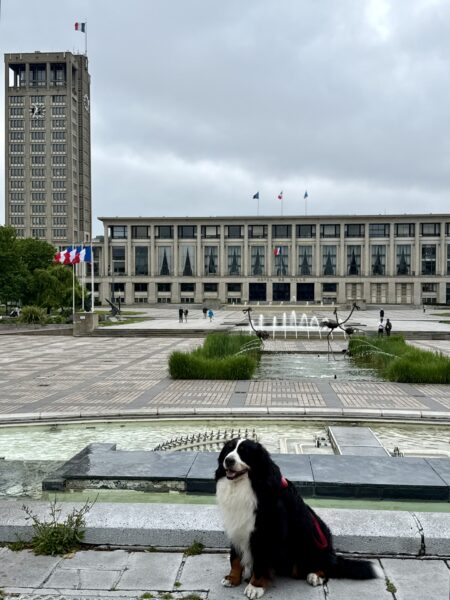
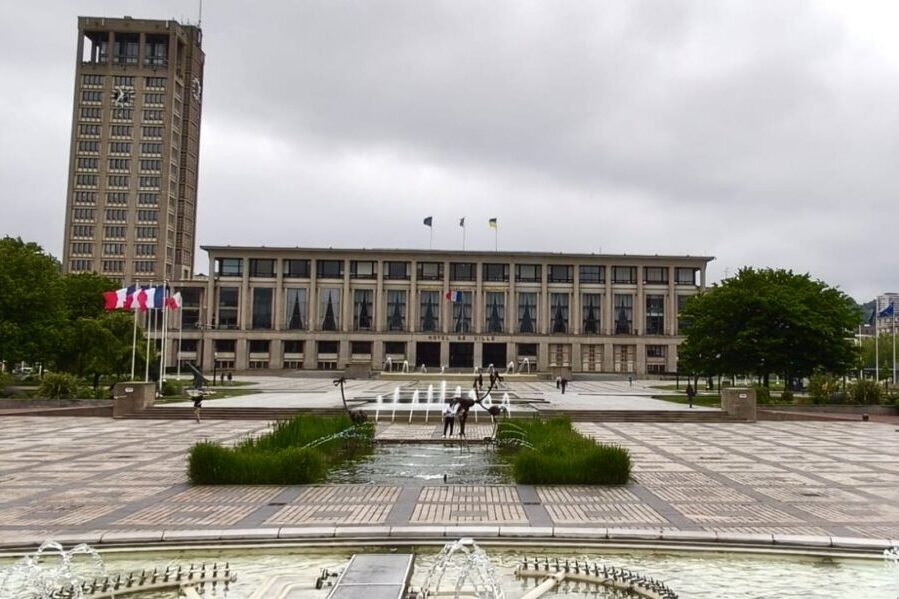
But nothing of that Le Havre remains, as the city was completely razed to the ground between September 5 and 6, 1944, when British Allied forces carpet-bombed it to finally crush the Nazis who had occupied the area. Nor does it have the Norman atmosphere typical of other towns, whose historic centers are adorned with typical buildings such as half-timbered houses.
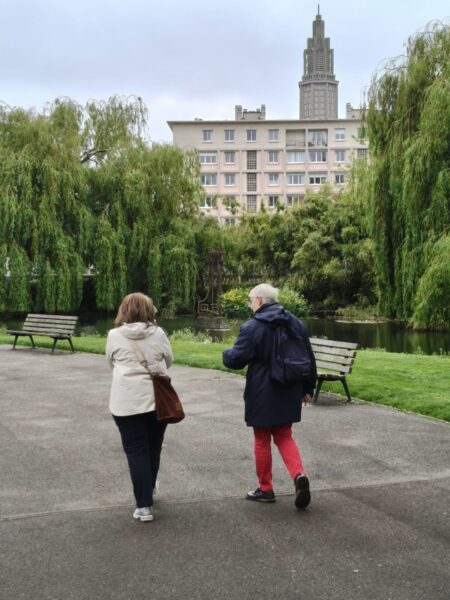

Our passionate guide, Lise Legendre from the Tourist Office, while showing us the modern buildings that represent the skyline of the new Le Havre, the one rebuilt after the war, spoke to us about the symbolic figure of this rebirth. This is Auguste Perret, the great architect who rebuilt a city 82% destroyed using reinforced concrete, an inexpensive but sturdy material that was readily available in a region struggling to rise from its ashes as quickly as possible.
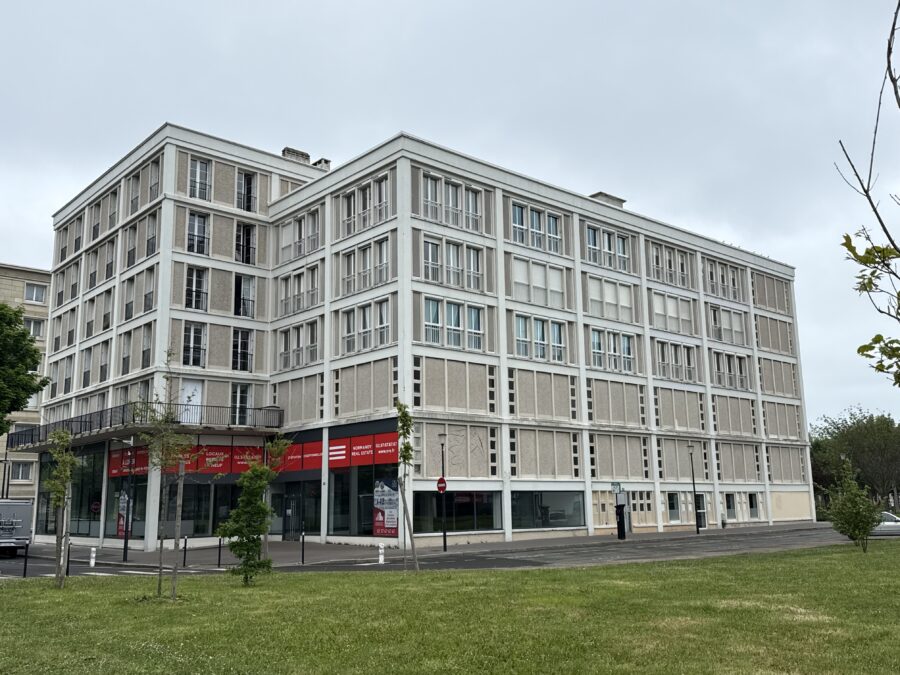
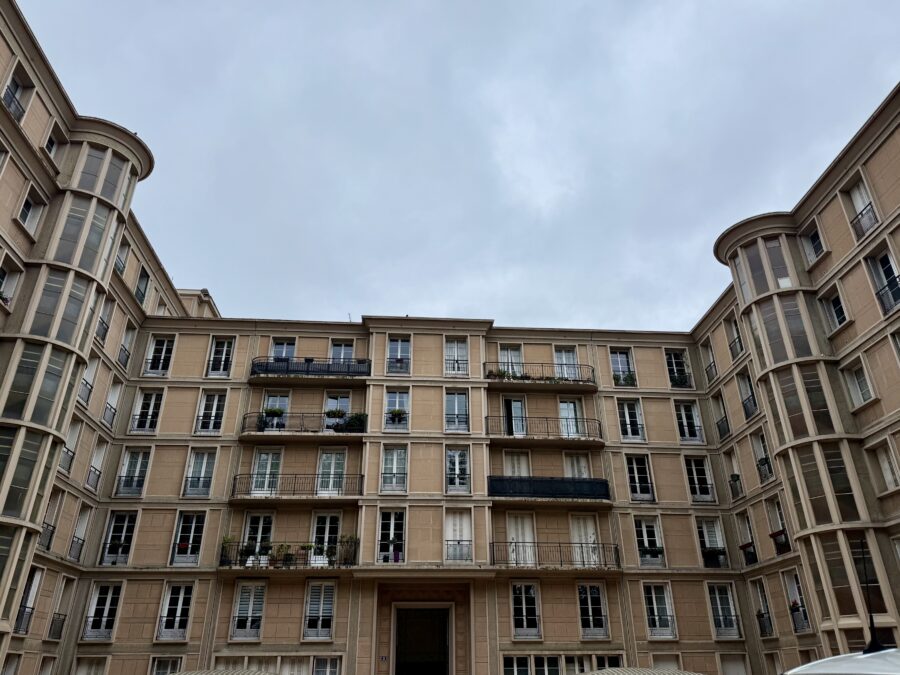
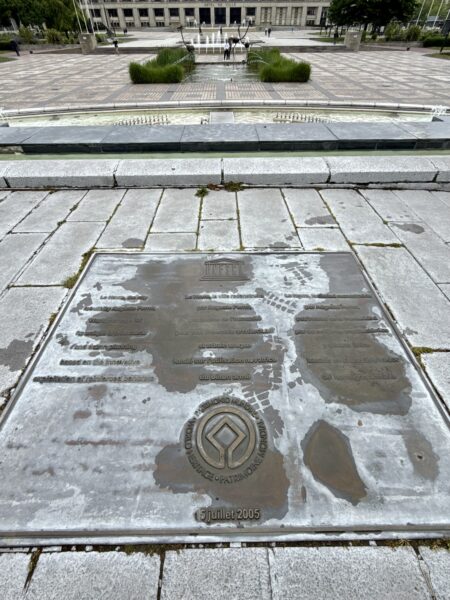
The result was a completely new city, characterized by wide avenues and where each building is constructed with precise measurements reminiscent of the classical world: the distance on the facades is 6.24 meters between each column, which is connected horizontally by a beam. This fixed and orderly layout, with a construction system that gave Le Havre a highly rational feel, Soviet-style according to its detractors. Despite the fact that it was disliked by the 30,000 residents called upon to repopulate the city because they did not recognize this style as their own, it was declared a UNESCO World Heritage Site in 2005 as an “exceptional example of postwar architecture and urban planning”.
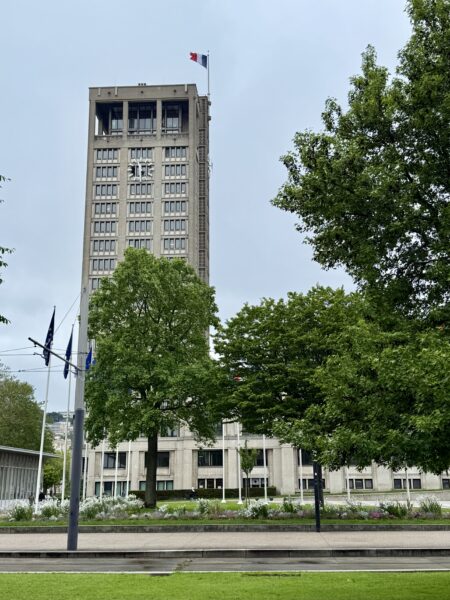
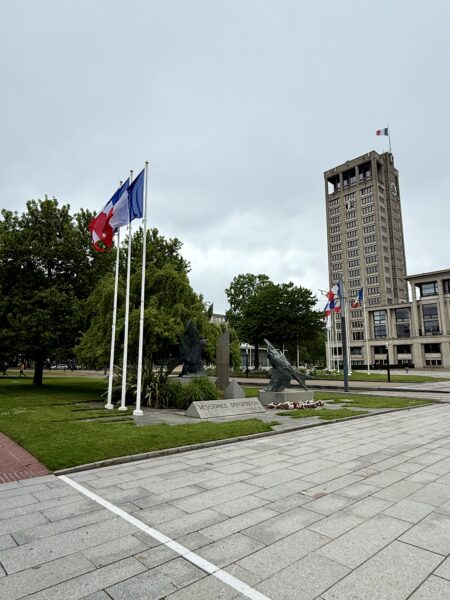
Walking down Rue de Paris under a leaden sky, which is certainly not uncommon in this part of the Seine-Maritime overlooking the English Channel, we reached the imposing Hôtel de Ville from the waterfront. Meanwhile, our guide continued to tell us the history of Le Havre and its reconstruction, which lasted almost 20 years, from 1945 to 1964.
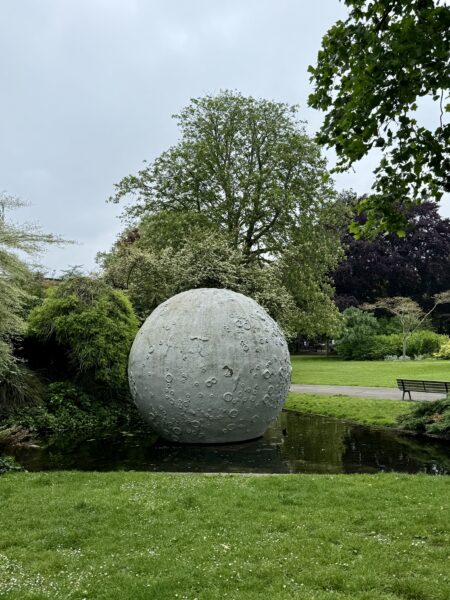
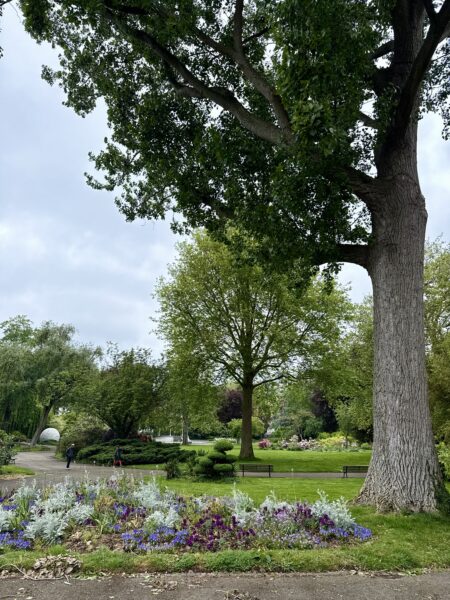
Charming Place Saint-Roch, the green lung in the center of the city, stands in stark contrast to the modern buildings, offering remarkable views of flowerbeds, ponds, and works of art.
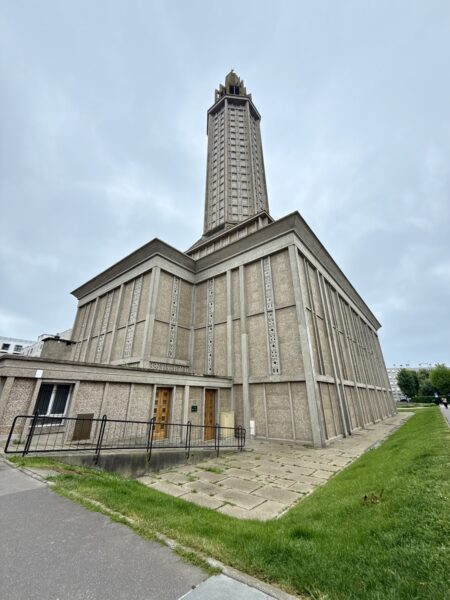
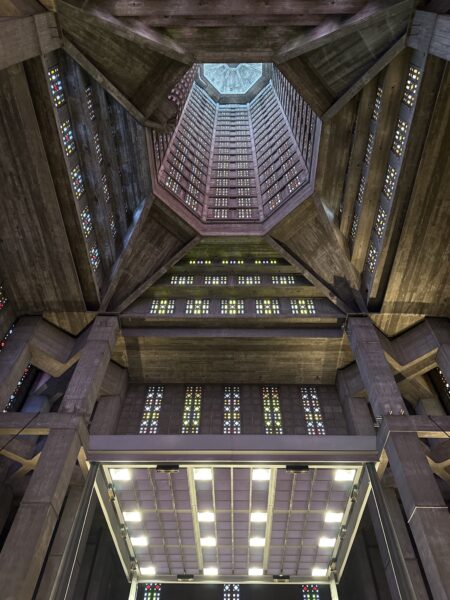

Returning to Perret, he is also the creator of what is considered the city’s spiritual and secular beacon, with its 107-meter-high tower visible from every angle. It is the Church of Saint-Joseph, also made of reinforced concrete like all the other buildings. From the outside, the building appears austere, rough, and rugged, but inside, the atmosphere changes completely. Light floods through the 12,768 hand-blown colored tiles that make up its stained-glass windows. These splendid mosaics of light were created by master glassmaker Marguerite Huré, who, using seven primary colors, created 50 different shades that, as one’s gaze rises, become increasingly luminous and clear, fading into white, a symbol of the divine.

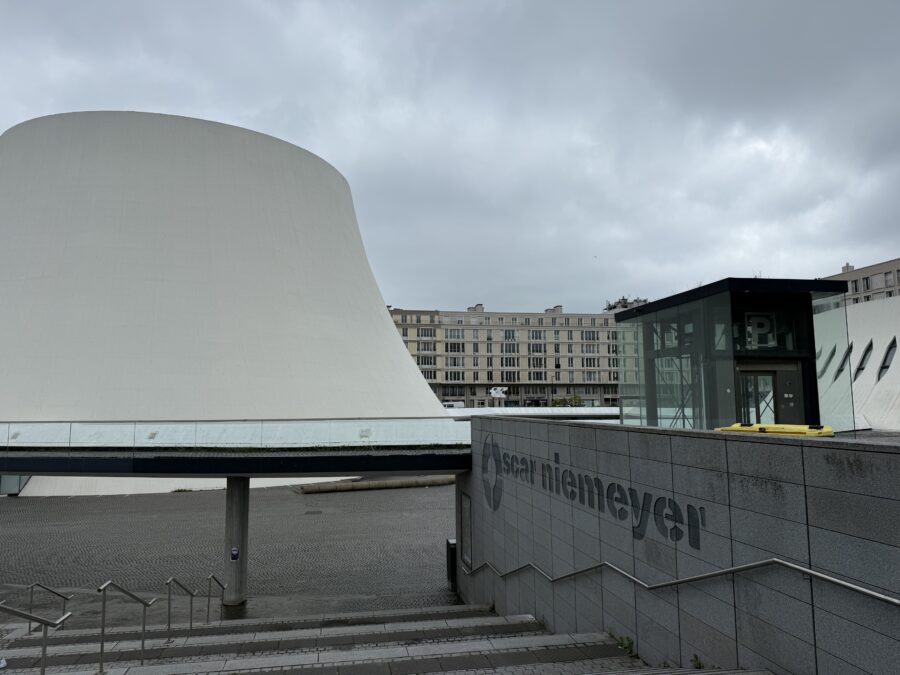
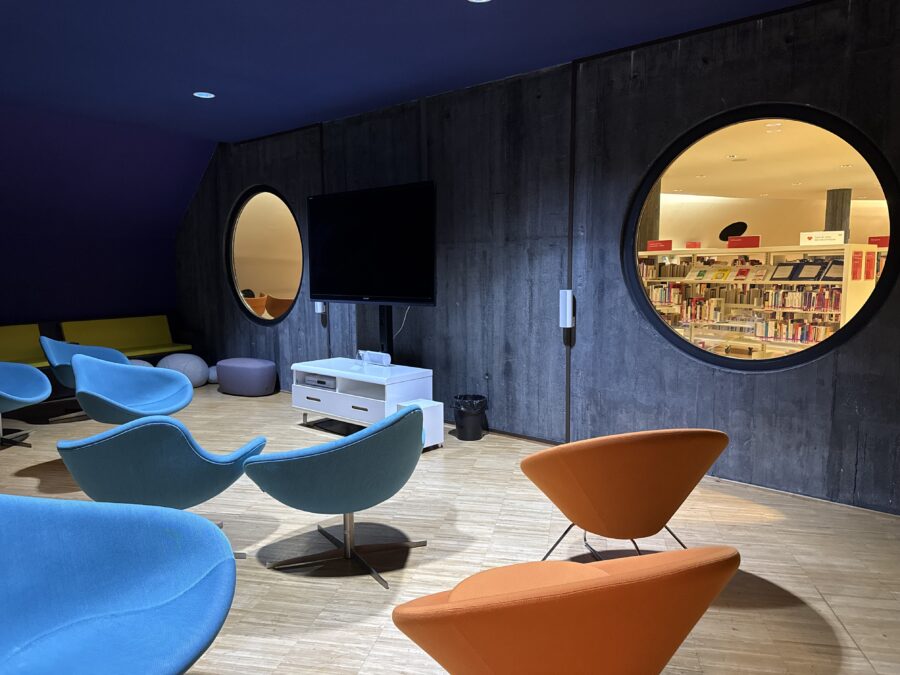
Contrasting with Perret’s rigorous architecture are the two white volcano-shaped creations, hence the name Volcan, by Brazilian architect Oscar Niemeyer. The larger one houses a theater, while the smaller one houses a modern and colorful library where it’s pleasant to stop and read, browse a magazine, or simply browse. The complex is also known as the Niemeyer Doves because, when seen from above, they resemble this bird-like symbol of peace.
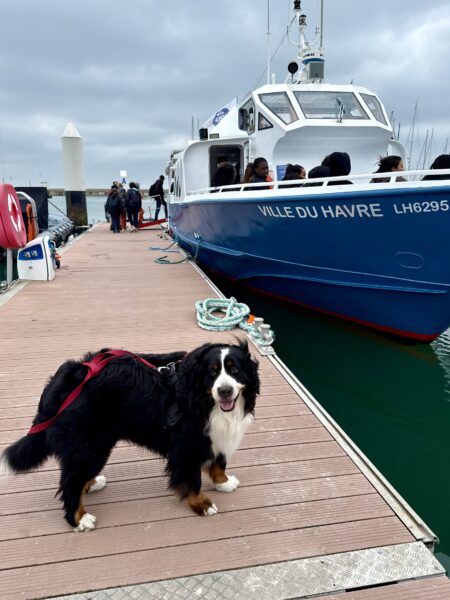
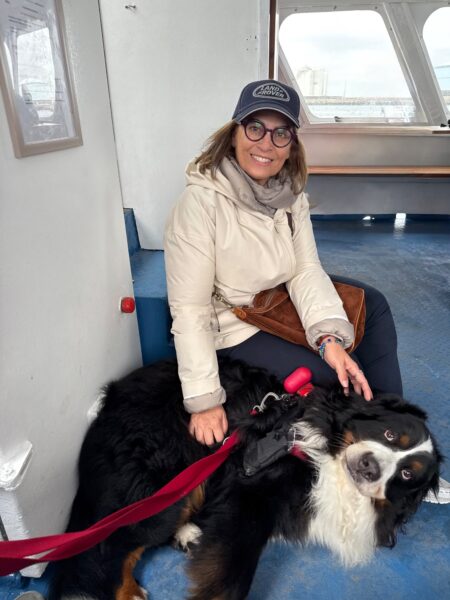
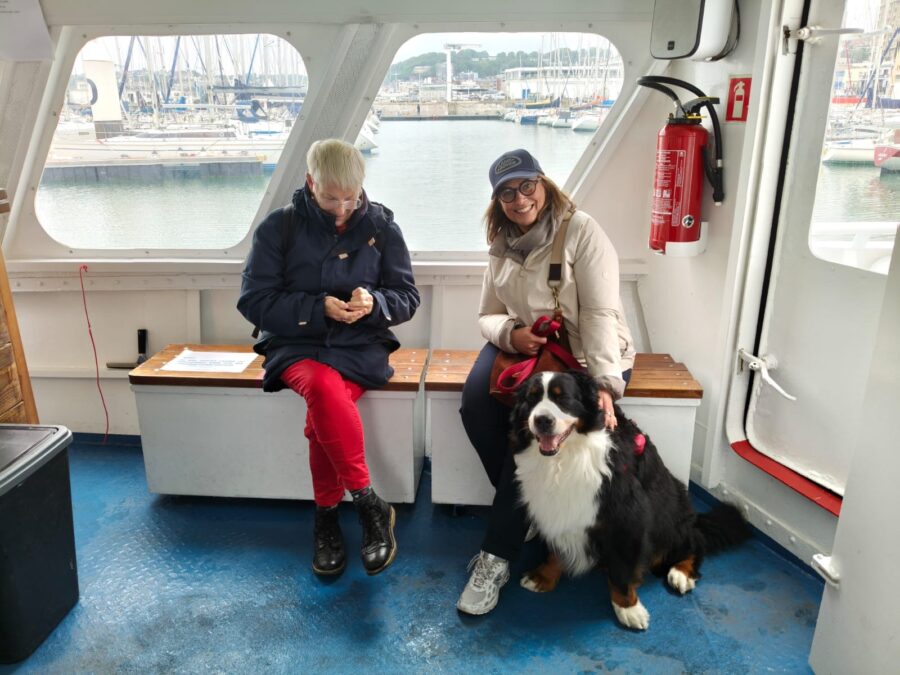
But above all, Le Havre is France’s second-largest port city after Marseille and the largest in container traffic. It should be seen from the sea, and a boat tour is a must to explore its port, founded by King Francis I in 1517 and which has maintained its strategic importance over time.
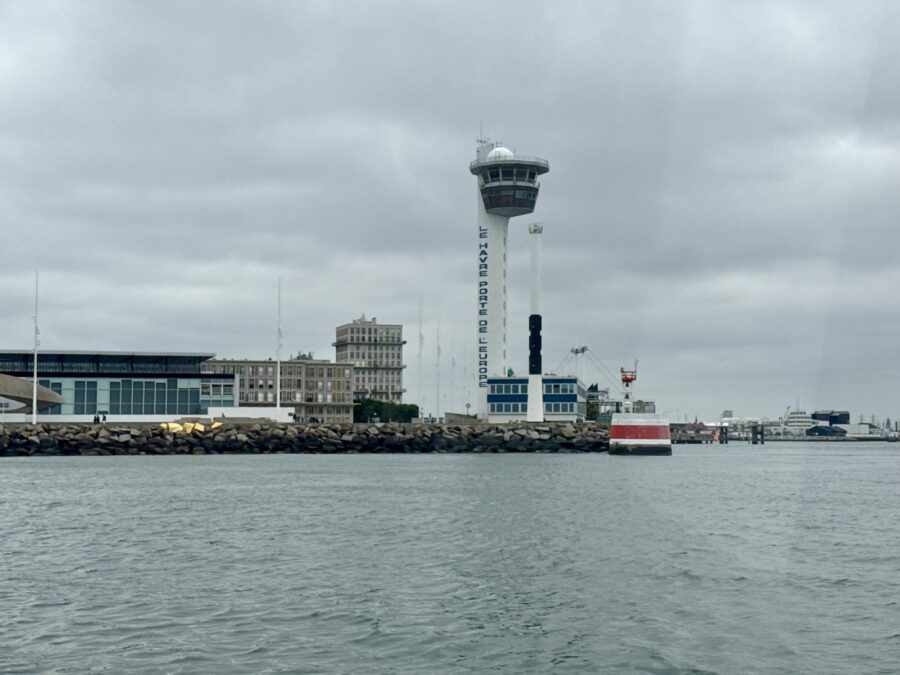


Here, in addition to the infrastructure, container terminals, and impressively sized commercial and cruise ships, the works of art housed on the docks are worth admiring. The brightly colored La Catène, a sculpture of 21 containers created by French artist Vincent Ganivet for the city’s 500th anniversary and dubbed the “Eiffel Tower” of Le Havre, is immediately noticeable.
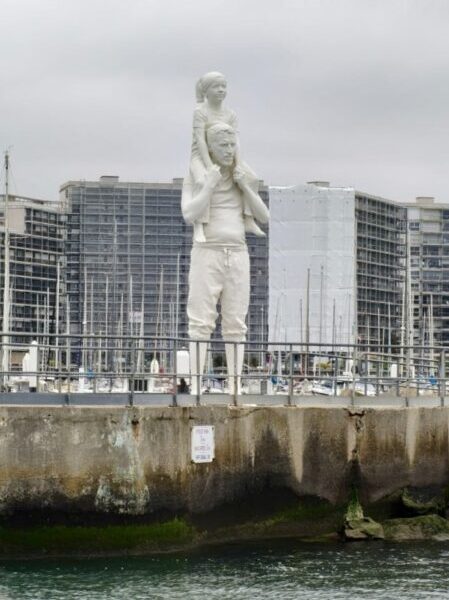
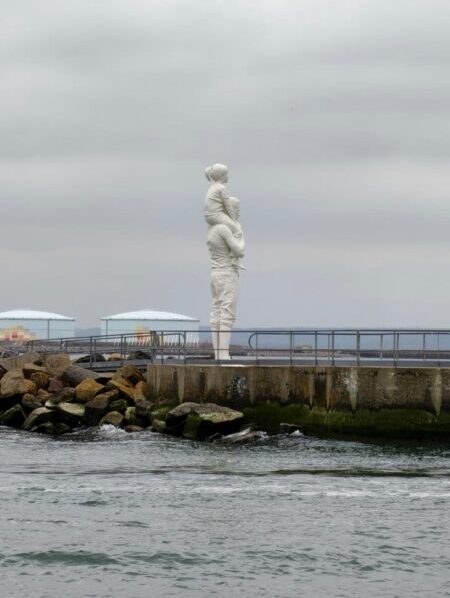

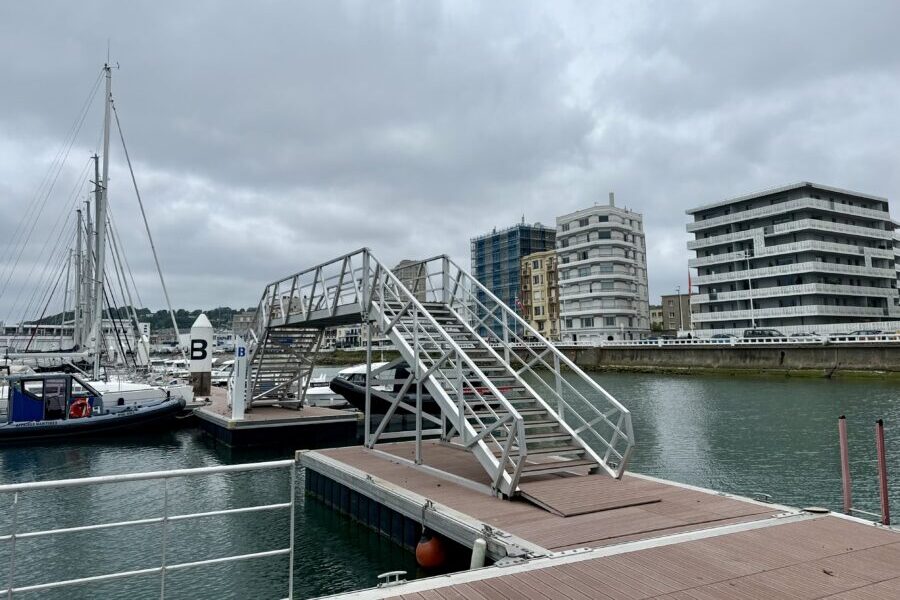
At the end of the breakwaters protecting the marina, where the boat tour departs, is the sculpture “Until the End of the World”, an imposing 6.24-meter statue created by Fabien Mérelle depicting a father and daughter gazing toward the horizon.
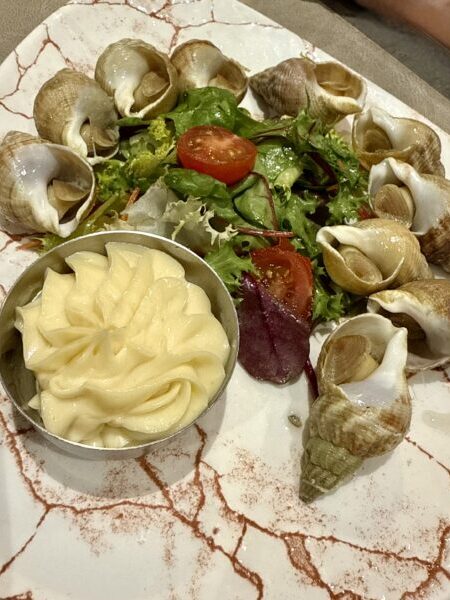

Where to sample traditional Norman cuisine in Le Havre? At Le Bouchon Normande, where we enjoyed Bulots, large seared conch shells served with homemade mayonnaise; Escargot, a classic French dish; and Tripe à la Mode de Caen, a dish of offal, vegetables, and herbs suitable for those with a strong palate.
In collaboration with Explore France, Normandie Tourisme and Le Havre Tourist Office

