







Rouen was our base for exploring the other Normandy, the one far from the D-Day beaches we first visited three years ago with Otto. We chose this city as a starting point for easy access to some of Normandy’s landmarks, from Jumièges Abbey, called by Victor Hugo “the most beautiful ruin in France”, to the villages on the English Channel that served as the backdrop for Marcel Proust’s Recherche.
Rouen an open-air museum
But Rouen is above all the city linked to the two trials of Joan of Arc. Known as the Maid of Orleans for the famous battle won by the French army she led against the English during the Hundred Years’ War, the young woman was captured and imprisoned in the tower of Rouen Castle, where she was tried and sentenced to death at the stake on charges of witchcraft.
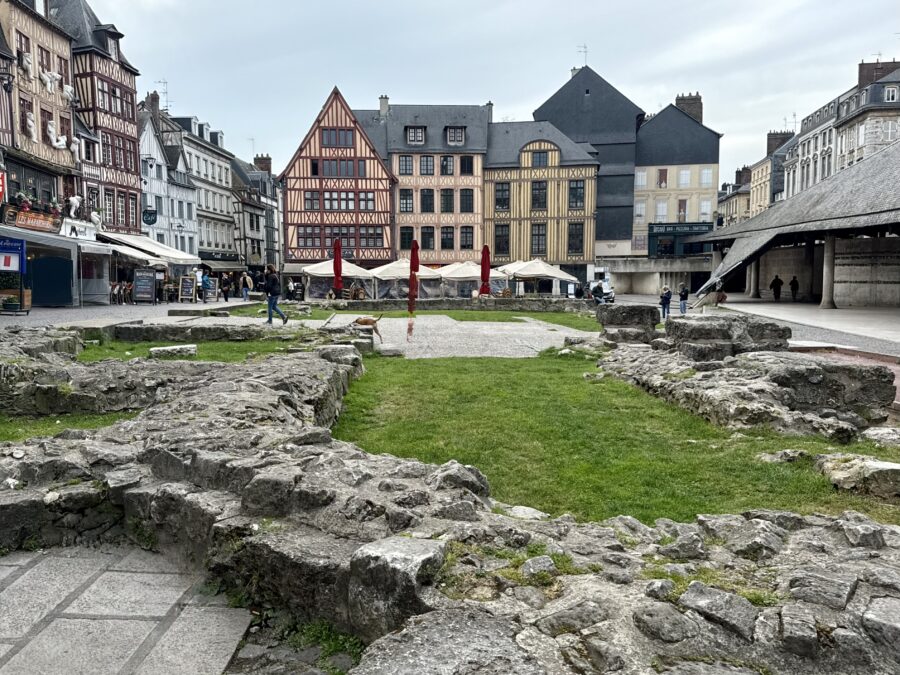
This occurred on May 30, 1431, in the Place du Vieux Marché, where today a large cross stands on the exact spot where she was burned alive. The church dedicated to her, the Église Saint-Jeanne d’Arc, was erected here. It is a modern building, but it retains the original stained glass windows of the nearby Gothic church of Saint Vincent, which was almost completely destroyed by bombing during the Second World War.
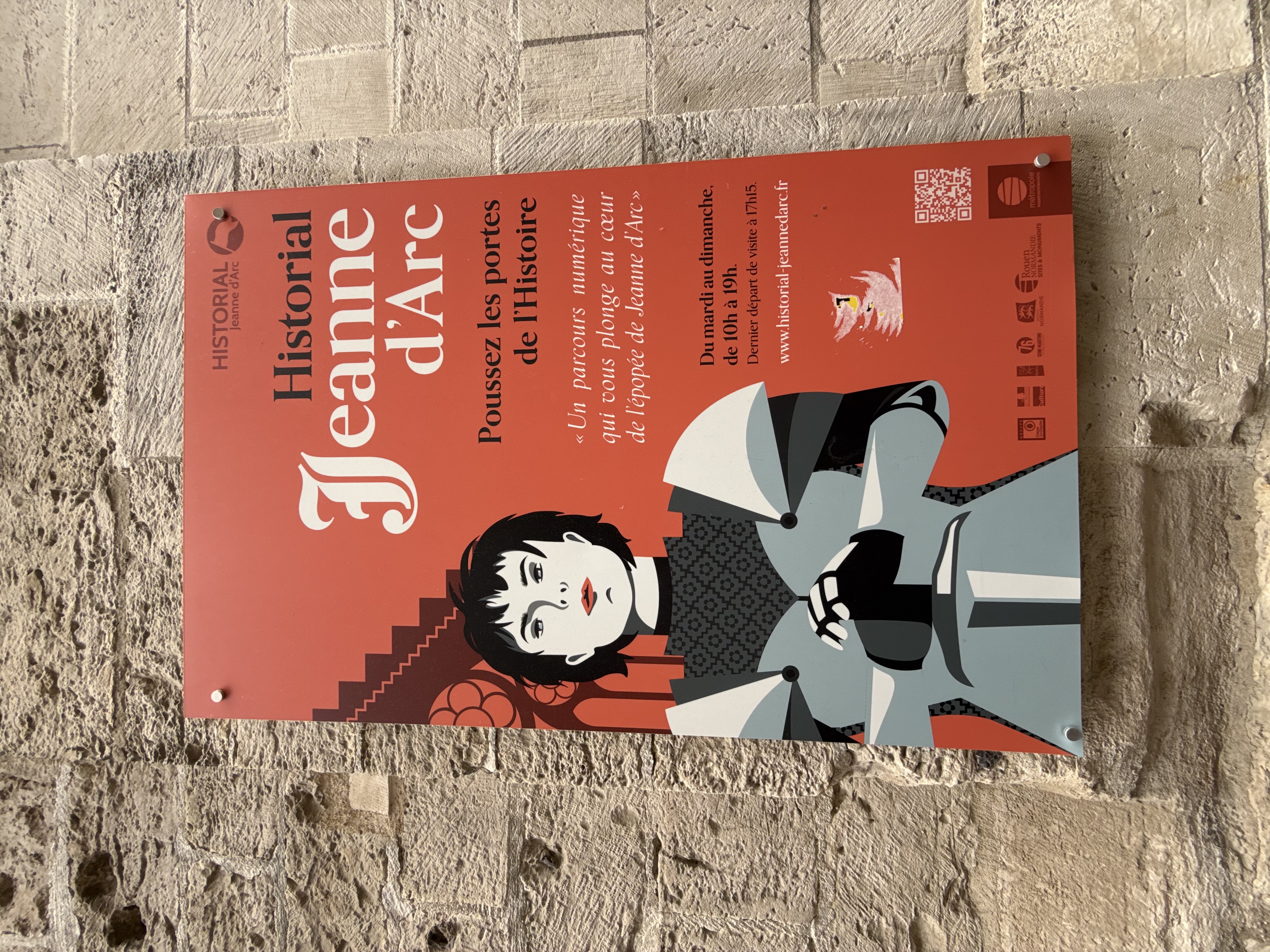
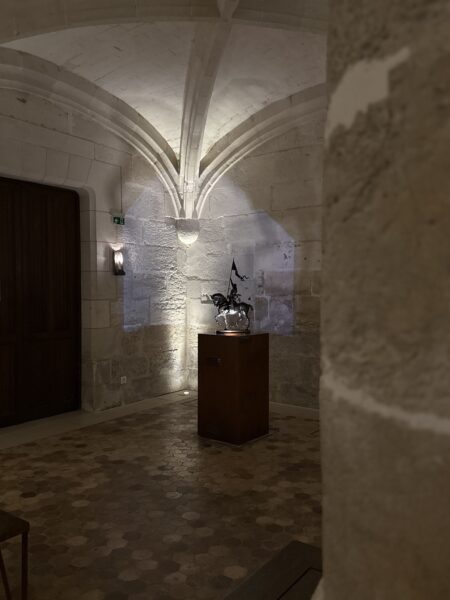
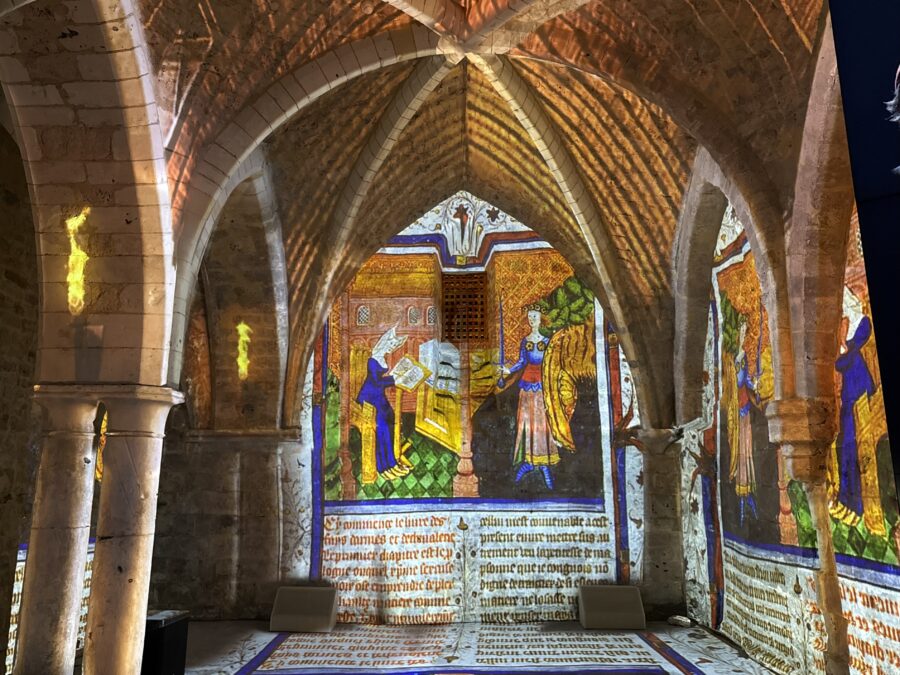
And a second trial was held in Rouen, twenty-five years after her death, at the request of her mother and King Charles VII, and with the consent of Pope Callixtus III, which rehabilitated Joan of Arc, annulling the previous sentence and declaring her innocent. It was from here that our journey of discovery of the city began, in collaboration with Explore France. While Michele waited for me outside with Otto (dogs are not admitted), they allowed me to fully immerse myself in the heroine’s posthumous rehabilitation process through a 3D multimedia exhibit at the Historial Jeanne d’Arc, a large exhibition space created in the Archbishop’s Palace.
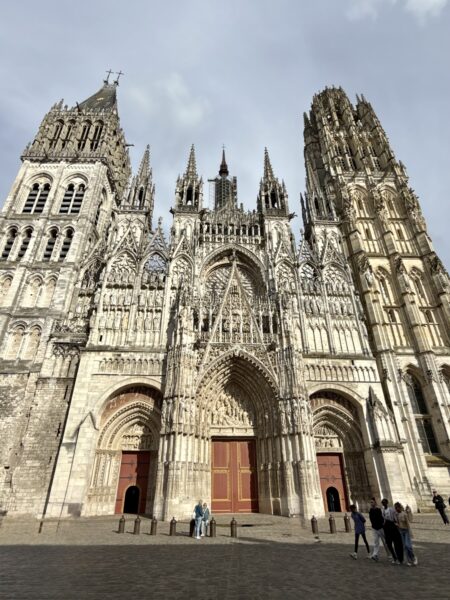
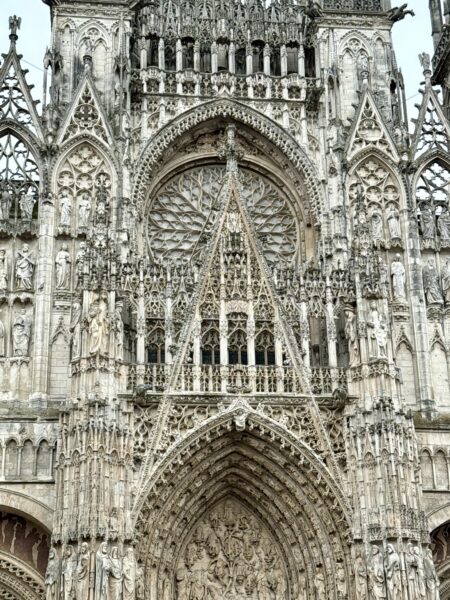
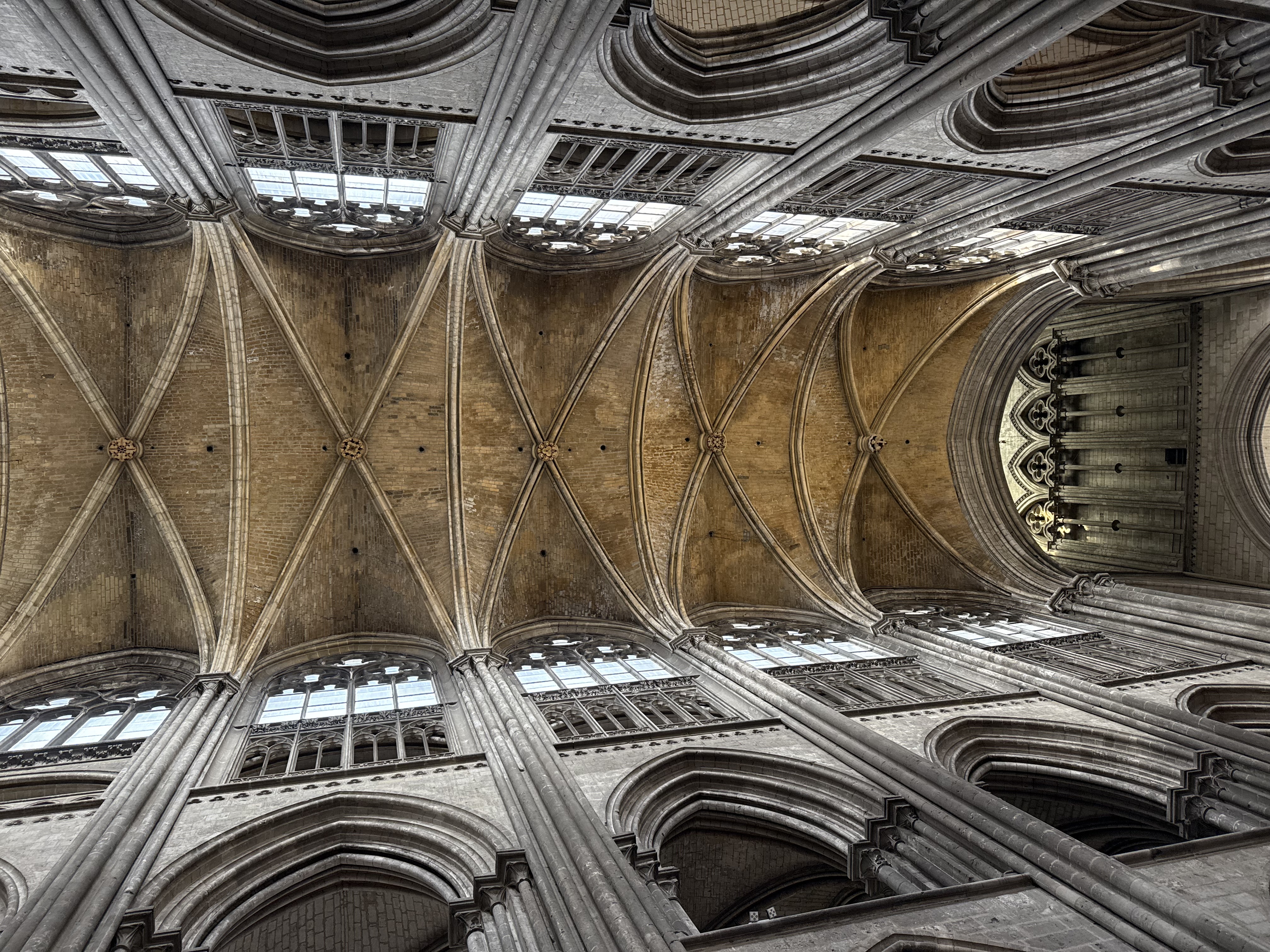
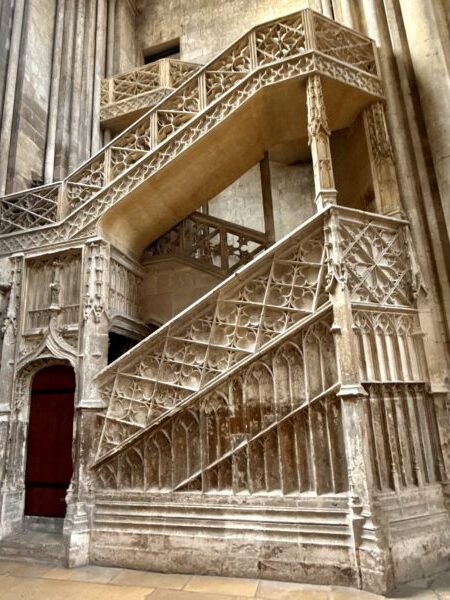
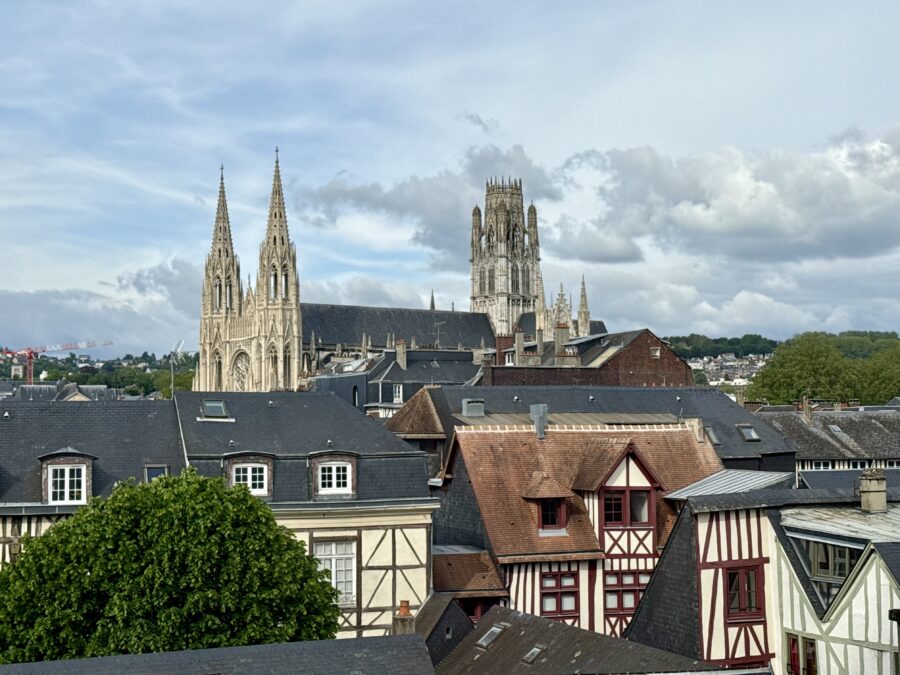
The second stop on our discovery of Rouen was Notre Dame Cathedral, which Claude Monet reproduced between 1892 and 1894 in over thirty-one versions. The subject was the same and seen from the same vantage point, an empty apartment at 31 Place de la Cathédrale. What was ever-changing was the light, which gave the paintings ever-changing nuances. The painter fell in love with it, in part because the cathedral is one of the most beautiful in all of France, with its richly decorated façade featuring 70 figures and its 19th-century cast-iron central spire rising 151 meters. The interior is spectacular and serves as a treasure chest for the tombs of the Dukes of Normandy and the tomb where the heart of Richard the Lionheart is kept.
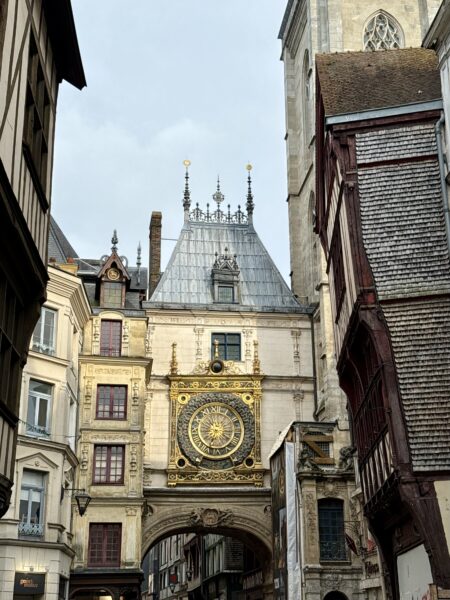
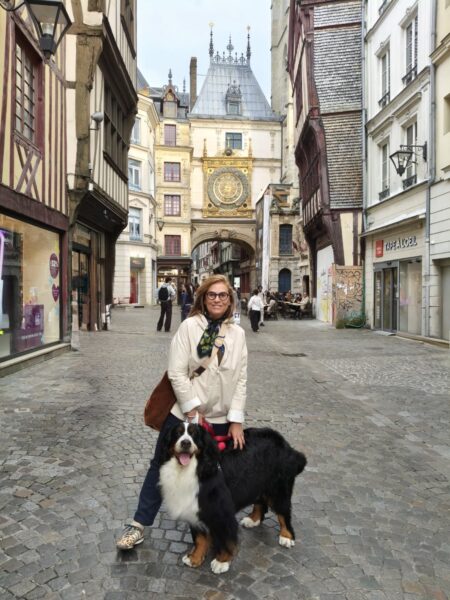
Besides the cathedral, the symbol of Rouen is the “Gros-Horloge”: built in 1389, it is one of the oldest functioning astronomical clocks in Europe. The clock has a single large hand, the hour hand, starting from the 24-rayed sun at its center. It is mounted on a Renaissance arch, its two faces set against a deep blue background studded with golden stars. The moon phases are also indicated, marked by a rotating sphere at the top, while a smaller dial below shows the day of the week.
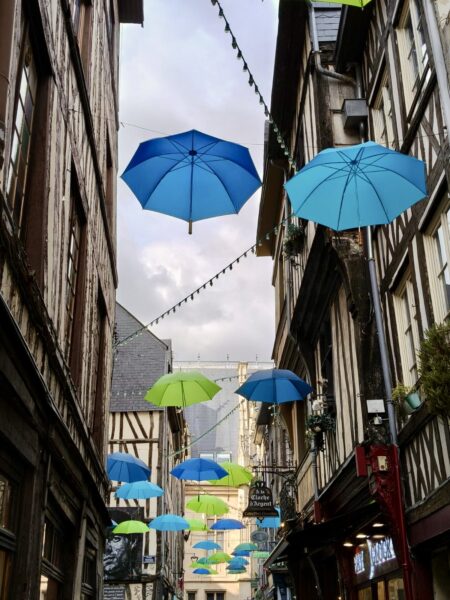
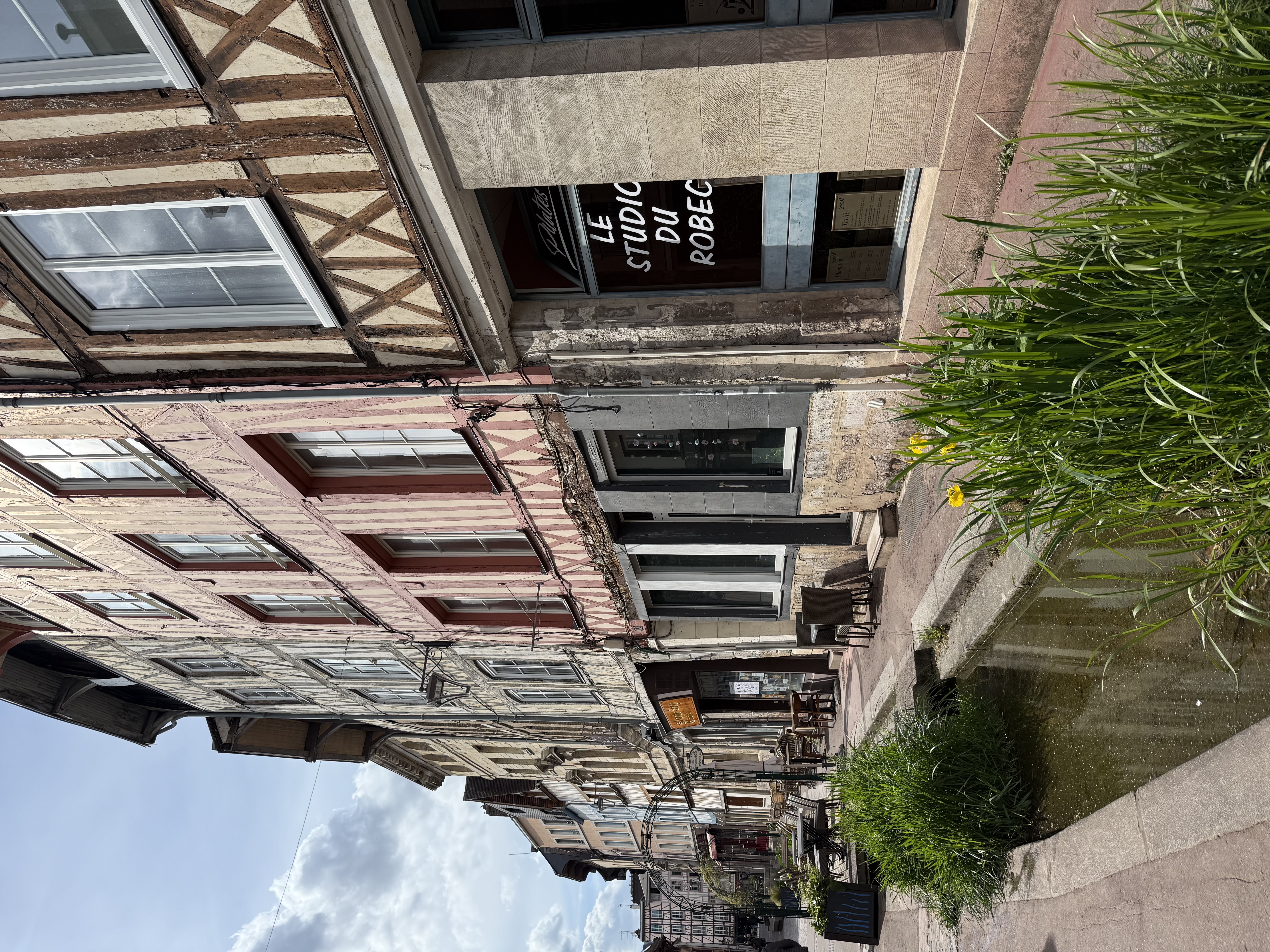
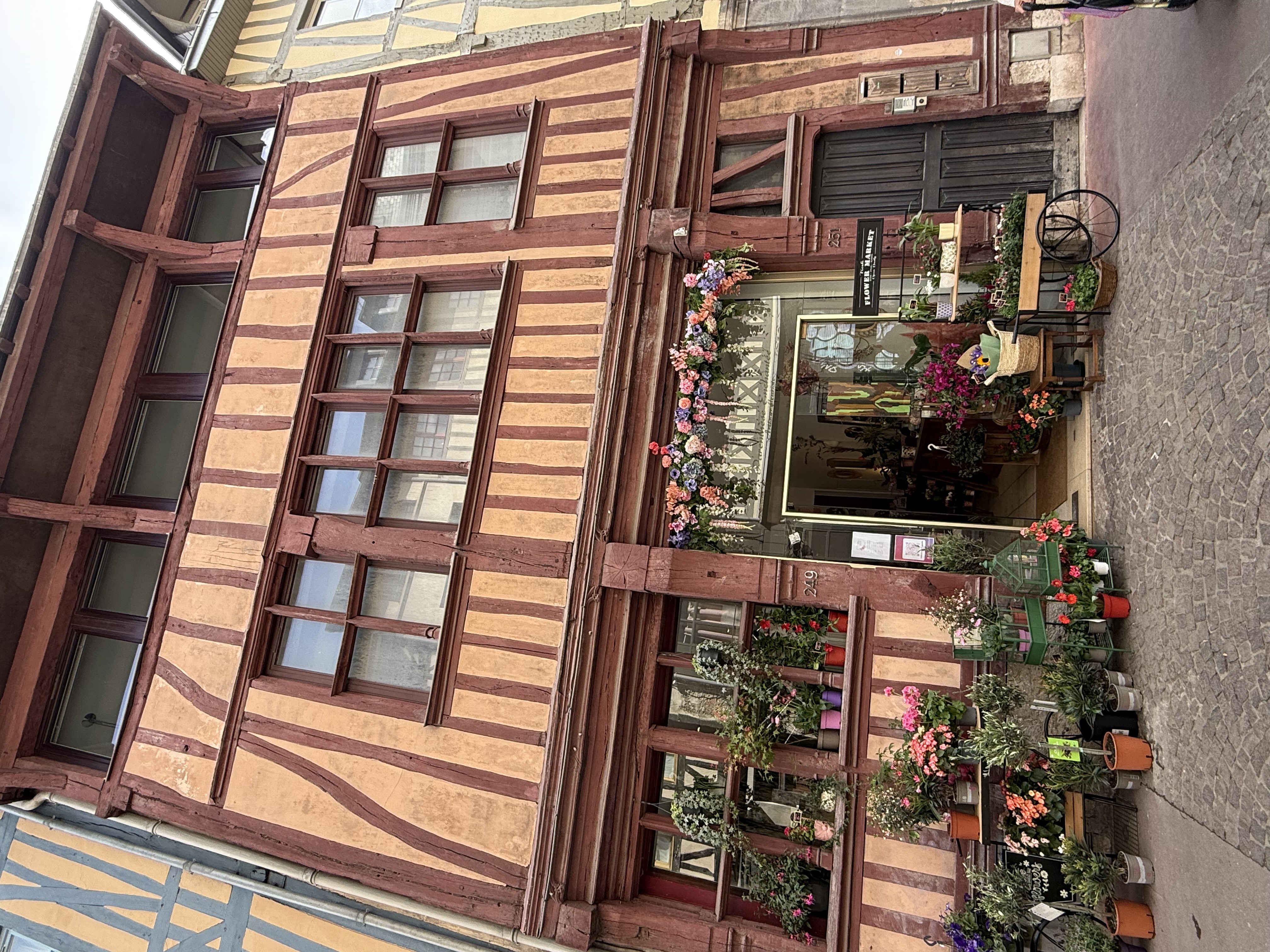
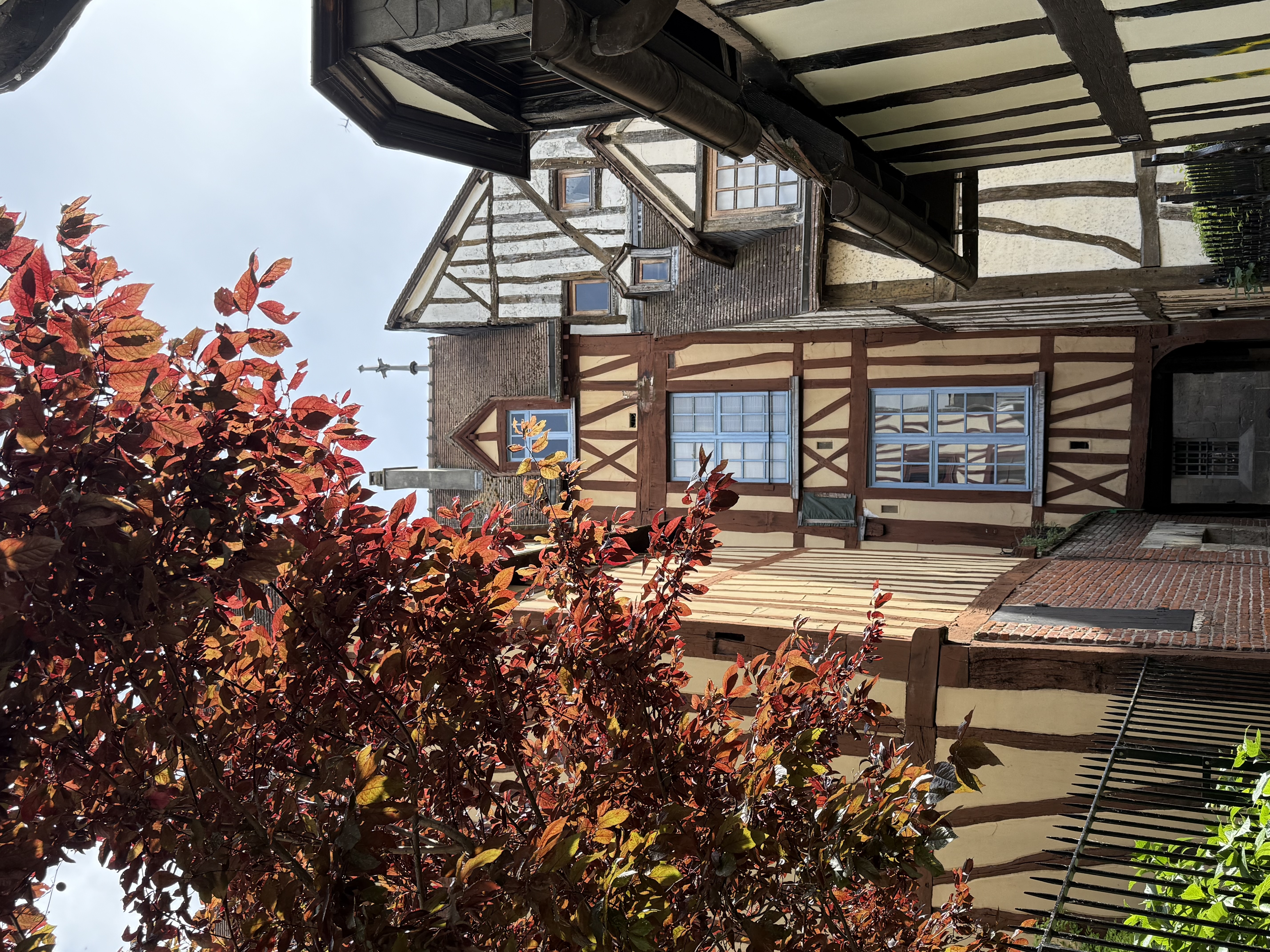
While the “Gros-Horloge” features prominently in many of the photographs depicting Rouen, it’s certainly not the only one; in fact, it’s in good company. We were amazed by Rue Massacre, despite its name, which recalls the butchers’ slaughter here, cheerful and decorated with brightly colored umbrellas; by Rue Eau-de-Robec, picturesque among its half-timbered houses and the small stream that runs through it; and by the façade of the church of Saint-Maclou, embellished with stone lacework typical of the Flamboyant Gothic architecture.
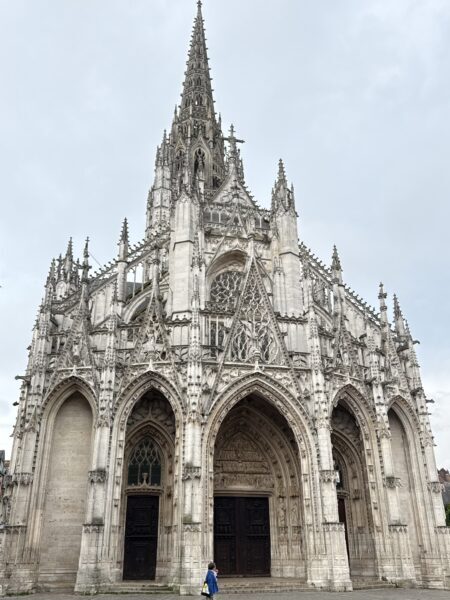
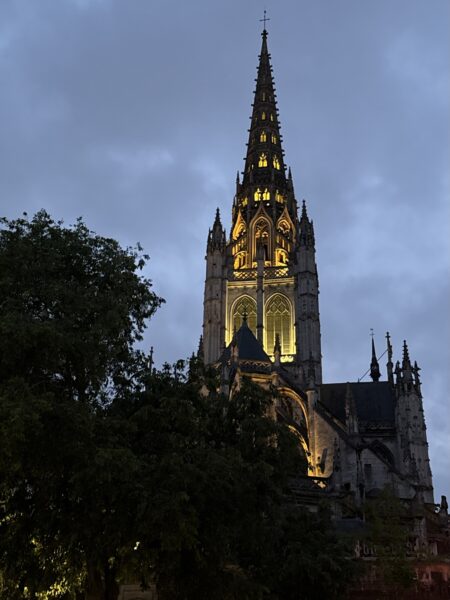
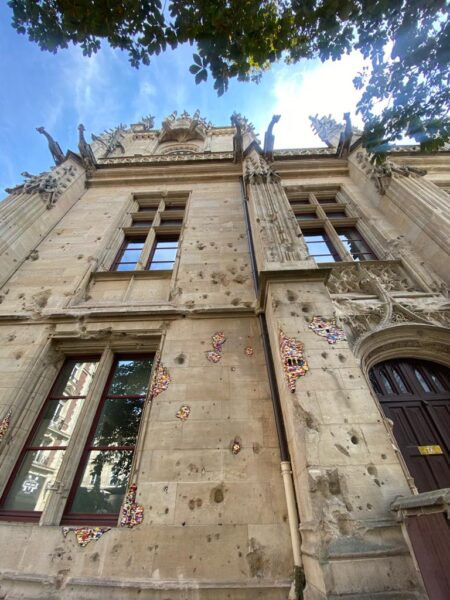
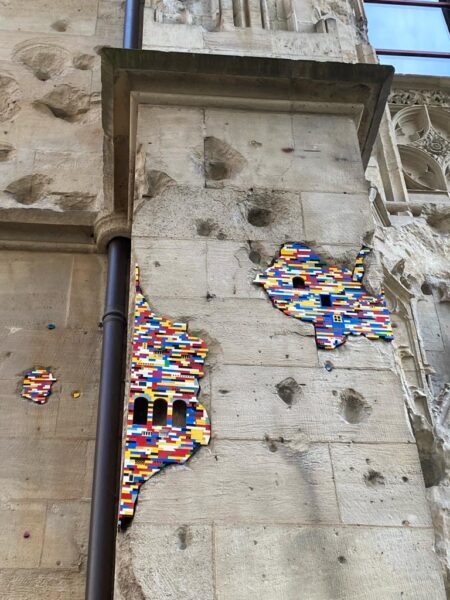
The church was severely damaged during the Second World War, as was the Courthouse, which bears the marks left by artillery shells on its façade. These marks were recently decorated by the Franco-German artist Jan Vormann with Lego bricks, creating a colorful repair effect that, rather than hiding them, highlights the “wounds”.

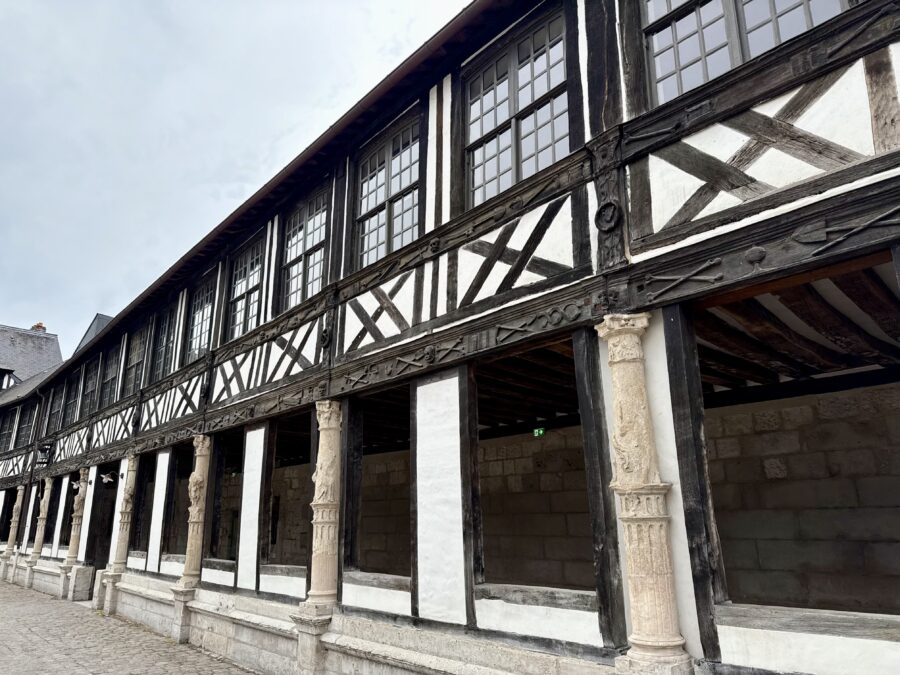
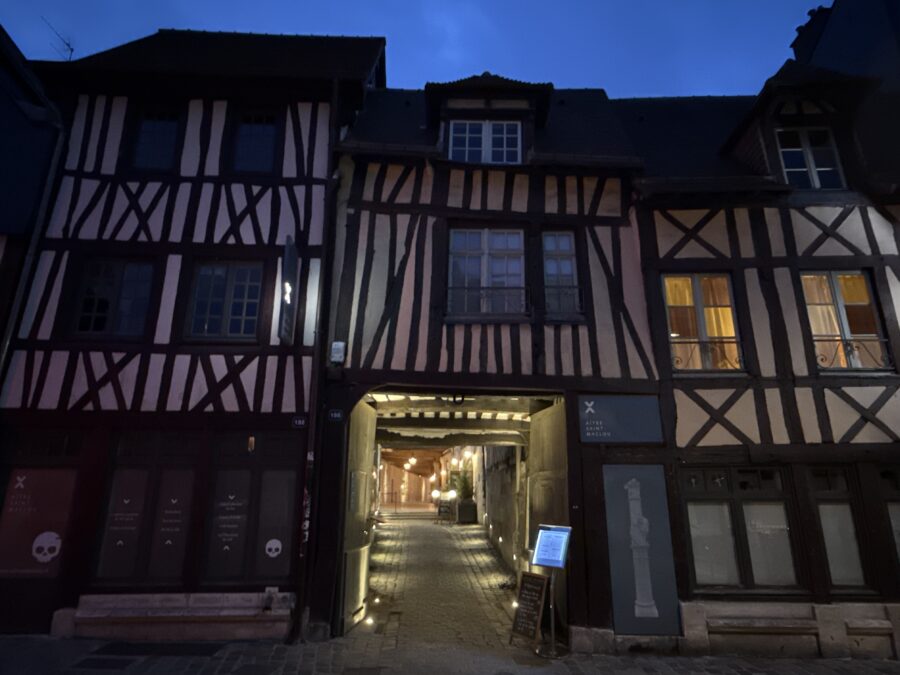
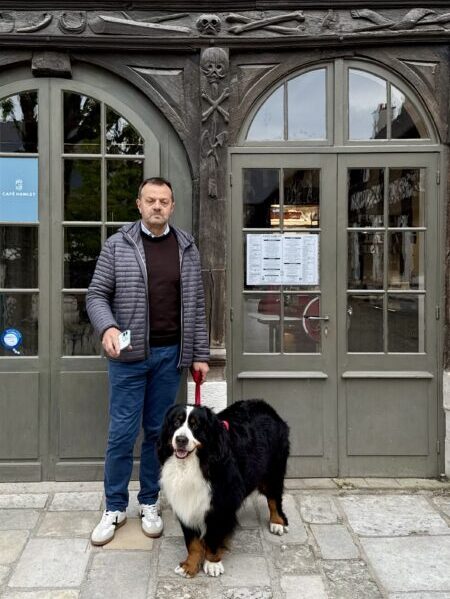
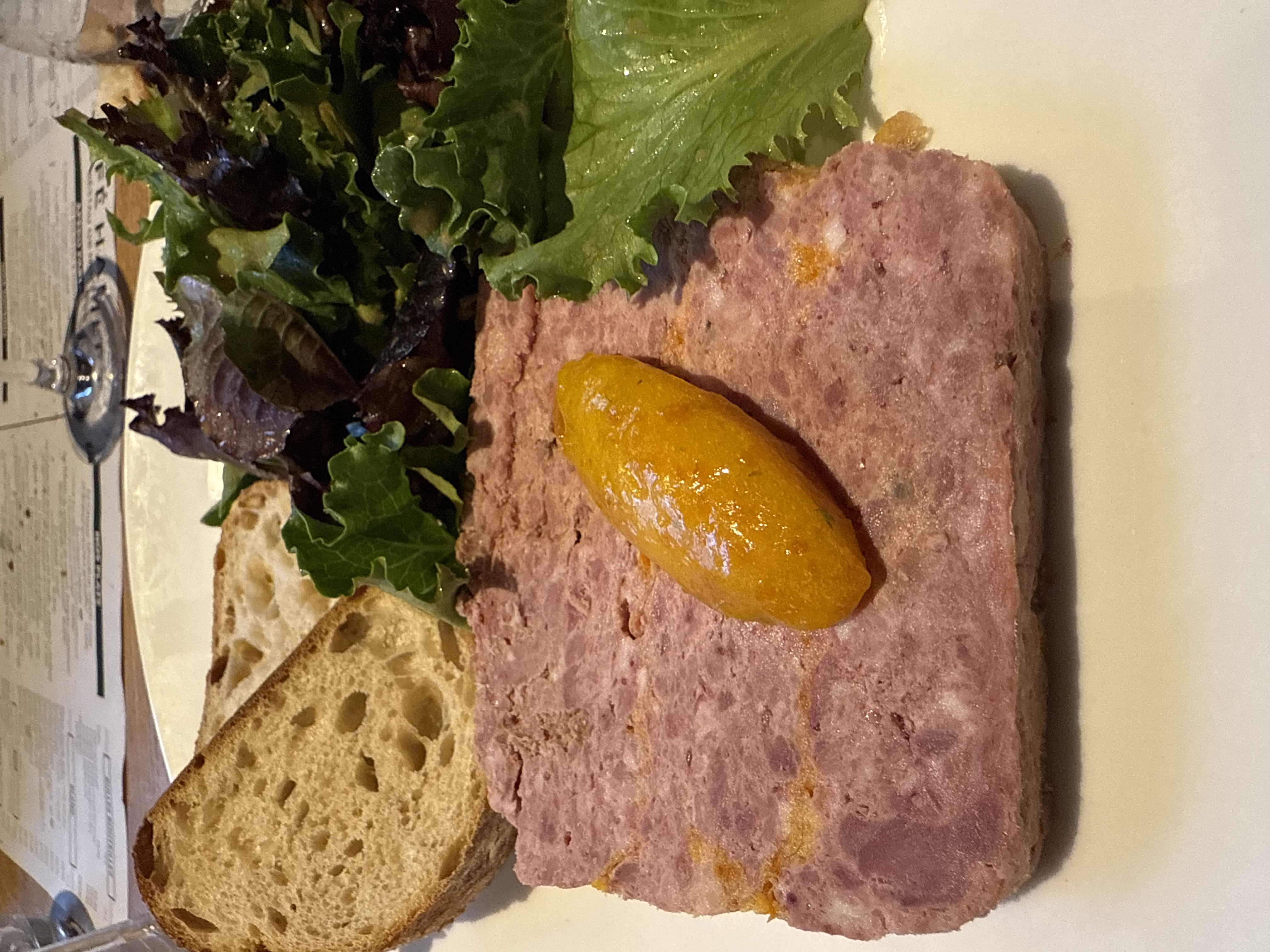
Just a few steps away is one of Rouen’s most unique sites: the Aître Saint-Maclou, the former cemetery for plague victims during the Middle Ages. Today, the three galleries surrounding the cemetery have been renovated and become home to an arts and crafts center as part of the “Cœur de Métropole” project, as well as Café Hamlet, a delightful restaurant where we enjoyed traditional Norman cuisine.
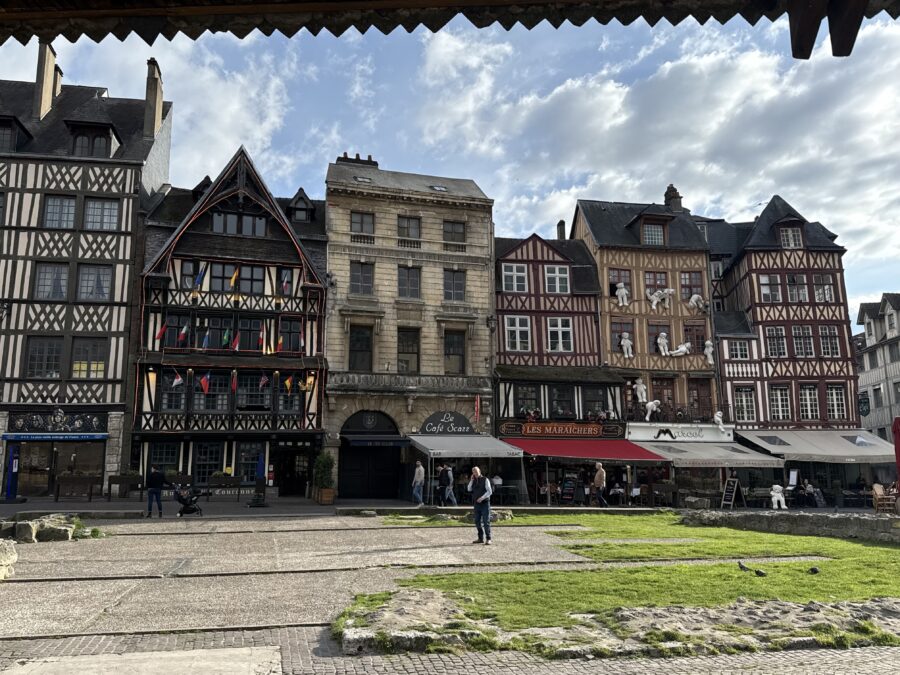
At the invitation of Rouen Tourisme, we dined at the Ristorante D’Eux-Mêmes, a historic and renowned establishment on the Place du Vieux Marché. It was a delightful and welcome surprise to find a menu in Italian entirely dedicated to us, featuring dishes featuring seasonal produce prepared by chef Nicolas Deschamps.
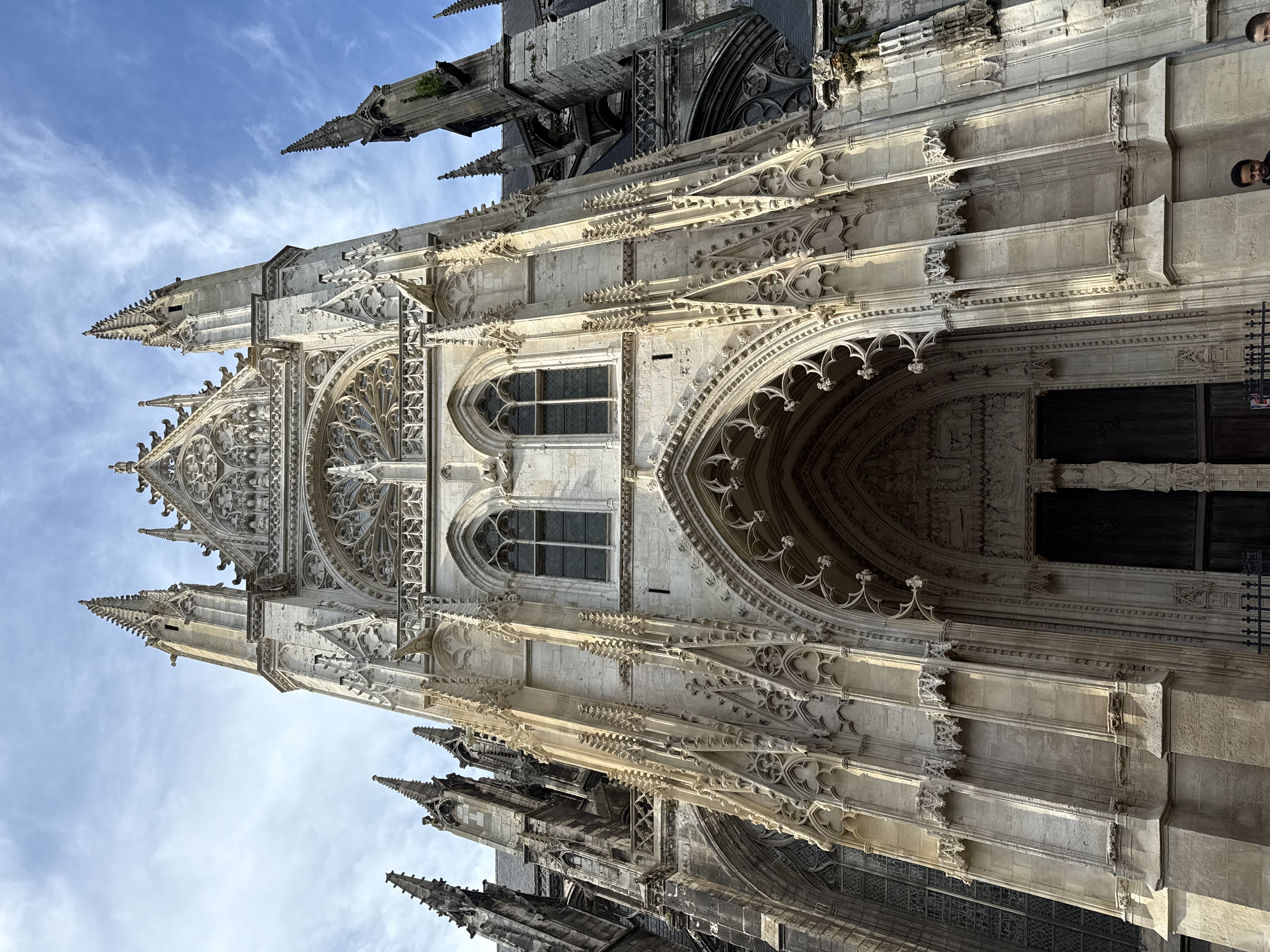

Another monument that characterizes Rouen with its majesty is the Abbey of Saint-Ouen, which can be described as the church of a thousand faces. Today it is a true jewel of Gothic architecture, but its origins date back to the Merovingian era, when a basilica stood on the site where the saint who gave it its name was buried. The abbey was founded in 750 and soon became one of the most powerful Benedictine monasteries in Normandy. Destroyed for the first time by the Vikings in 841, it suffered further damage from fires in the 12th and 13th centuries, but the real coup de grace came during the French Revolution, when the monks were dispersed and the buildings became the seat of Rouen’s city hall.
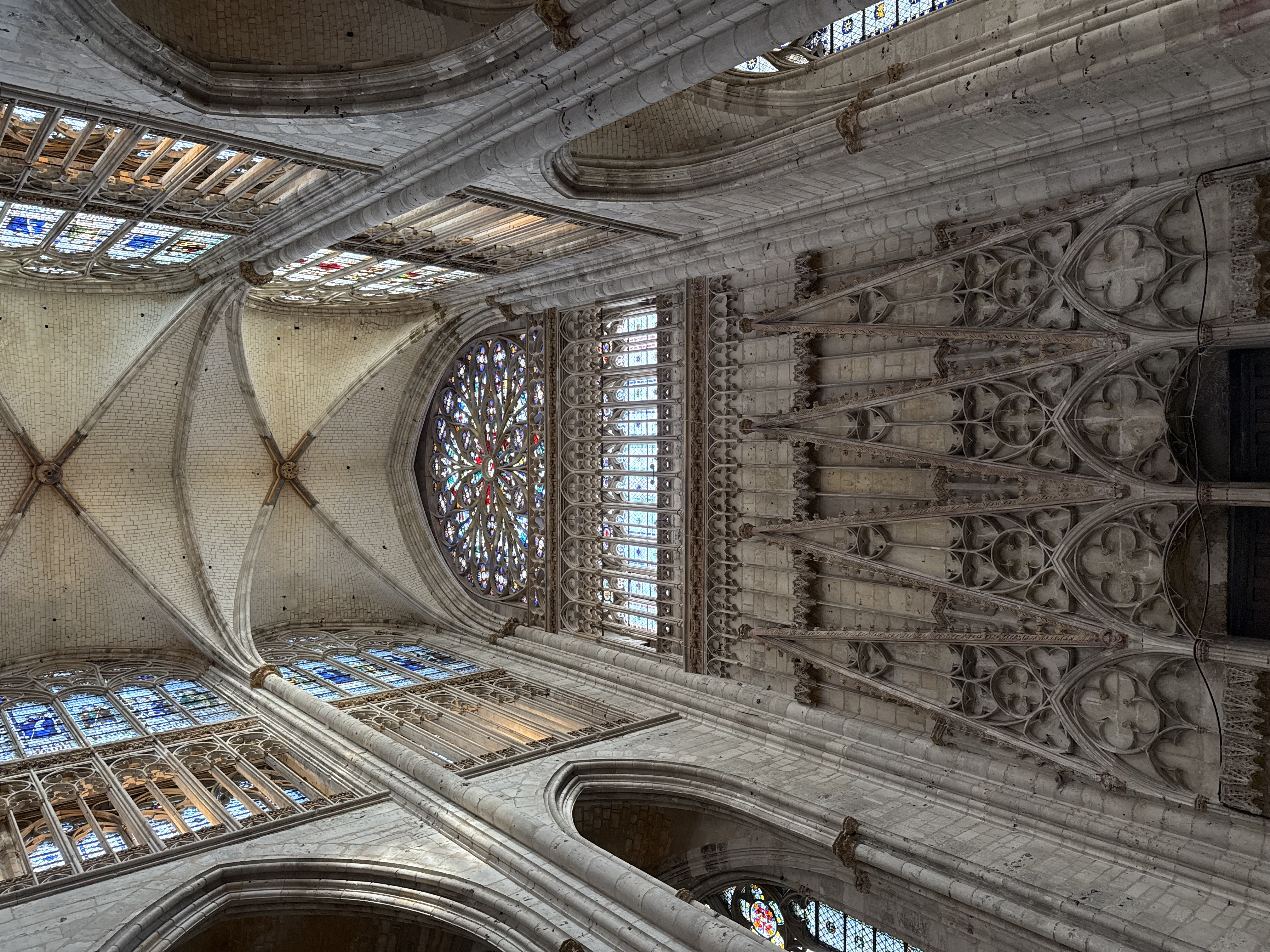
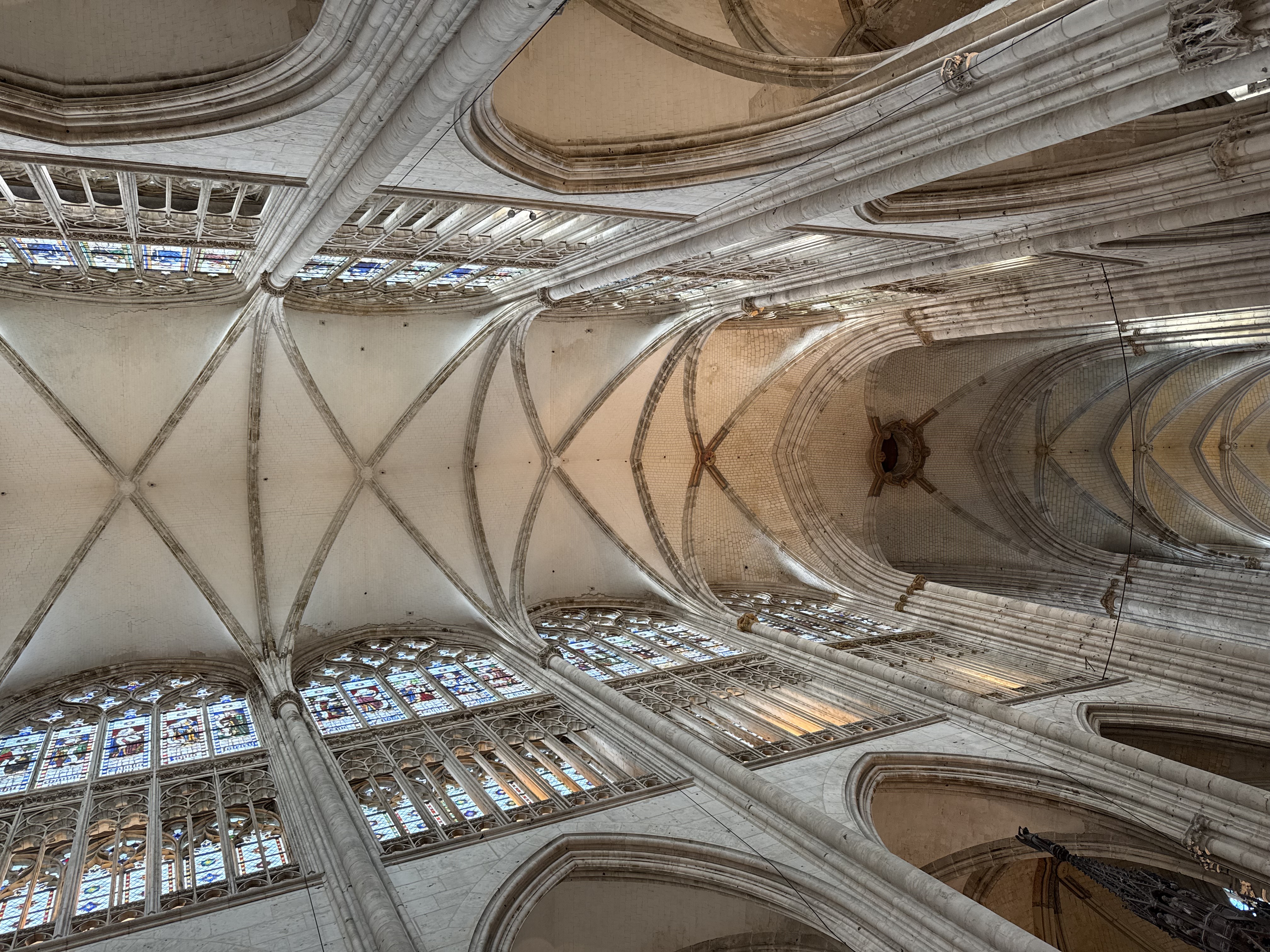
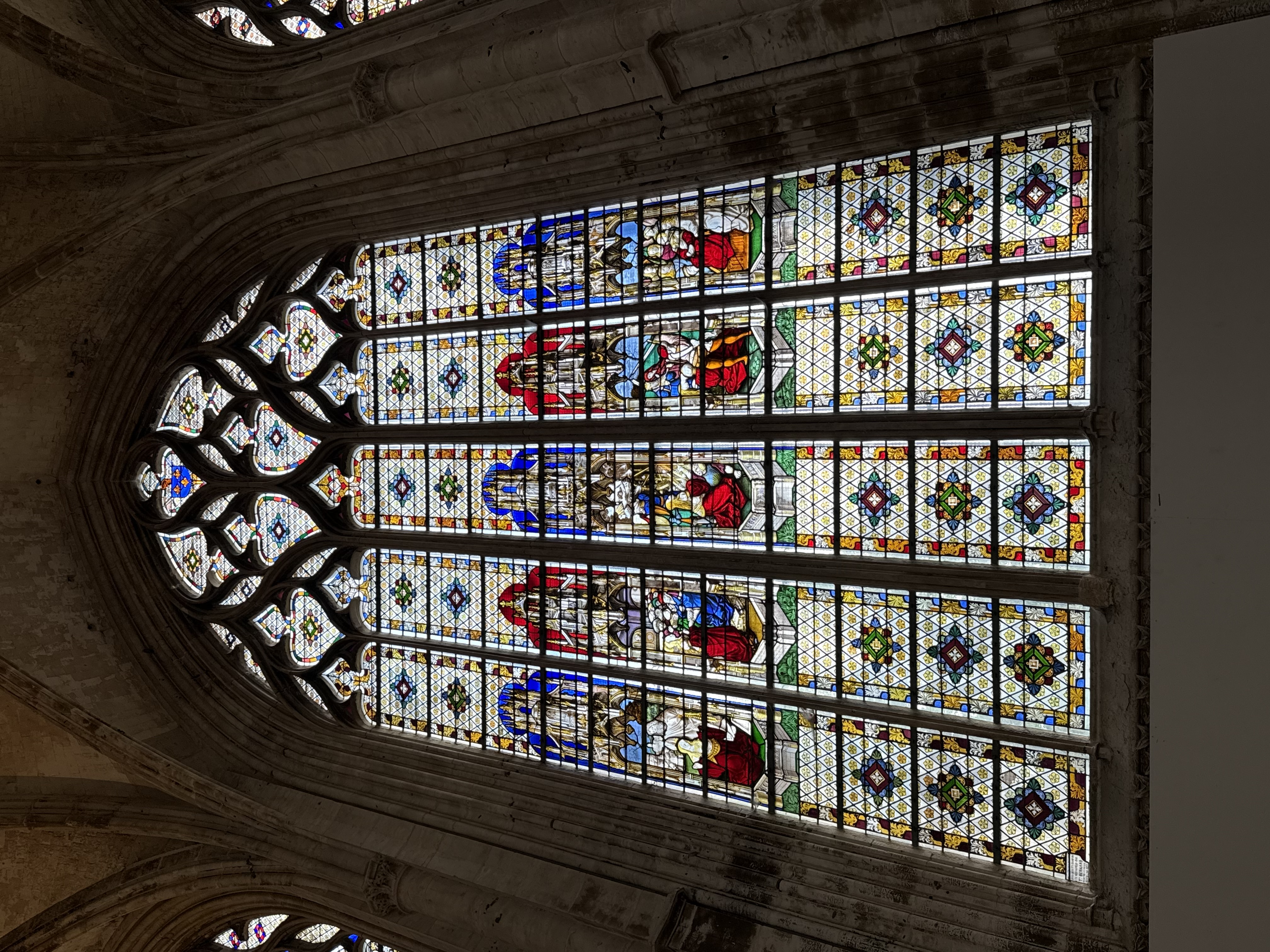
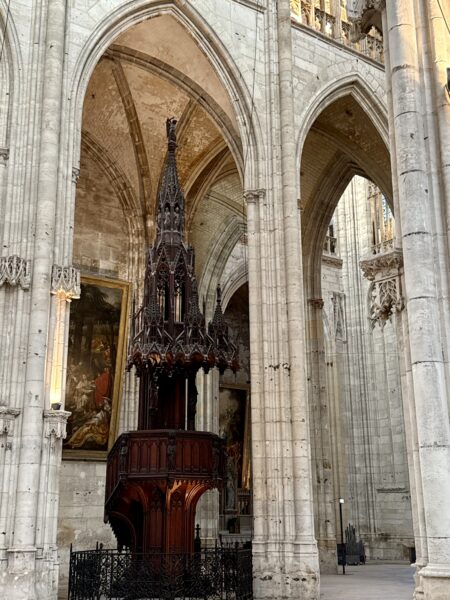
Inside, the nave dazzles with the light streaming in from the large windows and the colors of its exceptional stained-glass windows, which cover an area of over 1,500 square meters. Making it even more immense are the three levels of elevation, forcing you to tilt your head completely upward to fully appreciate it.
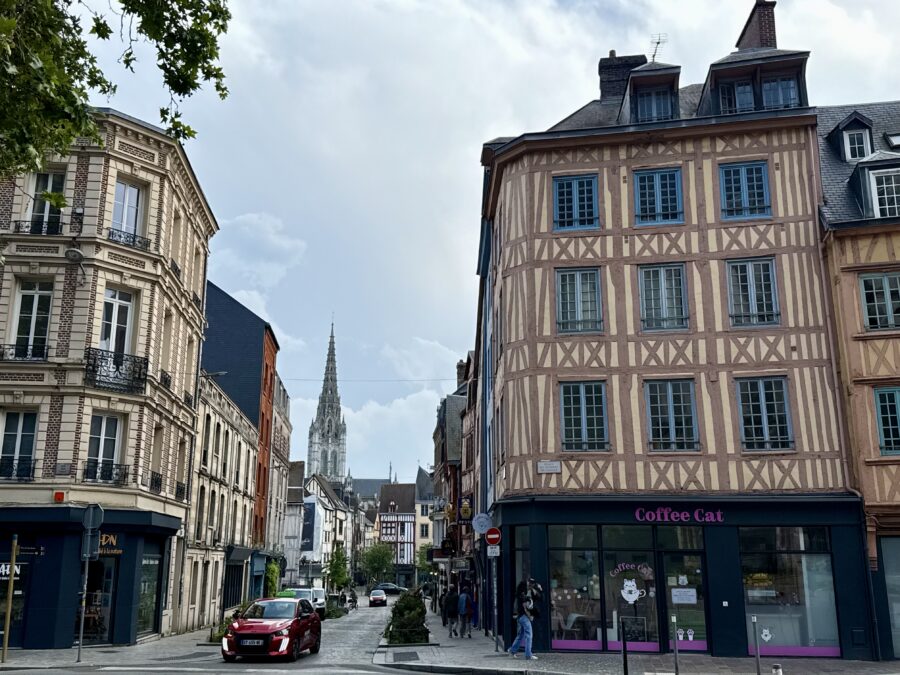
Monumental Rouen, which inspired painters and writers such as Monet, Flaubert and Corneille, was certainly a draw for us, but what we loved most was the medieval historic center, one of the best-preserved in all of France. Especially in the evening, when the city is quieter and less crowded, it feels like stepping back in time, amidst half-timbered houses, narrow alleys, and squares dominated by the flamboyant façades of Gothic churches. Strolling from the center to the little house where Cathie and Raja exquisitely hosted us and our Otto through HomeExchange, we were captivated by Rouen, a city that hides precious details around every corner, waiting to be discovered with careful observation.
In collaboration with Explore France, Rouen Tourisme, Normandie Tourisme

